

Rural education, built to sustain itself
At the heart of every Akal Academy lies a commitment to give rural children what the best rural education schools in India should offer: quality learning rooted in values.
130
Akal Academies across North India
1986
First school, 5 students, Baru Sahib
33,906
Students studying free or aided
70%
First-generation school-goers
From Hut To Hearts
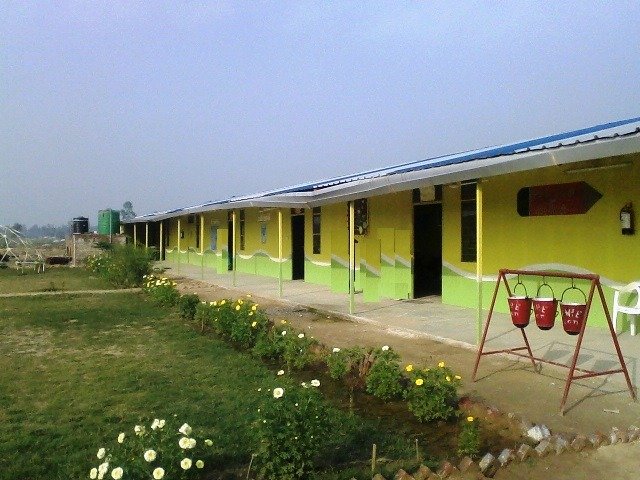

Reach across North India
The 130-school network doesn’t sit in one district — it spans five states, reaching villages that would otherwise have no school of comparable quality nearby.
5
States: Himachal Pradesh, Punjab, Haryana, Uttar Pradesh & Rajasthan
33
Districts reached
6,450+
Villages served
~1.95M
Rural population impacted
From five students to a movement
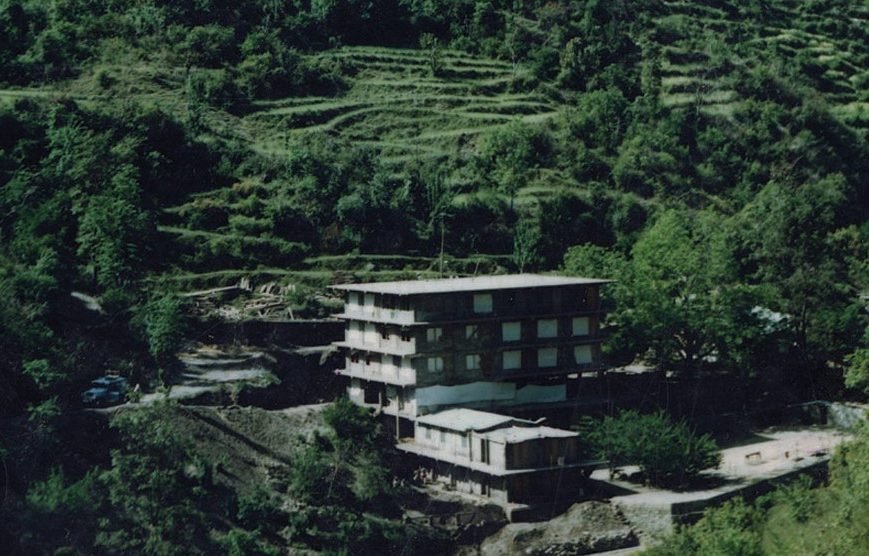
In 1986, Baba Iqbal Singh Ji gathered five children in a thatched classroom at Baru Sahib — not just a school, but the start of a movement to uplift rural children through education. By 2004, that single school had grown to 22 Akal Academies across Himachal Pradesh, Punjab, Haryana, Uttar Pradesh and Delhi. Today the network numbers 130 Akal Academies, reaching thousands of rural students across North India.
The program’s guiding principle is Vidya — the conviction that modern, scientific education must be blended with spiritual values, not delivered instead of them. Nearly a third of students pay no fees at all, based on family economic status, and 70% are the first in their family to attend any school.
We have an obligation to be empathetic, principled and considerate, even in our pursuit of material gratification. A compassionate mind and sustainable lifestyle is nurtured through knowledge and action that works in synchronicity with good human values.
Quality, kept affordable
Our Akal Academies follow a standard well above the CBSE norm, offering rural children the quality they would expect from the best rural education schools in India, at fees their families can afford.
20:1
Student–teacher ratio (CBSE norm: 30:1)
30%
Students charged no fees, by economic status
2%
Tuition fee increase, once every two years
1/3rd
Of comparable IB residential school fees, at Baru Sahib
Schools that don't send homework home
Akal Academies build the school day around one distinctive habit: the last hour of every school day is set aside for students to complete their homework before they leave — so children go home without a school bag, and families aren’t asked to supervise lessons they may not have the time, light, or literacy to help with.


A school network built to fund its own growth
The bedrock of Akal Academies’ financial model is a strict separation of capital investment from operational expenditure — and a simple rule: schools grow large enough to build the next one.
- 400 students – Covers the school’s own operating costs
- 600 students – Also covers its own construction cost
- 800 students – Funds the construction of another school
- 1,000 students – Supports establishing three more schools
- 1,200 students – Supports establishing five more schools
Donations
Fund capital investment — new buildings and new schools
Fee accruals
Fund operational expenditure — running each existing school
See the network itself
This page covers the program’s mission and model. For the full list of 130 schools, their locations, and the network’s history, see Akal Academies.
Akal Academies
130 schools across Himachal Pradesh, Punjab, Haryana, Uttar Pradesh and Delhi — nursery through class 12, with an interactive map of every location.
Continue the journey, from school to career
Students who begin at an Akal Academy can continue, under the same values, through Eternal University or Akal University — and supporters can sponsor a rural student’s education directly.