Govt of Bihar releases this beautiful Video for the 350th Birth Anniversary of Guru Gobind Singh Ji

From widening the streets to sprucing up the Ganga riverfront, the Patna City region and the iconic Sikh shrine nestled in its womb are undergoing a massive facelift as a large number of pilgrims are expected here during the 350th birth anniversary celebrations of Guru Gobind Singh.

Patna Sahib, the birthplace of the 10th Sikh guru, is considered one of the holiest places by Sikhs around the world, besides being a major tourism attraction for people from all communities.

The Bihar government has drawn up plans for grand celebrations in January 2017 to mark the historic occasion and is gearing up to put its best foot forward.

Govt of Bihar releases this beautiful Video for the 350th Birth Anniversary of Guru Gobind Singh Ji

From widening the streets to sprucing up the Ganga riverfront, the Patna City region and the iconic Sikh shrine nestled in its womb are undergoing a massive facelift as a large number of pilgrims are expected here during the 350th birth anniversary celebrations of Guru Gobind Singh.

Patna Sahib, the birthplace of the 10th Sikh guru, is considered one of the holiest places by Sikhs around the world, besides being a major tourism attraction for people from all communities.

The Bihar government has drawn up plans for grand celebrations in January 2017 to mark the historic occasion and is gearing up to put its best foot forward.

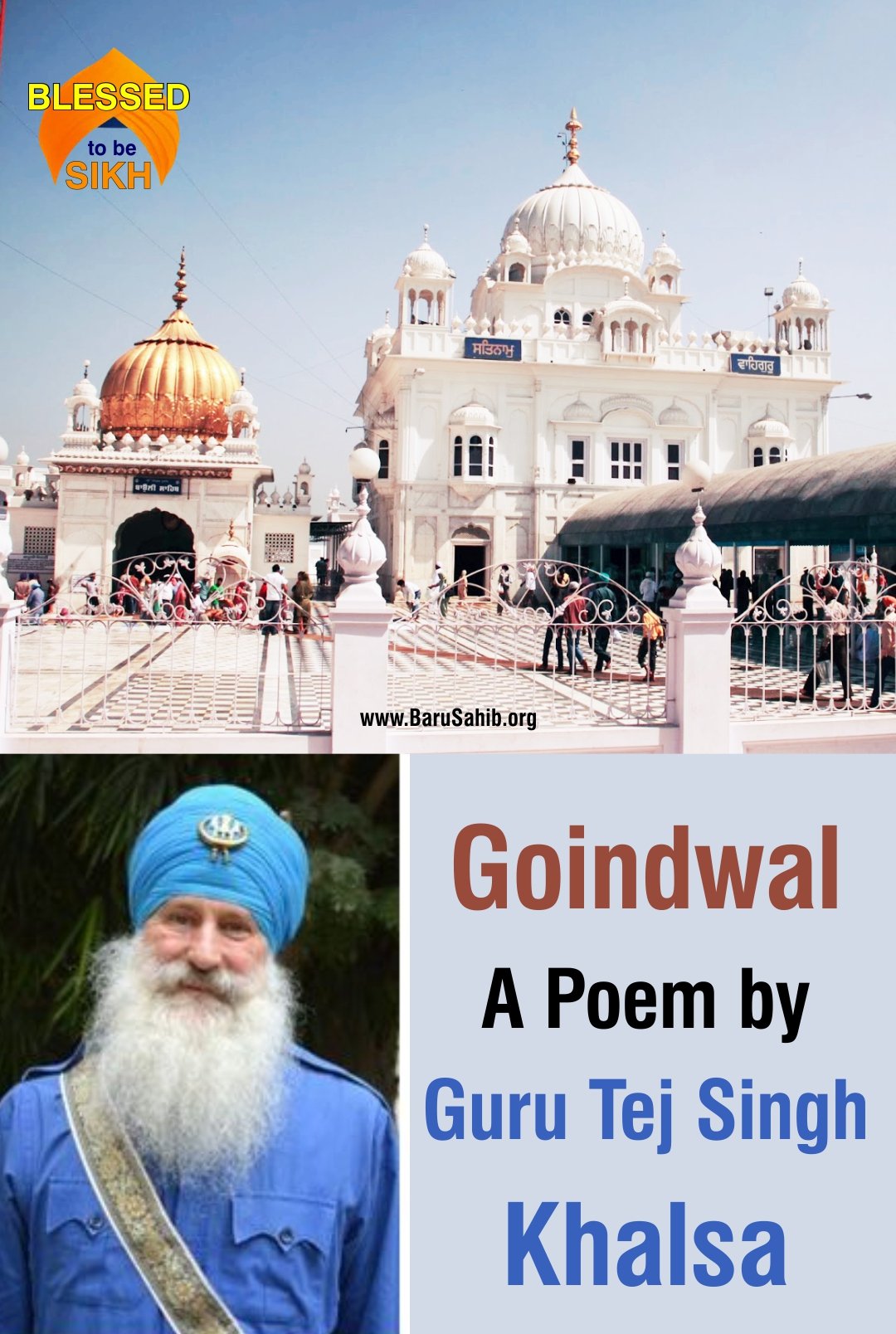
Goindwal – A Poem by Guru Tej Singh Khalsa

Where the Land lies green on fertile ground, At the bend of the river, Goindwal is found, In the humble village lived three Gurus; Amar Das and Ram Das, and Arjan, too But up in the village of Goindwal, In a sacred house with a peg in the wall, Lived Guru Amar Das, the third […]

Where the Land lies green on fertile ground,
At the bend of the river, Goindwal is found,
In the humble village lived three Gurus;
Amar Das and Ram Das, and Arjan, too

But up in the village of Goindwal,
In a sacred house with a peg in the wall,
Lived Guru Amar Das, the third Guru,
In the place where Arjan was born and grew.

I walked those streets to find that place
Where Guru sat in his sacred space,
Each step brought me closer to understand
That this path was carved by Guru’s hand.

For against that wall Guru would sit
And fate and destiny he would knit
Together in his meditations deep,
with his hair tied so that he wouldn’t sleep.

Around that peg his hair was tied,
To wake him up whenever he tried
To sleep, instead of meditate;
It pulled him up to stay awake.

And I understood, when I saw the wall,
That this path is the same for us all,
That only when we sit and meditate
Can we find the substance that makes us great.

It is the same for me, the same for you
As it was the same for the Guru;
That day by day we must sit and grind
ourselves slowly, slowly but exceedingly fine.

That wooden peg is smooth and worn
In the house where Arjan was born,
For the Guru was a man like you or me
Who followed this path to Victory.

Four hundred years later, here in the West,
Each new day we rise and face the test
To identify ourselves and stand our ground,
In this land where demons are found.

The course hasn’t changed since Guru’s time,
We all must bow low to be divine,
Japa and Tapa we must combine,
To give the light to shunya’s shine.

Guru has walked this way before,
As I walk it now to find his door
And it gives me hope when I recall
that humble peg in Goindwal.

-Guru Tej Singh Khalsa

Goindwal – A Poem by Guru Tej Singh Khalsa

Where the Land lies green on fertile ground, At the bend of the river, Goindwal is found, In the humble village lived three Gurus; Amar Das and Ram Das, and Arjan, too But up in the village of Goindwal, In a sacred house with a peg in the wall, Lived Guru Amar Das, the third […]

Where the Land lies green on fertile ground,
At the bend of the river, Goindwal is found,
In the humble village lived three Gurus;
Amar Das and Ram Das, and Arjan, too

But up in the village of Goindwal,
In a sacred house with a peg in the wall,
Lived Guru Amar Das, the third Guru,
In the place where Arjan was born and grew.

I walked those streets to find that place
Where Guru sat in his sacred space,
Each step brought me closer to understand
That this path was carved by Guru’s hand.

For against that wall Guru would sit
And fate and destiny he would knit
Together in his meditations deep,
with his hair tied so that he wouldn’t sleep.

Around that peg his hair was tied,
To wake him up whenever he tried
To sleep, instead of meditate;
It pulled him up to stay awake.

And I understood, when I saw the wall,
That this path is the same for us all,
That only when we sit and meditate
Can we find the substance that makes us great.

It is the same for me, the same for you
As it was the same for the Guru;
That day by day we must sit and grind
ourselves slowly, slowly but exceedingly fine.

That wooden peg is smooth and worn
In the house where Arjan was born,
For the Guru was a man like you or me
Who followed this path to Victory.

Four hundred years later, here in the West,
Each new day we rise and face the test
To identify ourselves and stand our ground,
In this land where demons are found.

The course hasn’t changed since Guru’s time,
We all must bow low to be divine,
Japa and Tapa we must combine,
To give the light to shunya’s shine.

Guru has walked this way before,
As I walk it now to find his door
And it gives me hope when I recall
that humble peg in Goindwal.

-Guru Tej Singh Khalsa

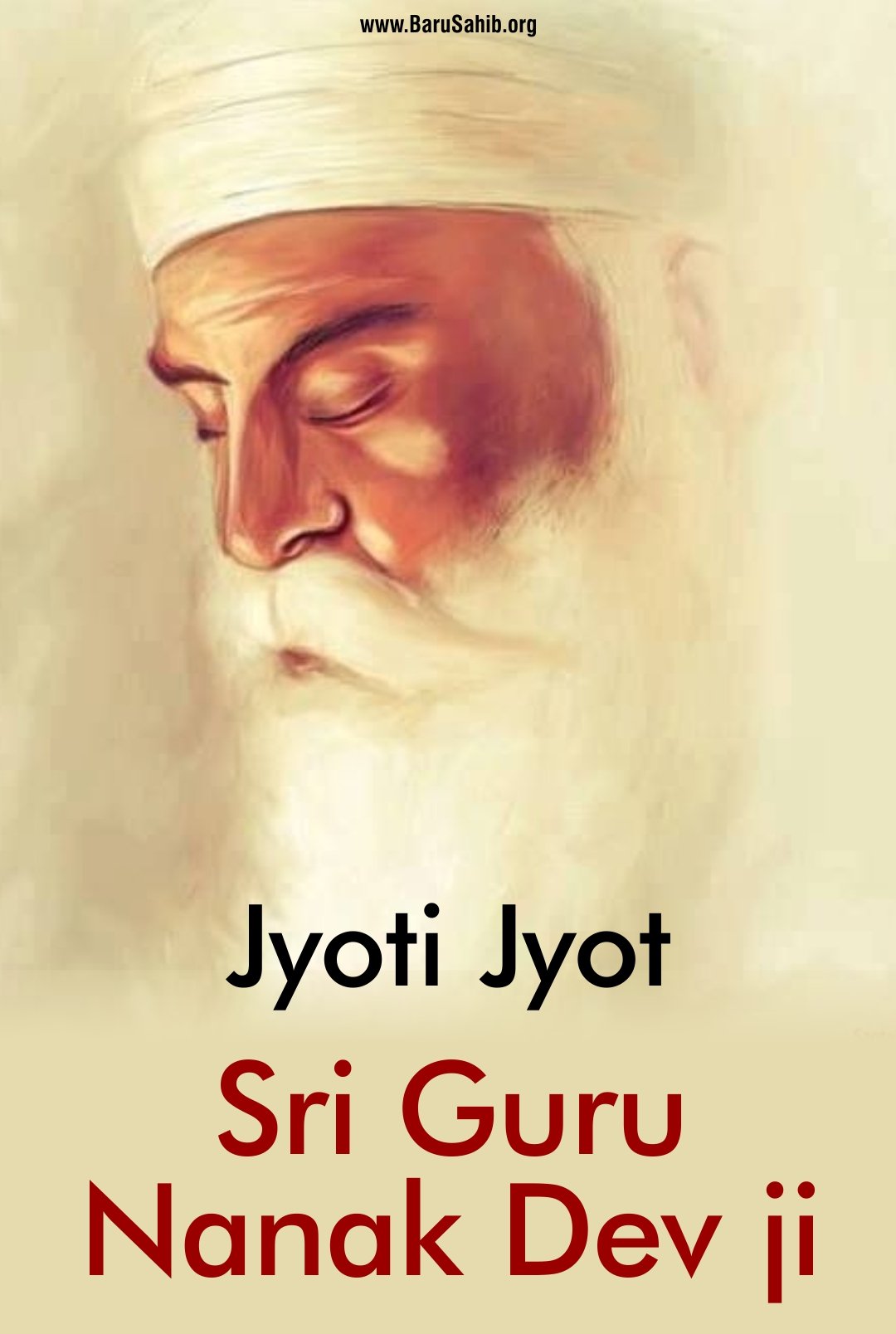
Jyoti Jyot Diwas of Shri Guru Nanak Dev Ji

Guru Nanak Dev Ji returned from his mission tours and lived in Kartarpur until the end of his days. The guru became widely renowned and respected for his humble service to humanity. Newly founded Sikh, Hindu and Muslim devotees all claimed the guru as one of their own prophets. When it became apparent that Guru […]

Guru Nanak Dev Ji returned from his mission tours and lived in Kartarpur until the end of his days. The guru became widely renowned and respected for his humble service to humanity. Newly founded Sikh, Hindu and Muslim devotees all claimed the guru as one of their own prophets.

When it became apparent that Guru Nanak Dev ji’s end was imminent, an argument ensued as to who would claim the guru’s body for funeral rites. The Muslims wished to bury him according to their customs, while the Sikhs and Hindus wished to cremate his body according to their beliefs. To settle the matter, Guru Nanak Dev himself was consulted as to how his remains should be disposed of, and by whom. He explained the concept of joti jot, that only his mortal body would expire, but that light which illumined him was divine light, and would pass to his successor.

The guru requested his devotees to bring flowers and instructed the Sikhs and Hindus to place flowers on his right side and the Muslims to place flowers to his left side.

Guru Granth Sahib

He told them that permission for funeral rites would be determined by whichever set of flowers remained fresh through out the night. After he had departed his body whoever had brought flowers which did not wilt should have the honor of disposing of his mortal remains in the manner they deemed fit. Guru Nanak then requested that the prayers of Sohila and Japji Sahib be uttered. After the prayers had been recited, the guru requested that those present arrange a sheet over his head and body, and then he instructed everyone to leave him. With his last breath, Guru Nanak infused his spiritual light jot into his successor Second Guru Angad Dev.

The Sikh, Hindu and Muslim devotees returned the following morning on September 22, 1539 A.D. They carefully lifted and removed the sheet which had been placed over the guru’s body. All were amazed and astonished to discover that no trace at all remained of Guru Nanak Dev Ji’s mortal body. Only fresh flowers remained, for not a single bud had wilted of any blossom which had been left by either Sikhs, Hindus, or Muslims, the night before.

The Sikhs, Hindu and Muslim devotees responded by erecting two separate memorials in order to commemorate Guru Nanak Dev and revere him as their own. Two shrines, one built by Sikhs and Hindus and the other by the Muslims, were placed side by side on the banks of the River Ravi in Kartarpur, a part of Punjab located in modern day Pakistan. Over the centuries, both of the shrines have each washed away twice by flooding, and been rebuilt.

Guru Nanak is considered by Sikhs to have departed his body only. His illumined spirit jot is believed to be immortally divine and to have been passed on through each of the succeeding Sikh gurus, to now and forever reside with Guru Granth Sahib, the holy scripture of Sikhism as the eternal guide to enlightenment.

Jyoti Jyot Diwas of Shri Guru Nanak Dev Ji

Guru Nanak Dev Ji returned from his mission tours and lived in Kartarpur until the end of his days. The guru became widely renowned and respected for his humble service to humanity. Newly founded Sikh, Hindu and Muslim devotees all claimed the guru as one of their own prophets. When it became apparent that Guru […]

Guru Nanak Dev Ji returned from his mission tours and lived in Kartarpur until the end of his days. The guru became widely renowned and respected for his humble service to humanity. Newly founded Sikh, Hindu and Muslim devotees all claimed the guru as one of their own prophets.

When it became apparent that Guru Nanak Dev ji’s end was imminent, an argument ensued as to who would claim the guru’s body for funeral rites. The Muslims wished to bury him according to their customs, while the Sikhs and Hindus wished to cremate his body according to their beliefs. To settle the matter, Guru Nanak Dev himself was consulted as to how his remains should be disposed of, and by whom. He explained the concept of joti jot, that only his mortal body would expire, but that light which illumined him was divine light, and would pass to his successor.

The guru requested his devotees to bring flowers and instructed the Sikhs and Hindus to place flowers on his right side and the Muslims to place flowers to his left side.

Guru Granth Sahib

He told them that permission for funeral rites would be determined by whichever set of flowers remained fresh through out the night. After he had departed his body whoever had brought flowers which did not wilt should have the honor of disposing of his mortal remains in the manner they deemed fit. Guru Nanak then requested that the prayers of Sohila and Japji Sahib be uttered. After the prayers had been recited, the guru requested that those present arrange a sheet over his head and body, and then he instructed everyone to leave him. With his last breath, Guru Nanak infused his spiritual light jot into his successor Second Guru Angad Dev.

The Sikh, Hindu and Muslim devotees returned the following morning on September 22, 1539 A.D. They carefully lifted and removed the sheet which had been placed over the guru’s body. All were amazed and astonished to discover that no trace at all remained of Guru Nanak Dev Ji’s mortal body. Only fresh flowers remained, for not a single bud had wilted of any blossom which had been left by either Sikhs, Hindus, or Muslims, the night before.

The Sikhs, Hindu and Muslim devotees responded by erecting two separate memorials in order to commemorate Guru Nanak Dev and revere him as their own. Two shrines, one built by Sikhs and Hindus and the other by the Muslims, were placed side by side on the banks of the River Ravi in Kartarpur, a part of Punjab located in modern day Pakistan. Over the centuries, both of the shrines have each washed away twice by flooding, and been rebuilt.

Guru Nanak is considered by Sikhs to have departed his body only. His illumined spirit jot is believed to be immortally divine and to have been passed on through each of the succeeding Sikh gurus, to now and forever reside with Guru Granth Sahib, the holy scripture of Sikhism as the eternal guide to enlightenment.

FIRST TIME EVER! Sikhs invited at Colorado church to spread the message of Sikhism

This is the first time that Shri Guru Granth Sahib has held court in a Christian church during a Christian service. This occurred at Mile Hi church in Colorado.

Mile Hi Church welcomed the Sikh community into its hearts and into its Sanctuary for an historic first.

Over 1,500 people from Mile Hi Church as well as other faith traditions, took off their shoes and covered their heads in honour of the Sikh tradition.

Reverend Shannon O’Hurley, has recently become known to Sikhs when videos of her sermons praising Sikhism recently spread around the internet.

“Imagine that the Christian Bible, or the Torah or the Koran or the Bhagvata Gita, or any sacred text was an actual living being. That Jesus, Budha, Krishna, Lao Tzu, or any of the great masters was actually going to come into the Sanctuary. This is the level of importance and reverence that the holy scriptures, the Guru Granth Sahib Ji is for the Sikhs. As such, very special preparations are made for the arrival of the Guru Ji.” -Rev. Shannon O’Hurley

When asked why she took such a bold step, Reverend O’Hurley replied “It’s time. Sikhism is a beautiful religion. It’s a faith that honours all people, that celebrates Oneness, and that is dedicated to service. We all have much to learn from our Sikh brothers and sisters.”

Hundreds of members of the Sikh community gathered and felt the significance of this historic first. Said Naureen Singh, founder of the Sikh Association at University of Colorado said, “Everyone was so incredibly inquisitive and genuinely interested in learning about the Sikh faith, something I have frankly never seen growing up here in America.

This was truly, especially for me, an unforgettable moment with feeling connected to both my Sikh faith and the community here in Colorado.”

FIRST TIME EVER! Sikhs invited at Colorado church to spread the message of Sikhism

This is the first time that Shri Guru Granth Sahib has held court in a Christian church during a Christian service. This occurred at Mile Hi church in Colorado.

Mile Hi Church welcomed the Sikh community into its hearts and into its Sanctuary for an historic first.

Over 1,500 people from Mile Hi Church as well as other faith traditions, took off their shoes and covered their heads in honour of the Sikh tradition.

Reverend Shannon O’Hurley, has recently become known to Sikhs when videos of her sermons praising Sikhism recently spread around the internet.

“Imagine that the Christian Bible, or the Torah or the Koran or the Bhagvata Gita, or any sacred text was an actual living being. That Jesus, Budha, Krishna, Lao Tzu, or any of the great masters was actually going to come into the Sanctuary. This is the level of importance and reverence that the holy scriptures, the Guru Granth Sahib Ji is for the Sikhs. As such, very special preparations are made for the arrival of the Guru Ji.” -Rev. Shannon O’Hurley

When asked why she took such a bold step, Reverend O’Hurley replied “It’s time. Sikhism is a beautiful religion. It’s a faith that honours all people, that celebrates Oneness, and that is dedicated to service. We all have much to learn from our Sikh brothers and sisters.”

Hundreds of members of the Sikh community gathered and felt the significance of this historic first. Said Naureen Singh, founder of the Sikh Association at University of Colorado said, “Everyone was so incredibly inquisitive and genuinely interested in learning about the Sikh faith, something I have frankly never seen growing up here in America.

This was truly, especially for me, an unforgettable moment with feeling connected to both my Sikh faith and the community here in Colorado.”

Sikhs receives ‘outpouring of support’ after racist posters found at University of Alberta

Just one day after at least a dozen disturbing posters were spotted on the University of Alberta campus, political and cultural leaders along with Canadians in general are rallying behind the Sikh community. MPs condemn ‘racist’ posters at University of Alberta A censored version of the poster found at the University of Alberta Monday, Sept. […]

Just one day after at least a dozen disturbing posters were spotted on the University of Alberta campus, political and cultural leaders along with Canadians in general are rallying behind the Sikh community.

MPs condemn ‘racist’ posters at University of Alberta

A censored version of the poster found at the University of Alberta Monday, Sept. 19, 2016. University of Alberta removes ‘disturbing racist posters’ from campus

A racist incident in downtown Edmonton and quickly spread on social media, Thursday, Sept. 1, 2016. Racist incident in downtown Edmonton caught on camera

“We’ve seen a huge outpouring of support from the community, the U of A community and the ethnic community at large,” Arundeep Singh Sandhu, a spokesperson for the World Sikh Organization, said on Tuesday. “Even the prime minister has come out against it, the mayor, as well as of course everyday Edmontonians and Canadians have come out against it.

“We’ve also seen a huge response from the Sikh community and the Punjabi community of Edmonton.”

Once the university became aware of the posters, they were taken down. At least 12 posters were removed

“When it first happened and when we first saw it on Facebook, the reaction was shock and surprise, disappointment and a little bit of anger,” Sandhu said. “But, you know, dealing with views like that with anger doesn’t really get you very far.”

“The name ‘Sikh’ actually means ‘to learn’ in Punjabi. A Sikh is a student,” he explained. “So, I thought the best response to this would be education.”

An event to respond to the posters is being planned for next Tuesday, tentatively at the University of Alberta campus between 11 a.m. and 2 p.m.

“The people who put up these posters gave their views and their side of the argument and we’re going to give our counterpoint,” Sandhu said. “We’re going to be wrapping turbans on students at the U of A. While this is happening, they’ll be able to ask questions.”

Free books will also be available that explain more about Sikh history in Canada and the significance of the turban.

“I’m a big believer in freedom of speech. It’s up to the university to decide if that’s hate speech. Police are investigating as well,” Sandhu said. “But for me, it’s how we put our views forward … fight it with education and give people an opportunity to make a decision for themselves of which vision of Canada they prefer.”

To this Harjit Singh Sajjan tweeted, “Proud to be Canadian, proud of my service to Canada, proud of my turban.”
and he was replied by Justin Trudeau, “and we’re proud of the enormous contributions Sikhs make to this country every day.

The response of the university community has been remarkable. They have reached out to our Sikh community, in particular. They have reached out to other minorities on campus and made them feel welcome and celebrated the cultural diversity that the University of Alberta is known for.

“I’m extraordinarily proud of the community on campus, the way they’ve reached out to others and supported them during this time.”

Turpin is also looking forward to Tuesday’s event.

“There will be some events coming up in celebration of diversity, there will be a turban tie-in where people learn about Sikh culture and how to tie a turban. There’s an opportunity here to reach out and educate each other about cultural diversity,” he said. “It’s something we celebrate.”

Source- globalnews.ca

Sikhs receives ‘outpouring of support’ after racist posters found at University of Alberta

Just one day after at least a dozen disturbing posters were spotted on the University of Alberta campus, political and cultural leaders along with Canadians in general are rallying behind the Sikh community. MPs condemn ‘racist’ posters at University of Alberta A censored version of the poster found at the University of Alberta Monday, Sept. […]

Just one day after at least a dozen disturbing posters were spotted on the University of Alberta campus, political and cultural leaders along with Canadians in general are rallying behind the Sikh community.

MPs condemn ‘racist’ posters at University of Alberta

A censored version of the poster found at the University of Alberta Monday, Sept. 19, 2016. University of Alberta removes ‘disturbing racist posters’ from campus

A racist incident in downtown Edmonton and quickly spread on social media, Thursday, Sept. 1, 2016. Racist incident in downtown Edmonton caught on camera

“We’ve seen a huge outpouring of support from the community, the U of A community and the ethnic community at large,” Arundeep Singh Sandhu, a spokesperson for the World Sikh Organization, said on Tuesday. “Even the prime minister has come out against it, the mayor, as well as of course everyday Edmontonians and Canadians have come out against it.

“We’ve also seen a huge response from the Sikh community and the Punjabi community of Edmonton.”

Once the university became aware of the posters, they were taken down. At least 12 posters were removed

“When it first happened and when we first saw it on Facebook, the reaction was shock and surprise, disappointment and a little bit of anger,” Sandhu said. “But, you know, dealing with views like that with anger doesn’t really get you very far.”

“The name ‘Sikh’ actually means ‘to learn’ in Punjabi. A Sikh is a student,” he explained. “So, I thought the best response to this would be education.”

An event to respond to the posters is being planned for next Tuesday, tentatively at the University of Alberta campus between 11 a.m. and 2 p.m.

“The people who put up these posters gave their views and their side of the argument and we’re going to give our counterpoint,” Sandhu said. “We’re going to be wrapping turbans on students at the U of A. While this is happening, they’ll be able to ask questions.”

Free books will also be available that explain more about Sikh history in Canada and the significance of the turban.

“I’m a big believer in freedom of speech. It’s up to the university to decide if that’s hate speech. Police are investigating as well,” Sandhu said. “But for me, it’s how we put our views forward … fight it with education and give people an opportunity to make a decision for themselves of which vision of Canada they prefer.”

To this Harjit Singh Sajjan tweeted, “Proud to be Canadian, proud of my service to Canada, proud of my turban.”
and he was replied by Justin Trudeau, “and we’re proud of the enormous contributions Sikhs make to this country every day.

The response of the university community has been remarkable. They have reached out to our Sikh community, in particular. They have reached out to other minorities on campus and made them feel welcome and celebrated the cultural diversity that the University of Alberta is known for.

“I’m extraordinarily proud of the community on campus, the way they’ve reached out to others and supported them during this time.”

Turpin is also looking forward to Tuesday’s event.

“There will be some events coming up in celebration of diversity, there will be a turban tie-in where people learn about Sikh culture and how to tie a turban. There’s an opportunity here to reach out and educate each other about cultural diversity,” he said. “It’s something we celebrate.”

Source- globalnews.ca