Remembering Maharaja Ranjeet Singh – Lion of Punjab!

Maharaja Ranjit Singh (13 November 1780 – 27 June 1839) was the founder of the Sikh Empire, which came to power in the Indian subcontinent in the early half of the 19th century. The empire, based in the Punjab region, existed from 1799 to 1849. It was forged, on the foundations of the Khalsa, under […]

Maharaja Ranjit Singh (13 November 1780 – 27 June 1839) was the founder of the Sikh Empire, which came to power in the Indian subcontinent in the early half of the 19th century. The empire, based in the Punjab region, existed from 1799 to 1849. It was forged, on the foundations of the Khalsa, under the leadership of Ranjit Singh from a collection of autonomous Sikh Misls. Ranjit Singh was succeeded by his son, Kharak Singh.

Early life

Ranjit Singh was born to Maha Singh and Raj Kaur on 13 November 1780, in Gujranwala, Punjab. At first he was named Buddh Singh, but Maha Singh received the news of his son’s birth on his return from a victorious battle against the Chattar chief, Pir Muhammad, and renamed his son Ranjit (Victor in War). Historians have mixed views as to his family origins, while some assert he was born into a Jatt Sikh family. As a child he suffered from smallpox which resulted in the loss of one eye. At the time, much of Punjab was ruled by the Sikhs under a Confederate Sarbat Khalsa system, who had divided the territory among factions known as misls. Ranjit Singh’s father Maha Singh was the Commander of the Sukerchakia Misl and controlled a territory in the west Punjab based around his headquarters at Gujranwala. After his father’s death, Ranjit Singh was raised under the protection of his mother Raj Kaur, and his mother-in-law Sada Kaur.

In 1799, Ranjit Singh captured Lahore from the Bhangi Misl and later made it his capital. This was the first important step in his rise to power. In the following years he brought the whole of the central Punjab from the Sutlej to the Jhelum under his sway. After several campaigns, he conquered the other misls and created the Sikh Empire.

Invasions and Conquests

Ranjit Singh’s earliest invasions as a young misldar (baron) were effected by defeating his coreligionists, the heads of other Sikh Sardaris (popularly known as the Misls). By the end of his reign, however, he had conquered vast tracts of territory strategically juxtaposed between the limits of British India to the East and the Durrani Empire to the West.On 7 July 1799, Ranjit Singh became master of Lahore. He then rapidly annexed the rest of the Punjab, the land of the five rivers. Having accomplished this, he extended his empire further north and west to include the Kashmir mountains and other Himalayan kingdoms, the Sind Sagar Doab, the Pothohar Plateau and trans-Indus regions right up to the foothills of the Sulaiman Mountains. In 1802 Ranjit Singh took Amritsar from the Bhangi Sardari and followed this in 1807, after a month of fierce fighting, with the conquest of Kasur from the Afghan chief Qutb ud-Din. With the capture of Multan in 1818 the whole Bari Doab came under his sway and in 1819 Ranjit Singh successfully annexed Kashmir. This was followed by subduing the Kashmir mountains, west of the river Jhelum (today, Hazara in Pakistan and Pakistan administered Kashmir).

The most significant encounters between the Sarkar Khalsaji and the Afghans were fought in 1813, 1823, 1834 and in 1837. In 1813, Ranjit Singh’s general Dewan Mokham Chand led the Sikh forces against the Afghan forces of Shah Mahmud who were led by Dost Mohammad Khan. Following this encounter, the Afghans lost their stronghold at Attock. Subsequently, the Pothohar plateau, the Sindh Sagar Doab and Kashmir came under Sikh rule. In 1823, Ranjit Singh defeated a large army of Yusufzai tribesmen north of the Kabul River in what is now Pakistan, while the presence of his Sikh General, Hari Singh Nalwa prevented the entire Afghan army from crossing this river and going to the aid of the Yusafzais at Nowshera. This defeat led to the gradual loss of Afghan power in present- day Pakistan. In 1834, when the forces of the Sarkar Khalsaji marched into Peshawar, the ruling Barakzais retreated without offering a fight.[19] In April 1837, the real power of Maharaja Ranjit Singh came to the fore when his commander-in-chief, Hari Singh Nalwa, kept the entire army of Amir Dost Mohammad Khan at bay, with a handful of forces till reinforcements arrived from Lahore over a month after they were requisitioned.[citation needed] The Battle of Jamrud in 1837 became the last confrontation between the Sikhs and the Afghans. Hari Singh Nalwa was killed while the Afghans retreated to Kabul to deal with the Persian invasion on its western border in Herat and internal fighting between various princes. Khalsa Sarkar Wazir Jawahar Singh nominated Sardar Gurmukh Singh Lamba as political-cum-military adviser to safeguard the gains of Khalsa Sarkar.

Role in Sikh History –

Process of Unification –

In 1799, a process of unification was started by Ranjit Singh to establish a empire. The occupation of Lahore from Bhangi Misl in the summer of 1799 marked a watershed in his career. With the conquest of Lahore Ranjit Singh was fairly launched on a career of systematic aggrandisement which made him master of a vast empire in less than quarter of a century.

Ranjit Singh was crowned on 12 April 1801 as the Maharaja of Punjab. He was 20 years old at the time. Sahib Singh Bedi, a descendant of Guru Nanak, conducted the coronation. He reduced many neighbouring states to tributary status and gradually established his control over all the Sikh Misl’s west of the Satluj. He spent the following years fighting the Durrani rulers of Afghanistan. After driving them out of Punjab, Ranjit Singh and his Sikh army then invaded ethnic Pashtun territories in Khyber Pakhtunkhwa. He captured Multan which encompassed the southern parts of Punjab, Peshawar (1818), Jammu (1812–13) and Kashmir (1819). When the foreign minister of Ranjit Singh’s court, Fakir Azizuddin, met the British Governor-General of India, Lord Auckland, in Simla, Auckland asked Fakir Azizuddin which of the Maharaja’s eyes was missing, Azizuddin replied: “The Maharaja is like the sun and sun has only one eye. The splendor and luminosity of his single eye is so much that I have never dared to look at his other eye.” The Governor General was so pleased with this reply that he gave his gold watch to Azizuddin.

Secular Sikh Rule

The Sikh Empire was idiosyncratic in that it allowed men from religions other than their own to rise to commanding positions of authority. The Christians formed a part of the militia of the Sikhs.[citation needed] In 1831, Ranjit Singh deputed his mission to Simla to confer with the British Governor General, Lord William Bentinck. Sardar Hari Singh Nalwa, Fakir Aziz-ud-din and Diwan Moti Ram ― a Sikh, a Muslim and a Hindu representative ― were nominated at its head. Externally, everyone in the Sikh empire looked alike; they sported a beard and covered their head, predominantly with a turban. This left visitors to the Punjab region quite confused. Most foreigners arrived there after a passage through Hindustan, where religious and caste distinctions were very carefully observed. It was difficult for them to believe that though everyone in the Sarkar Khalsaji looked similar, they were not all Sikhs. The Sikhs were generally not known to force either those in their employ or the inhabitants of the country they ruled to convert to Sikhism. In fact, men of piety from all religions were equally respected by the Sikhs and their ruler. Hindu sadhus, yogis, saints and bairagis; Muslim faqirs and pirs; and Christian priests were all the recipients of Sikh largess. There was only one exception – the Sikhs viewed the Muslim clergy with suspicion. Mullahs were not looked upon kindly.The Sikhs made attempt not to offend the prejudices of Muslims, noted Baron von Hügel, the famous German traveller, yet the Sikhs were referred to as being harsh. In this regard, Masson’s explanation is perhaps the most pertinent:

“Though compared to the Afghans, the Sikhs were mild and exerted a protecting influence, yet no advantages could compensate to their Mohammedan subjects, the idea of subjection to infidels, and the prohibition to slay kine, and to repeat the azan, or “summons to prayer”.Hinduism emphasises the sanctity of cows. The ban on cow slaughter was universally imposed in the Sarkar Khalsaji.

The Sikhs never razed places of worship to the ground belonging to the enemy. The Sikhs were utilitarian in their approach. Marble plaques removed from Jahangir’s tomb at Shahdera were used to embellish the Baradari inside the Fort of Lahore, while the mosques were left intact. Forts were destroyed, however these too were often rebuilt ― the best example being the Bala Hissar in Peshawar, which was destroyed by the Sikhs in 1823 and rebuilt by them in 1834.Ranjit Singh’s Empire was secular, none of the subjects were discriminated against on account of their religions. He did not force Sikhism on non-Sikhs and respected all religions.

~ Source: Wikipedia

Waris Ahluwalia on Indian Identity and That Viral Gap Ad

A fixture on New York’s social scene, one of the most photographed men in the city, and widely-celebrated as one of the world’s best dressed, Waris Ahluwalia has built successful careers in designing, acting, and modeling, though he never intended to go down any of those paths. The 39-year old son of Indian immigrants has […]

A fixture on New York’s social scene, one of the most photographed men in the city, and widely-celebrated as one of the world’s best dressed, Waris Ahluwalia has built successful careers in designing, acting, and modeling, though he never intended to go down any of those paths.

The 39-year old son of Indian immigrants has starred in Wes Anderson films, launched jewelry lines, and been the face of major ad campaigns. But it’s his latest project that now takes him back to his country of birth, to find and bring the work of Indian artisans to the rest of the world.

Ahluwalia opens up about his family, developing his sense of identity, and the photos he hopes never surface.

How do you introduce yourself?

It depends on what country it is. So here, in this country, I introduce myself as Waris. But if it’s in Bali, I go by Zebra.

Zebra? Why?

I decided that’s my Bali name.

And if someone asks you, “what do you do?”

I say “about what?” (laughs). You know, it just seems like the harshest question. It happens a lot and I take a lot of joy and time in making it a game to avoid answering the question.

Do you have a hyphenated identity, like a lot of Asian Americans?

Storyteller-Explorer-Lothario? My identities tend to be as vague as possible. I don’t feel the need to self-identify, because it’s complicated.

Where is your family from?

From India, from Punjab. I was born in India as well, and we moved to New York when I was five. My dad passed away when I was 20. I like to say I got my sense of adventure from him. He essentially just picked up his son and wife and moved.

Did you have much of a connection to India growing up?

We didn’t move to an Indian neighborhood. My friends were non-Indians, non-Sikhs. But we spoke Punjabi at home as well as English. We ate at home every day. My culture was intact through my family.

Was it tough to fit in?

Whenever you’re different, your existence presents a challenge for other people. You’re the odd man out. But I think from an early age I was just comfortable with who I was, largely due to the way I was brought up.

What do you mean?

My dad named me after one of his favorite poets, Waris Shah. He didn’t give me a traditional, Indian, Sikh name, which are beautiful names. But it just made an extra point for me. Even within my own community, I didn’t fit in.

Was there pressure to succeed at home?

There was some pressure. It’s not like they said, “do whatever you want!” But I knew what wasn’t right for me. After ninth grade biology class I came home and was like, “Nope! Not gonna be a doctor!”

How did that go over?

My parents were always supportive. It was harder for my extended family to understand. They just saw someone who couldn’t commit to something, which is fair. But I’ve never been closer to my family than I am now. Growing up is a nice thing.

Were you always as put together as you are now?

I probably definitely always had a look. In ninth grade, I remember my favorite thing was my boots that had skulls on them. I went through lots of phases.

Any phases you regret?

I’m gonna stick by my skull boots. It’s not, “I can’t believe I did that.” It’s more, “Thank God cell phones didn’t have cameras then.” I went through one phase, in school in upstate New York, where the only thing to do was go to raves.

Please say there are pictures.

Not that you’ll see. Definitely some pants that were wider than they needed to be. Whatever. I did it. I embrace it. No regrets.

Your Gap ad went viral last year when it was defaced with a racial slur. Did Gap’s response surprise you?

I’m from New York. People write things on subway posters all the time. When that happened, I wasn’t hurt. But I was amazed at the response. I think it was a beautiful thing. What it did was create an opportunity for dialogue and race relations.

You called it a crossover moment – why?

I’ve been relatively unknown in my country of birth for a long time. I was better known in France or Japan than in India. That was new — walking in the airport in Delhi and having people go, “Hey!” That’s been a big shift.

For one of your projects, House of Waris RARE, you hand pick items from all over the world. What led to that?

When I work, I create, I make things. So the idea was to create an experience, to tell stories — the stories of these items and where they come from. This project features craftsmanship from 14 countries. This is about objects to engage with, to learn their history, their stories.

You talk a lot about thoughtful consumption. What does that mean?

Like in our jewelry line with Forevermark, each stone has a marking, a code which allows you to trace it to the mine. You can look at the history of that mine, its track record, its human rights record, its environmental practices. That’s important to me.

The Uncrate India project takes you back your place of birth. What has that been like?

It’s a bit strange. It’s not like going home. New York is my home. But it doesn’t feel like a foreign country either. It’s another home. I do believe you can have more than one home.

What advice would Adult Waris have for Kid Waris?

It’s going to be okay. It’s going to be confusing. But it’ll be fine. And learn to play an instrument.

~ Edited from an interview by Amna Nawaz
~ Source: www.nbcnews.com

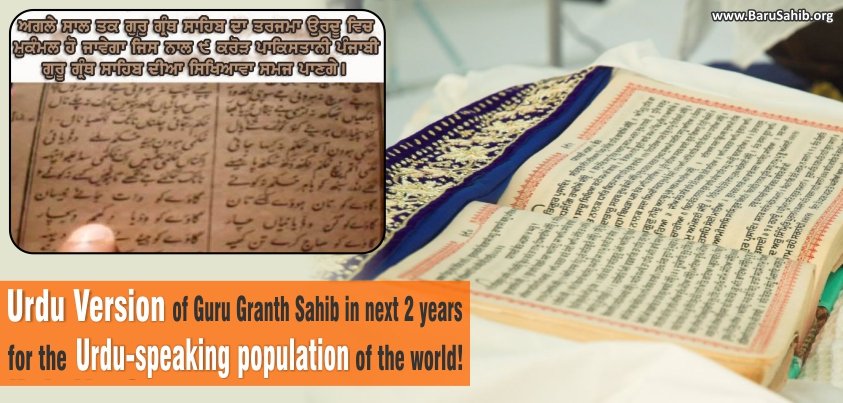
Urdu version of Guru Granth Sahib in 2 years for the Urdu Speaking population of the World!

PATIALA: To disseminate principles and philosophy of the Sikh religion among Urdu-speaking population of the world, including over nine crore Punjabis residing in Pakistan, Guru Granth Sahib will soon be published in Urdu language. The translation of the holy book has been done by nonagenarian Devinder Pal Singh Sidhu, from Rampura Phul town of Bathinda […]

PATIALA: To disseminate principles and philosophy of the Sikh religion among Urdu-speaking population of the world, including over nine crore Punjabis residing in Pakistan, Guru Granth Sahib will soon be published in Urdu language. The translation of the holy book has been done by nonagenarian Devinder Pal Singh Sidhu, from Rampura Phul town of Bathinda district, which is being edited by experts at Sri Guru Granth Sahib World University in Fatehgarh Sahib. The university hopes to publish the Urdu version of Guru Granth Sahib within the next 1-2 years in phases. The translated version of the hold book will also contain footnotes detailing meanings of important and difficult words and also explaining their central idea.

“We have got the voluminous translated draft and got its samples checked from a committee of experts of Sikh theology, including Dr Jaswant Singh Neki, who also has deep understanding of Arabic and Urdu languages. They have given their nod saying that the translated draft can be published with some minor changes. It would take us 1-2 years to publish the Urdu version of Guru Granth Sahib,” said Professor Gurmohan Singh Walia, vice-chancellor of the university. Professor Walia said that the draft submitted by Sidhu spans over 32 registers and 16,000 pages and it was translated by him without help from any agency. “He is around 90 years old and retired as a “kanungo” (revenue record keeper). Having served in the revenue department where Urdu and Persian were widely used in official dealings, he is well-versed in these languages and it took him years to translate Guru Granth Sahib,” Walia said.

~ Amaninder Pal Sharma, TNN

Sikh Leaders Come Out Against Opulent Marriages!

Sikh leaders are taking the initiative to curb extravagance at weddings. On Sunday, representatives of 17 gurudwaras met at Khar to discuss ways to do this and put an end to the game of one-upmanship associated with grand weddings among Sikh families. “The meeting was to ensure that people spend less on marriages. These days […]

Sikh leaders are taking the initiative to curb extravagance at weddings. On Sunday, representatives of 17 gurudwaras met at Khar to discuss ways to do this and put an end to the game of one-upmanship associated with grand weddings among Sikh families.

“The meeting was to ensure that people spend less on marriages. These days marriage expenses run into lakhs. We feel the money wasted on fancy weddings should be utilised to better educate and socially uplift the community,” said Pritam Singh, treasurer, Sri Guru Singh Sabha in Khar, where the meting was held.

Sikh weddings have, over the years, grown in grandiosity with members of the community growing richer. The catering rates per plate in some of these marriages are as high as Rs 1,500 to Rs 2,000.

“The trend is to have Mexican, Italian, Thai and Chinese dishes with a large number of sweets added in. However, there isn’t a matching capacity to eat, the result often being a lot of food being wasted. But this splurging, instead of triggering consternation, make many others in the community feel inferior and envious. We are now thinking in terms of introducing a code of conduct where not more than one dal, two/three vegetables, raitas, etc are served,” said Kanwal Nain Singh, chairperson of the trust looking after Gurudwara Kalgidhar Sabha in Dahisar.

Decorations too eat into the purse, say Gurudwara representatives. “There was a time when people conducted marriages spending just a few thousand rupees,” said Avtar Singh Sachdev, president, Khar Gurudwara, who took the initiative in organising the meeting.

“These days, even at gatherings post death (of a person), a number of dishes are served. It’s unnecessary, tea and light snacks should do.”

In the meeting it was decided to approach more Gurudwaras in the city on the issue. They are expected to make announcements at Sunday gatherings and Kirtans to help spread the word among the community.

“In Sikhism, one has to spend 10% of one’s budget for social upliftment. Garib ka mu guru ki golakh (mouth of the poor is coffer of the Guru); that’s what Sikkism teaches,” said Manmohan Singh, secretary, Sri Guru Singh Sabha, central body of all Sikhs. He added: It’s in fact aadesh or order of the SGPC that 5% of the budget should go towards social betterment.”

Source: www.dnaindia.com

First Sikh to play Rugby for Team Canada Wolverines – Gurvinder Singh Kalar

Darpan: Do you remember the Friends episode, in which Ross is invited to play rugby with Emily’s friends Liam and Devon from London? Emily laughs at Ross at the mere thought of him playing rugby, offended Ross asks, “What’s – ah, what’s so funny about that?” Emily replies, “Well I mean, you’re American to start […]

Darpan: Do you remember the Friends episode, in which Ross is invited to play rugby with Emily’s friends Liam and Devon from London? Emily laughs at Ross at the mere thought of him playing rugby, offended Ross asks, “What’s – ah, what’s so funny about that?” Emily replies, “Well I mean, you’re American to start with. You don’t even have rugby here.” Ross yells, “Well, we didn’t have freedom here until 1776 either!” Well, freedom and hockey we have but rugby was always a popular sport within the United Kingdom. But hey, norms are meant to be challenged! Rugby has always been a strong tradition in Spain and France, which rivals American football. Additionally, the sport gained popularity in South Africa, then Australia and New Zealand. Rugby also has a strong hold in Polynesia, Fiji, Samoa and Tonga. Hockey is Canada’s predominant sport, but not anymore! Rugby has been creeping up the popularity ladder over the years. Canada Rugby League’s national team, the Wolverines, represents Canada in international test matches and tournaments – and Gurvinder Singh Kalar is the first Sikh to play for Team Canada Wolverines and to represent Canada internationally in this sport.

Kalar began his rugby career at the age of 13 when he was forced to play rugby by his Grade 8 teacher, as he “one of the bigger kids in school. I played for the first year and I was hooked.” Born in Abbotsford and raised in Surrey, Kalar stands tall at 6’2” and 220 pounds of muscle – he was naturally born to play rugby. Kalar eats, breathes and dreams rugby. He trains all year round, “team training consists of Tuesday and Thursday nights with games on Saturdays. We are expected to be training in the gym and on the track an extra three days a week during the season.” That’s what he calls “light training!” Offseason is when things get tougher, “the real gains in the gym are made offseason where we are in the gym and on the track at least five days a week.”

Kalar also travelled to Australia to play for a year so he could train with the best and be the best. “I learned what professionalism really is. The way the players take the game seriously in training, nutrition and their mental approach. It showed me the dedication required to play at the highest level possible.” With the skill set he was born with and the one that he learnt from his experiences, Kalar knew that playing for Team Canada Wolverines “was always in the back of my mind. I play with and against national team players week in and week out. I knew that there was no reason I couldn’t be right there with them.”

Dedication of this caliber requires inspiration and motivation and for Kalar, his motivation is to simply be the best. Before he made the Canadian national rugby team, he made it his goal “to play at the highest level I am capable of playing and I feel that I haven’t achieved that yet so that’s what motivates me to keep playing.” Now his inspiration, on the other hand, comes from a whole different place. Being the only Sikh playing at the level where Kalar is, there is no such thing as blending in and he proudly states, “It allows me to show what our people can accomplish in anything we pursue.”

Kalar not only represents the Sikh community when he’s on the field but is grateful to his parents Arvinder and Joti and his Balraj Veerji, who “have instilled the strength of the Sikh people in not only me but our entire family and I am lucky enough to be able to show that on the rugby field.” Kalar is honoured to be able to represent Canada and the Sikh community at an international level. Being a role model to adolescents, Kalar aspires others to believe that with effort, time and daring to dream – anything is possible.

Besides playing rugby, Kalar enjoys playing other sports, mostly pick-up games and he has played field hockey for the United Brothers Field Hockey Club. Since fitness is an integral part of his life, Kalar with the help of his family has opened up his own business – Anytime Fitness in Surrey.

Kalar has been humbled by the endless support and genuine blessings he has received. He says, “Our community has shown nothing but support for me and it’s a great feeling to know that Sikhs are making huge strides in playing at the highest levels in all sports.” With great dreams, come great sacrifices and Kalar’s advice to those looking to follow in his footsteps is “just keep at it. There are going to be tough times but the most important thing is for you push past them. It’s always better to be prepared and not get an opportunity than to get an opportunity and not be prepared.”

This year the rugby season has already come to an end, however next year; it is a whole new game! Even though Canada did not qualify for the Rugby League World Cup next year – with Kalar in the running, it’s only a matter of time!

~ Source: www.darpanmagazine.com

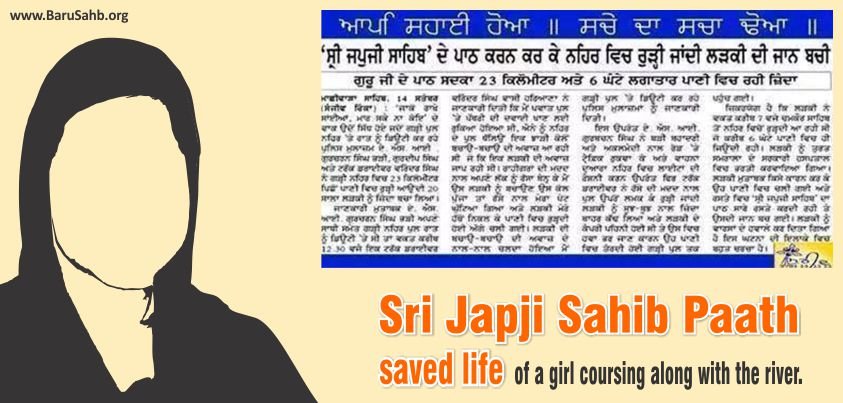
“Sri Japji Sahib Paath” saved life of a girl coursing along with the river!

“He Himself has become my help and support. True is the support of the True Lord.”! “Sri Japji Sahib Paath” saved life of a girl coursing along with the river. With the Grace of Guru Ji’s Paath, the girl stayed alive despite remaining in water for 23 Kilometers and 6 hours. The girl informed that […]

“He Himself has become my help and support. True is the support of the True Lord.”!

“Sri Japji Sahib Paath” saved life of a girl coursing along with the river.

With the Grace of Guru Ji’s Paath, the girl stayed alive despite remaining in water for 23 Kilometers and 6 hours. The girl informed that she kept doing Japji Sahib Paath all the way from Chamkaurh Sahib which saved her.

The 20 year old girl, who was coursing along with the river, was seen by the police officials on duty at ‘Garhi Pul Neher’ at night. A truck driver, who stopped at the pull to take his medicine for curing stone, happened to see the girl who was calling loud for help. The truck driver tried to save the girl using a rope, but failed when the rope cut his stomach, he then contacted police officer on duty at the overpass. The girl was wearing Capri, which got filled with air, because of which she kept floating with the river.

Read the Story here – News Cutting

US schools register with Punjabi university for courses in Gurmat Sangeet, Gurmukhi!

PATIALA: Sikh string instruments and Punjabi language have found yet another taker in the United States. Within a year of launching of online study centre in Gurmat Sangeet (Sikh religious music) by Punjabi university, Patiala, two US schools have registered themselves with the varsity to provide elementary and PG diploma courses in Gurmat Sangeet and […]

PATIALA: Sikh string instruments and Punjabi language have found yet another taker in the United States. Within a year of launching of online study centre in Gurmat Sangeet (Sikh religious music) by Punjabi university, Patiala, two US schools have registered themselves with the varsity to provide elementary and PG diploma courses in Gurmat Sangeet and Gurmukhi (Punjabi script) to students in the US.

One such school, Sikh Garden State, Bridgewater, New Jersey, has already enrolled 53 students for these courses and the second one, The Sikh Centre of the Gulf Coast Area, Inc, Houston, registered itself with the varsity this week.

Gurmat Gyan Online Study Centre of Punjabi University is coordinating with these schools. Gurnam Singh, founder professor and head, Gurmat Sangeet chair, department of Gurmat Sangeet, said the aim was to apprise the second and the third generations of Punjabis settled in the US of Sikh music, Punjabi language and culture.
“Although both the schools are open for admission to kids of every religion and race, so far only Punjabi students are getting training in these schools,” he added.

He said this was the first of its kind initiative taken by any university to promote Sikh music and studies in United States.

“The schools have committed that they would enroll six students in each course, which would be of one to two semesters’ duration. Classes and examinations of the students would be conducted online by Punjabi University staff sitting on Patiala campus,” he said.

The programme would be completely online and students would be trained through the medium of audio-visual. The schools in the US would enroll students, organize weekly classes and help Punjabi University to conduct examination.

~ Source: http://timesofindia.indiatimes.com/

ਵਿਸ਼ਵ ਨਸ਼ਾ ਮੁਕਤੀ ਦਿਵਸ ‘ਤੇ ਵਿਸ਼ੇਸ਼

ਨਸ਼ੇੜੀਆਂ ਲਈ ਨਵੇਂ ਜੀਵਨ ਦੀ ਕਿਰਨ ਅਕਾਲ ਨਸ਼ਾ ਛੁਡਾਓ ਕੇਂਦਰ ਚੀਮਾਂ ਲਾਭ ਰਹਿਤ ਇਸ ਕੇਂਦਰ ‘ਚ ੩੪੮੧ ਪਰਿਵਾਰ ਲਾਭਵਾਨ ਚੀਮਾਂ ਮੰਡੀ, ੨੬ ਜੂਨ (ਜਸਵਿੰਦਰ ਸਿੰਘ ਸ਼ੇਰੋਂ)-ਜ਼ਿਲ੍ਹਾ ਸੰਗਰੂਰ ‘ਚ ਸ ੰਤ ਅਤਰ ਸਿੰਘ ਜੀ ਮਸਤੂਆਣੇ ਵਾਲਿਆਂ ਦੀ ਜਨਮ ਭੂਮੀ ਚੀਮਾਂ ਸਾਹਿਬ ਵਿਖੇ ਕਲਗੀਧਰ ਟ੍ਰਸਟ ਬੜੁ ਸਾਹਿਬ ਵਲੋਂ ਸੰਚਾਲਿਤ ਅਕਾਲ ਨਸ਼ਾ ਛੁਡਾਉ ਕੇਂਦਰ ਨਸ਼ੇੜੀਆਂ ਲਈ ਨਵੇਂ ਜੀਵਨ […]

ਨਸ਼ੇੜੀਆਂ ਲਈ ਨਵੇਂ ਜੀਵਨ ਦੀ ਕਿਰਨ ਅਕਾਲ ਨਸ਼ਾ ਛੁਡਾਓ ਕੇਂਦਰ ਚੀਮਾਂ

ਲਾਭ ਰਹਿਤ ਇਸ ਕੇਂਦਰ ‘ਚ ੩੪੮੧ ਪਰਿਵਾਰ ਲਾਭਵਾਨ

ਵਿਸ਼ਵ ਨਸ਼ਾ ਮੁਕਤੀ ਦਿਵਸ 'ਤੇ ਵਿਸ਼ੇਸ਼

ਚੀਮਾਂ ਮੰਡੀ, ੨੬ ਜੂਨ (ਜਸਵਿੰਦਰ ਸਿੰਘ ਸ਼ੇਰੋਂ)-ਜ਼ਿਲ੍ਹਾ ਸੰਗਰੂਰ ‘ਚ ਸ ੰਤ ਅਤਰ ਸਿੰਘ ਜੀ ਮਸਤੂਆਣੇ ਵਾਲਿਆਂ ਦੀ ਜਨਮ ਭੂਮੀ ਚੀਮਾਂ ਸਾਹਿਬ ਵਿਖੇ ਕਲਗੀਧਰ ਟ੍ਰਸਟ ਬੜੁ ਸਾਹਿਬ ਵਲੋਂ ਸੰਚਾਲਿਤ ਅਕਾਲ ਨਸ਼ਾ ਛੁਡਾਉ ਕੇਂਦਰ ਨਸ਼ੇੜੀਆਂ ਲਈ ਨਵੇਂ ਜੀਵਨ ਦੀ ਕਿਰਨ ਹੈ ਕਿਉਂਕਿ ਸੰਨ ੨੦੦੪ ‘ਚ ਗੁਰਦੁਆਰਾ ਜਨਮ ਅਸਥਾਨ ਸੰਤ ਅਤਰ ਸਿੰਘ ਜੀ ਚੀਮਾਂ ਵਿਖੇ ਬੜੂ ਸਾਹਿਬ ਵਲੋਂ ਸ਼ੁਰੂ ਕੀਤੇ ਇਸ ਕੇਂਦਰ ਦੁਆਰਾ ੩੧ ਮਈ ੨੦੧੪ ਤੱਕ ੩੪੮੧ ਪਰਿਵਾਰ ਲਾਭ ਪ੍ਰਾਪਤ ਕਰ ਚੁੱਕੇ ਹਨ।੨੦੦੭ ‘ਚ ਇਸ ਕੇਂਦਰ ਦੀ ਆਪਣੀ ਨਵੀਂ ਬਿਲਡਿੰਗ ਦਾ ਉਦਘਾਟਨ ਪੰਜਾਬ ਦੇ ਉੱਪ ਮੁੱਖ ਮੰਤਰੀ ਸ੍ਰ. ਸੁਖਬੀਰ ਸਿੰਘ ਬਾਦਲ ਨੇ ਕੀਤਾ।ਬਾਬਾ ਇਕਬਾਲ ਸਿੰਘ ਬੜੂ ਸਾਹਿਬ ਵਾਲਿਆਂ ਦੀ ਪ੍ਰਧਾਨਗੀ ਅਤੇ ਕਰਨਲ ਡਾ. ਰਜਿੰਦਰ ਸਿੰਘ ਦੀ ਦੇਖ-ਰੇਖ ਹੇਠ ਚੱਲ ਰਿਹਾ ਇਹ ਕ ੇਂਦਰ, ਸਰਕਾਰ ਤੋਂ ਮਾਨਤਾ ਪ੍ਰਾਪਤ ਹੈ, ਜਿੱਥੇ ੩੦ ਤੋਂ ੩੫ ਮਰੀਜ਼ਾਂ ਨੂੰ ਰੱਖਣ ਦਾ ਖਾਸ਼ ਪ੍ਰਬੰਧ ਹੈ।ਇੱਥੇ ਇਲਾਜ ਲਈ ਨਛੇੜੀ ਪੰਜਾਬ ਤੋਂ ਇਲਾਵਾ ਹਰਿਆਣਾ, ਯੂ.ਪੀ. ਰਾਜਸਥਾਨ, ਚੰਡੀਗੜ੍ਹ, ਮੋਹਾਲੀ, ਦਿੱਲੀ, ਯੂ.ਕੇ., ਆਸਟ੍ਰੇਲੀਆ ਅਤੇ ਕਨੇਡਾ ਤੋਂ ਆਉਂਦੇ ਹਨ।ਕਈ ਮਰੀਜ਼ ਮਰਜ਼ੀ ਨਾਲ ਨਸ਼ਾ ਛੱਡਣ ਲਈ ਕੇਂਦਰ ‘ਚ ਇਲਾਜ ਲਈ ਆਉਂਦੇ ਹਨ, ਕਈ ਮਰੀਜ਼ਾਂ ਤੋਂ ਦੁੱਖੀ ਹੋਕੇ ਘਰ ਵਾਲੇ ਧੱਕੇ ਨਾਲ ਮਰੀਜ਼ ਛ ੱਡ ਕੇ ਜਾਂਦੇ ਹਨ, ਇਹ ੋ ਜਿਹੇ ਮਰੀਜ਼ਾਂ ਨੂੰ ਮਨੋਵਿਗਿਆਨਿਕ ਮਾਹਿਰਾਂ ਵਲੋਂ ਕਾਂਊਸਲਿੰਗ ਕਰਕੇ ਮਰੀਜ਼ਾਂ ਨੂੰ ਇਲਾਜ ਕਰਵਾਉਣ ਲਈ ਰਾਜੀ ਕੀਤਾ ਜਾਂਦਾ ਹੈ।ਬੇਰੁਜ਼ਗਾਰੀ, ਅੱਲੜਪੁਣਾ, ਬਹੁਤਾ ਪੈਸਾ ਅਤੇ ਮਾਪਿਆਂ ਦੀ ਬੱਚਿਆਂ ਪ ੍ਰਤੀ ਲਾਪਰਵਾਹੀ ਨਸ਼ਿਆਂ ਦਾ ਮੁੱਖ ਕਾਰਨ ਹੈ।


ਨਸ਼ਾ ਛੁਡਾਉਣ ਦੀ ਜੁਗਤਿ: ਕੇਂਦਰ ‘ਚ ਇਲਾਜ ਲਈ ਮਰੀਜ਼ ਨੂੰ ੧ ਮਹੀਨਾ ਰੱਖਿਆ ਜਾਂਦਾ ਹੈ, ਜਿਸ ਦੌਰਾਨ ਮਰੀਜ਼ਾਂ ਨੂੰ ਦਵਾਈਆਂ, ਮਨੋਵਿਗਿਆਨਿਕ ਕਾਂਊਸਲਿ ੰਗ ਅਤੇ ਗੁਰਮਤਿ ਰਾਹੀਂ ਠੀਕ ਕਰਨ ਦਾ ਯਤਨ ਕੀਤਾ ਜਾਂਦਾ ਹੈ। ਸਾਰੇ ਮਰੀਜ਼ ਨੂੰ ਮਾਨਸਿਕ ਤੌਰ ‘ਤੇ ਤੰਦਰੁਸਤ ਰੱਖਣ ਲਈ ਵੀ ਟਾਈਮ ਟੇਬਲ ਅਨੁਸਾਰ ਯੋਗਾ, ਖੇਡਾਂ, ਲਾਇਬ੍ਰੇਰੀ, ਅਖ਼ਬਾਰਾਂ ਅਤੇ ਟੀ.ਵੀ ਦਾ ਵੀ ਖਾਸ ਪ੍ਰਬੰਧ ਹੈ।ਕੋਰਸ ਪੂਰਾ ਹੋਣ ਤੋਂ ਬਾਅਦ ਵੀ ੧ ਸਾਲ ਤੱਕ ਨਸ਼ਾ ਛੱਡਣ ਵਾਲੇ ਮਰੀਜ਼ਾਂ ਅਤੇ ਪਰਿਵਾਰਾਂ ਦੀ ਮਹੀਨੇ ‘ਚ ੨ ਵਾਰ ਕਾa ੂਸਲਿੰਗ ਕੀਤੀ ਜਾਂਦੀ ਹੈ।

ਆਮ ਮਰੀਜ਼ ਅਤੇ ਨਸ਼ੇੜੀ ਮਰੀਜ਼ ‘ਚ ਕੀ ਫਰਕ ਹੈ: ਡਾ. ਰਜਿੰਦਰ ਸਿੰਘ ਨੇ ਦੱਸਿਆ ਕਿ ਇੱਕ ਨਛੇੜੀ ਮਰੀਜ਼ ੧੦ ਦੂਸਰੇ ਆਮ ਮਰੀਜ਼ਾਂ ਦੇ ਬਰਾਬਰ ਹੈ, ਕਿਉਂਕਿ ਨਸ਼ਾ ਕਰਨ ਵਾਲੇ ਮਰੀਜ਼ ਨਸ਼ਾ ਨਾ ਮਿਲਣ ਦੀ ਸੂਰਤ ‘ਚ ਲੂੱਟ- ਖੋਹ, ਚੋਰੀ, ਮਾਰ-ਕੁੱਟ ਅਤੇ ਕਈ ਵਾਰ ‘ਤੇ ਮਾਪਿਆਂ ਦਾ ਕਤਲ ਵੀ ਕਰ ਦਿੰਦਾ ਹੈ, ਅਜਿਹੇ ਮਰੀਜ਼ਾਂ ਦਾ ਇਲਾਜ ਕਰਨ ‘ਚ ਕਾਫ਼ੀ ਮੁਸ਼ਕਿਲ ਆਉਂਦੀ ਹੈ।

ਅਧਿਆਤਮਿਕਤਾ ‘ਤੇ ਜ਼ੋਰ ਦਿੱਤਾ ਜਾਂਦਾ ਹੈ: ਗੁਰਮਤਿ ਤੋਂ ਟੁੱਟੇ ਹੋਣਾ ਵੀ ਨਸ਼ਿਆਂ ਵੱਲ ਨਿਘਾਰ ਦਾ ਇੱਕ ਕਾਰਨ ਹੈ, ਇਸ ਲਈ ਮਰੀਜ਼ਾਂ ਨੂੰ
ਅਧਿਆਤਮਿਕ ਮਾਹੌਲ ਨਾਲ ਜੋੜਨ ਲਈ ਕ ੇਂਦਰ ‘ਚ ਸ ੍ਰੀ ਗੁਰੂ ਗ੍ਰ ੰਥ ਸਾਹਿਬ ਦਾ ਪ੍ਰਕਾਸ਼ ਕੀਤਾ ਹੋਇਆ ਹੈ, ਜਿੱਥੇ ਸਾਰੇ ਮਰੀਜ਼ ਇਕੱਠੇ ਬੈਠ ਕੇ ਸਵੇਰੇ ਸ਼ਾਮ ਨਿਤਨੇਮ, ਸਿਮਰਨ ਅਤੇ ਸੁਖਮਨੀ ਸਾਹਿਬ ਦ ੇ ਪਾਠ ਦੇ ਨਾਲ-ਨਾਲ ਸਹਿਜ ਪਾਠ ਵੀ ਕਰਦੇ ਹਨ।

ਪਹਿਲਾਂ ਅਤੇ ਮੌਜੂਦਾ ਮਰੀਜ਼ਾਂ ‘ਚ ਕੀ ਫਰਕ ਆਇਆ: ਡਾ. ਸਾਹਿਬ ਨੇ ਦੱਸਿਆ ਕਿ ੨੦੦੪ ‘ਚ ਜਦੋਂ ਕੇਂਦਰ ਸ਼ੁਰੂ ਕੀਤਾ, ਉਸ ਸਮੇਂ ਭੁੱਕੀ ਅਤੇ ਅਫ਼ੀਮ ਦਾ ਨਸ਼ਾ ਕਰਨ ਵਾਲੇ, ਗਰੀਬ ਪਰਿਵਾਰਾਂ ਅਤੇ ਪੇਂਡੂ ਪਰਿਵਾਰਾਂ ਚੋਂ ਜ਼ਿਆਦਾਤਰ ਅਨਪੜ ੍ਹ ਬਜ਼ੁਰਗ ਮਰੀਜ਼ ਹੀ ਇਲਾਜ ਕਰਵਾਉਣ ਆਊਂਦੇ ਸਨ।ਪਰ ਮੌਜੂਦਾ ਸਮੇਂ ‘ਚ ਸ਼ਹਿਰਾਂ ਦੇ ਅਣ-ਵਿਆਹੇ, ਪੜ੍ਹੇ-ਲਿਖੇ ਨੌਜਵਾਨ ਲੜਕੇ ਮੈਡੀਕਲ, ਕੈਪਸੂਲ, ਸਰਾਬ, ਸਮੈਕ ਅਤੇ ਹੀਰੋਇਨ ਦਾ ਨਸ਼ਾ ਲੈਣ ਵਾਲੇ ਜ਼ਿਆਦਾ ਹਨ।


ਕਿਹੜੇ ਨਸ਼ੇ ਦੀ ਜ਼ਿਆਦਾ ਵਰਤੋਂ ਹੋ ਰਹੀ ਹੈ:- ਇਸ ਸਮੇਂ ਨੌਜਵਾਨਾਂ ਸ਼ਰਾਬ ਤੋਂ ਇਲਾਵਾ ਸਮੈਕ ਅਤੇ ਹੀਰੋਇਨ ਦੇ ਨਸ਼ੇ ਦਾ ਵਧੇਰੇ ਸੇਵਨ ਕਰਨ ਲੱਗ ਪਏ ਹਨ, ੨੫੦੦ ਰੁ: ਪ੍ਰਤੀ ਗ੍ਰਾਮ ਦੇ ਭਾਅ ਦੀ ਹੀਰੋਇਨ ਨੂੰ ਨਛੇੜੀ ਟੀਕਿਆਂ ਦੇ ਰਾਹੀਂ ਲੈਣ ਲੱਗ ਪਏ ਹਨ। ਜਦੋਂ ਨਛੇੜੀ ਇਕੱਠੇ ਬੈਠ ਕੇ ਟੀਕੇ ਲਗਾਉਂਦੇ ਹਨ ਤਾਂ ਅਕਸਰ ਇੱਕ ਹੀ ਸਰਿੰਜ/ਸੂਈ ਦੀ ਵਰਤੋਂ ਕਰਦੇ ਹਨ, ਜਿਸ ਨਾਲ ਮਰੀਜ਼ਾਂ ‘ਚ ਏਡਜ਼, ਹੈਪੇਟਾਇਟਸ ਸੀ ਅਤੇ ਬੀ ਦੀ ਇਨਫੈਕਸ਼ਨ ਵੀ ਜ਼ਿਆਦਾ ਫੈਲਦੀ ਹੈ। ਕੇਂਦਰ ਦਾ ਮੁੱਖ ਮਕਸਦ: ਉਨ੍ਹਾਂ ਕਿਹਾ ਕਿ ਬਿਨ ੍ਹਾਂ ਕਿਸੇ ਸਰਕਾਰੀ ਸਹਾਇਤਾ ਤੋਂ ਇਹ ਕੇਂਦਰ ਲਾਭ ਰਹਿਤ ਚੱਲ ਰਿਹਾ ਹੈ, ਜਿਸਦਾ ਮੁੱਖ ਉਦੇਸ਼ ਕਮਾਈ ਕਰਨਾ ਨਹੀਂ ਸਗੋਂ ਨਸ਼ਿਆਂ ਦਾ ਸੇਵਨ ਕਰਨ ਵਾਲਿਆਂ ਨੂੰ ਨਸ਼ਾ ਰਹਿਤ ਕਰਕੇ, ਨਸ਼ਾ ਮੁਕਤ ਸਮਾਜ ਦੀ ਸਿਰਜਣਾ ਕਰਨਾ ਹੈ।ਉਨ੍ਹਾਂ ਦੱਸਿਆ ਕਿ ਸੰਸਥਾ ਵਲੋਂ ਅਕਾਲ ਚੈਰੀਟੇਬਲ ਹਸਪਤਾਲ ਬੜੂ ਸਾਹਿਬ ਹਿਮਾਚਲ ਪ੍ਰਦੇਸ਼ ‘ਚ ਵੀ ਨਸ਼ਾ ਛੁਡਾਉ ਕੇਂਦਰ ਸ਼ੁਰੂ ਕੀਤਾ ਗਿਆ ਹੈ।

ਨਸ਼ਿਆਂ ਦਾ ਖਾਤਮਾ ਕਰਕੇ ਪੰਜਾਬ ਦੀ ਨੌਜਵਾਨ ਪੀੜ੍ਹੀ ਨੂੰ ਨਸ਼ਿਆਂ ਤੋਂ ਬਚਾਉਣ ਲਈ ਜਿੱਥੇ ਸਰਕਾਰਾਂ ਨੂੰ ਅਹਿਮ ਉਪਰਾਲੇ ਕਰਨ ਦੀ ਲੋੜ ਹੈ, ਉੱਥੇ ਸਮੂਹ ਸੰਸਥਾਵਾਂ, ਜਥੇਬੰਦੀਆਂ ਅਤੇ ਨਾਗਰਿਕਾਂ ਨੂੰ ਵੀ ਅਪਣੀ ਜਿੰਮੇਵਾਰੀ ਸਮਝਦਿਆਂ ਨਸ਼ਿਆਂ ਪ੍ਰਤੀ ਜਾਗਰੂਕ ਹੋਣ ਅਤੇ ਹੋਰਨਾਂ ਨੂੰ ਜਾਗਰੂਕ ਕਰਕ ਦੀ ਲੋੜ ਹੈ।

~ ਜਸਵਿੰਦਰ ਸਿੰਘ ਸ਼ੇਰੋਂ

The Journey of the Boy with Long Hair!

Tejinder – the name that means divine energy. He was recognized by Sant Kartar Singh Ji Kamaliye Wale, who, when held twenty-one day old Tejinder, had said, “Who will face his aura?” Little did I know what he meant by that. Being a young mother, I thought, I will feed him, play with him, walk […]

Tejinder – the name that means divine energy. He was recognized by Sant Kartar Singh Ji Kamaliye Wale, who, when held twenty-one day old Tejinder, had said, “Who will face his aura?” Little did I know what he meant by that. Being a young mother, I thought, I will feed him, play with him, walk him to school, bring him home, and feed him again.

My husband and I moved to the United States when Tejinder was almost three years old. He spoke Punjabi but no English. Within three months, he unlearned Punjabi and became proficient in English. In school, he was the boy with long hair, teased and harassed by his peers. He had to explain to his teachers and peers what his long hair meant. Sometimes people understood, sometimes they didn’t. Although very trying at times, his Sikh identity kept him focused and away from the many evils that stalk our youth.

We had always told him that he was representing the whole Sikh community, that all Sikhs will be judged by whatever he will do (a tremendous pressure on a young child). He stayed away from any experiments that could have harmed him or distracted him from the path of excellence. In college he was the designated driver for his friends.

He was also a strong willed, argumentative and laid back young boy. He did not believe in studying, because he ‘knew everything’. When I got frustrated, all I could do was yell at him, “I hope you have a son like yourself.” We tried to keep him as busy as possible in activities.

It literally takes a village to raise such a child. Tejinder was supported and loved by the community. Meetpaul Singh and Sameer Singh of Berkeley University started a Big Brother Big Sister Initiative to support young Sikhs. They gave him an avenue to voice his concerns in a protected manner and offered ideas on how to respond to situations in school. Khalsa School San Jose became a strong component of his weekends. It offered him opportunities to learn Punjabi, Sikhi, Gurbani, Kirtan and public speaking though participating in Sri Hemkunt Foundation Symposia. He met other Sikh boys there and realized that he wasn’t alone. Tejinder’s grandparents, uncles, aunts, and cousins from both sides of the family showered him with love. His teachers challenged him to reach his potential. His mentors and bosses gave him guidance and support to excel in college and his career. His friends made sure that he got into trouble, but never so much trouble that he couldn’t get out, which is probably how he learned a lot of the best lessons in life. And so many other members of the community have cared for him and hoped and prayed for his successes.
He became the first Sikh boy with long hair to attend and graduate from Bellarmine College Preparatory in San Jose, CA. They had to change their facial hair policy of 150 years to accommodate the growing beard and mustache on Tejinder’s teen face. They prepared him well to receive a full ride scholarship into Berkeley’s debate team.

The Journey of the Boy with Long Hair to the Supreme Court of the United States of AmericaHis father, Dr. Gurinder Pal Singh always insisted on excellence in everything he did. This did make him afraid of failures and he probably stayed out of many activities like sports, just because he felt he wasn’t excellent in them.
Tejinder had a highly competitive spirit which helped him excel as a debater in high school and college. He and his debate partner Dan Shalmon won the Copeland Award for being the best team in the nation. When Tejinder was studying for LSAT, his father asked him what score he hopes to get on the test. Tejinder quoted a random number. His father seized the opportunity and inquired, “Why not 100%?” Tejinder looked at him as if it was a challenge he was willing to accept. He studied and received full score in LSAT.
Tejinder received admission in many prestigious law schools, including full scholarships to a few. We convinced him to go to Harvard Law School. While at Harvard, he met his future boss, who was a Supreme Court attorney. Now Tejinder works with him in Washington DC in his law firm that works on Supreme Court cases.

On April 28th,2014, Tejinder made his first oral argument in front of the nine Supreme Court Justices. It was an incredible feeling to watch a turbaned lawyer so handsome, so confident and so amazingly powerful in his speech. I, his father, his sister Lilly, and his wife Anna were there as a family and as proud members of the Sikh community. History was made- Tejinder Singh is the first Sikh and turbaned lawyer to have argued a case in the Supreme Court of the United States of America. As a child, he always thought he knew everything . . . well, I guess some things never change. He does!
Tejinder also met his sweetheart Anna at Harvard. They now have a son-who is just like his daddy. Has my wish come true? Yes, it has! It was a beautiful wish from a mother’s heart.

Source – www.sikhfoundation.org

Shaheedi of Banda Singh Ji Bahadur (1670 – 1716)

Banda’s original name was Lachhman Dev. He was born in Kartik 1727 Bikrami Samvat, October-November 1670, four years after the birth of Guru Gobind singh. He belonged either to Kashmir or Punjab. He was a Rajput cultivator. By the time he was just turned 20, his astonishing mind was set on its task. He had […]

Banda’s original name was Lachhman Dev. He was born in Kartik 1727 Bikrami Samvat, October-November 1670, four years after the birth of Guru Gobind singh. He belonged either to Kashmir or Punjab. He was a Rajput cultivator. By the time he was just turned 20, his astonishing mind was set on its task. He had a reputation of being a great hunter. One day he killed a doe which immediately delivered itself of two cubs which expired in his presence. The sight shocked him. He renounced worldly life and became a bairagi sadhu or a wandering hermit and ultimately settled at Nander on the banks of river Godavari in Maharashtra. He won great fame as a sorcerer under the name of Madhodas and commanded thousands of followers.

Guru Gobind Singh went to his hermitage. Madhodas was away. The Guru ordered his disciples to kill a few goats of the Bairagi and cook meat there and then. The matter was reported to Bairagi. The Guru asked him who he was. Madhodas replied, he was Banda or Guru’s slave. The Guru inquired, if he knew whom he was talking to. He said he was none other than Guru Gobind Singh. At that time Banda was 38 years old and Guru ji 42. The Guru encouraged him to give up his present way of living and resume the duties of a real Rajput. In few days the Guru held a durbar, conferred the title of Banda Bahadur on him and appointed him his military lieutenant to punish the Governor of Sarhind who had killed his two youngest sons, and was mainly responsible for the death of his two elder sons, his mother and thousands of Sikhs and Hindus. He was given a council of advisers of Five Sikhs who on their arrival in Punjab were to assure the Sikhs that Banda was Guru’s nominee and deputy to organize them in order to lead an expedition against Sarhind.

At a durbar held at Nander about the middle of September 1708, the Guru conferred the title of Bahadur on Banda and invested him with full political and military authority as his deputy to carry on the national struggle in the Punjab and to punish Wazir Khan of Sarhind and his supporters. He was supplied with a standard arrow and a drum as symbols of temporal authority. He was given an advisory council of five devoted Khalsa: Baj Singh, a descendant of the family of third Guru, Amar Das, his brother Ram Singh, Binod singh, who descended from Guru Angad Dev second Guru, his son Kahan singh and Fateh Singh. Twenty five soldiers were given to him as his bodyguard. A prescript called Hukumnamah or a letter of authority in the handwriting of the Guru instructing Sikhs to join Banda Bahadur in his national war against Mughal tyranny was provided. As an insignia of his temporal authority invested in him, Guru gave Banda Bahadur his own sword, green bow and Five arrows from his quiver. Three hundred Sikh cavaliers in battle array accompanied Banda to a distance of eight kilometers to give him final send off.

Torture and execution of Banda Bahadur by Mughals

Banda Singh’s rule, though short-lived, had a far-reaching impact on the history of the Punjab. With it began the decay of Mughal authority and the demolition of the feudal system of society it had created. Banda Singh increasing influence roused the ire of the Mughal emperor, Bahadur Shah, who journeyed northwards from Deccan to punish Sikhs. Instructions were issued to the governors of Delhi and Oudh and other Mughal officers to march towards Punjab. Prohibitory laws against Sikhs were passed. Fearing that some Sikhs might not have smuggled themselves into the royal camp disguised as Hindus, Bahadur Shah ordered all Hindus employed of imperial forces to shave off their beards. Emperor Bahadur Shah’s order, issued on December 10, 1710 was a general warrant for the faujdars to “kill the worshippers of Nanak, i.e. Sikhs, wherever they are found. (Nanak Prastan ra Har ja kih bayaband baqatl rasanand)” Banda was chased out of Every corner of Punjab and he took refuge in the Shivalik hills.

He got married to daughter of one of the hill chiefs and it was few years before Mughals could trace him down . He again started his campaigns against Mughals and came out of hills to the plains of Punjab. But was overwhelmed by the superior numbers of Mughal forces. As reported to emperor Bahadur Shah on April 28th 1711, (Akhbarat-i-darbar-i-mualla) , “The wretched Nanak-worshipper (Banda Singh) had his camp in the town of Kalanaur (District Gurdaspur). He has promised and proclaimed: “I do not oppress the Muslims.” Any muslim who approaches him, he fixes a daily allowance and wage, and looks after him. He has permitted them to recite khutba and namaz. As such five thousand Muslim have gathered round him. siege_Picture

The massive imperial force drove the Sikhs from Sirhind and other places to take shelter in the fort of Lohgarh in the hilly region. “It is impossible for me,” says Khafi Khan a muslim historian of that time, “to describe the fight which followed. The Sikhs in ther faqir’s dress struck terror into the hearts of the royal troops. The number of casualties among the latter was so large that for a time it appeared as if they were going to lose.”

Further reinforcements arrived and sixty thousand horse and foot closely invested Banda’s hill retreat. For want of provisions, Sikhs were reduced to rigorous straits. They killed their horses for food, and when they could stand up to the enemy no longer, they made desperate nightly sally to escape into the hills of Nahan. Banda was far from vanquished. A hukamnamah, issued by him to his followers within a fortnight of his leaving the fort of Lohgarh, showed the spirit which swayed the Sikhs during those arduous times. The following is an English version of Banda Singh’s letter.

Deg O Teg O Fateh o nusrat bedirang
Yaft Az Nanak Guru Gobind Singh

The kettle and the sword (Symbols of charity and power), victory and blessing have been obtained from Guru Nanak-Gobind Singh. God is one! Victory to the Presence!! This is the order of Sri Sachcha Sahib (The great master) to the entire Khalsa. The Guru will protect you. Call upon the Guru’s name. Your lives will be fruitful!. You are the Khalsa of the great immortal God. On seeing this letter, repair to the presence, wearing five arms. Observe the rules of conduct laid down for the Khalsa. Do not use Bhang, tobocco, Poppy, wine, or any other intoxicant…Commit no theft or adultery. We have brought Satyug (the golden age) Love one another. This is my wish. He who lives according to the rules of Khalsa shall be saved by the Guru.

Torture and execution of Banda Bahadur by Mughals

Banda Singh’s rule, though short-lived, had a far-reaching impact on the history of the Punjab. With it began the decay of Mughal authority and the demolition of the feudal system of society it had created. Banda Singh increasing influence roused the ire of the Mughal emperor, Bahadur Shah, who journeyed northwards from Deccan to punish Sikhs. Instructions were issued to the governors of Delhi and Oudh and other Mughal officers to march towards Punjab. Prohibitory laws against Sikhs were passed. Fearing that some Sikhs might not have smuggled themselves into the royal camp disguised as Hindus, Bahadur Shah ordered all Hindus employed of imperial forces to shave off their beards. Emperor Bahadur Shah’s order, issued on December 10, 1710 was a general warrant for the faujdars to “kill the worshippers of Nanak, i.e. Sikhs, wherever they are found. (Nanak Prastan ra Har ja kih bayaband baqatl rasanand)” Banda was chased out of Every corner of Punjab and he took refuge in the Shivalik hills.

He got married to daughter of one of the hill chiefs and it was few years before Mughals could trace him down . He again started his campaigns against Mughals and came out of hills to the plains of Punjab. But was overwhelmed by the superior numbers of Mughal forces. As reported to emperor Bahadur Shah on April 28th 1711, (Akhbarat-i-darbar-i-mualla) , “The wretched Nanak-worshipper (Banda Singh) had his camp in the town of Kalanaur (District Gurdaspur). He has promised and proclaimed: “I do not oppress the Muslims.” Any muslim who approaches him, he fixes a daily allowance and wage, and looks after him. He has permitted them to recite khutba and namaz. As such five thousand Muslim have gathered round him. siege_Picture

The massive imperial force drove the Sikhs from Sirhind and other places to take shelter in the fort of Lohgarh in the hilly region. “It is impossible for me,” says Khafi Khan a muslim historian of that time, “to describe the fight which followed. The Sikhs in ther faqir’s dress struck terror into the hearts of the royal troops. The number of casualties among the latter was so large that for a time it appeared as if they were going to lose.”

Further reinforcements arrived and sixty thousand horse and foot closely invested Banda’s hill retreat. For want of provisions, Sikhs were reduced to rigorous straits. They killed their horses for food, and when they could stand up to the enemy no longer, they made desperate nightly sally to escape into the hills of Nahan. Banda was far from vanquished. A hukamnamah, issued by him to his followers within a fortnight of his leaving the fort of Lohgarh, showed the spirit which swayed the Sikhs during those arduous times. The following is an English version of Banda Singh’s letter.

Deg O Teg O Fateh o nusrat bedirang
Yaft Az Nanak Guru Gobind Singh

The kettle and the sword (Symbols of charity and power), victory and blessing have been obtained from Guru Nanak-Gobind Singh. God is one! Victory to the Presence!! This is the order of Sri Sachcha Sahib (The great master) to the entire Khalsa. The Guru will protect you. Call upon the Guru’s name. Your lives will be fruitful!. You are the Khalsa of the great immortal God. On seeing this letter, repair to the presence, wearing five arms. Observe the rules of conduct laid down for the Khalsa. Do not use Bhang, tobocco, Poppy, wine, or any other intoxicant…Commit no theft or adultery. We have brought Satyug (the golden age) Love one another. This is my wish. He who lives according to the rules of Khalsa shall be saved by the Guru.

On June 9th , came the turn of Banda Singh. Harshest torments had been reserved for him. His eyes were pulled out and his hands and feet chopped off. His flesh was torn with red hot pincers. The end came, mercifully for him with the executioner’s axe falling on his neck. With his end Sikhism did not die on the contrary Sikhism came out strong and the torch of Banda Singh Bahadur was carried with new Warriors like Nawab Kapur Singh Virk, Sardar Budh Singh, Sardar Charat Singh, Baba Deep Singh ji Shaheed, Sardar Jassa Singh ji Ahluwalia, Maharaja Ranjit Singh, Hari singh Bhangi, etc.

Manas ki jaal sabhai ekai pehchaanbo is the Guru Gobind Singh’s message. which emphatically states “men may call themselves Hindus, Muslims, Emams and Shaffies, but I see them all belonging to one race mankind.” Guru Gobind Singh had given Banda specific orders to punish those who had persecuted good saints like Pir Budhu Shah. He had not mentioned any revenge on those who had executed his own young boys at Sirhind. Hc had expected Bahadur Shah to fulfil his promise to punish those who had committed atrocitics on good men, but had parted company from the Emperor completely disappointed. Banda Singh was then taught to bring to reality the Guru’s own dream!

Source – http://www.sikh-history.com/sikhhist/warriors/banda.html

Share the Historic story through the Social Buttons listed here!