
First Sikh to become Singapore’s ace fighter pilot & also to attain the rank of Brigadier General

Planes cannot take off or land if the runway is hit by mortars and rockets. A damaged runway that is not repaired in time can single-handedly curtail an air force’s operations. A seemingly minor hygiene lapse in the kitchen can similarly jeopardise the entire mission if pilots, technicians, security forces, are down with food poisoning. […]

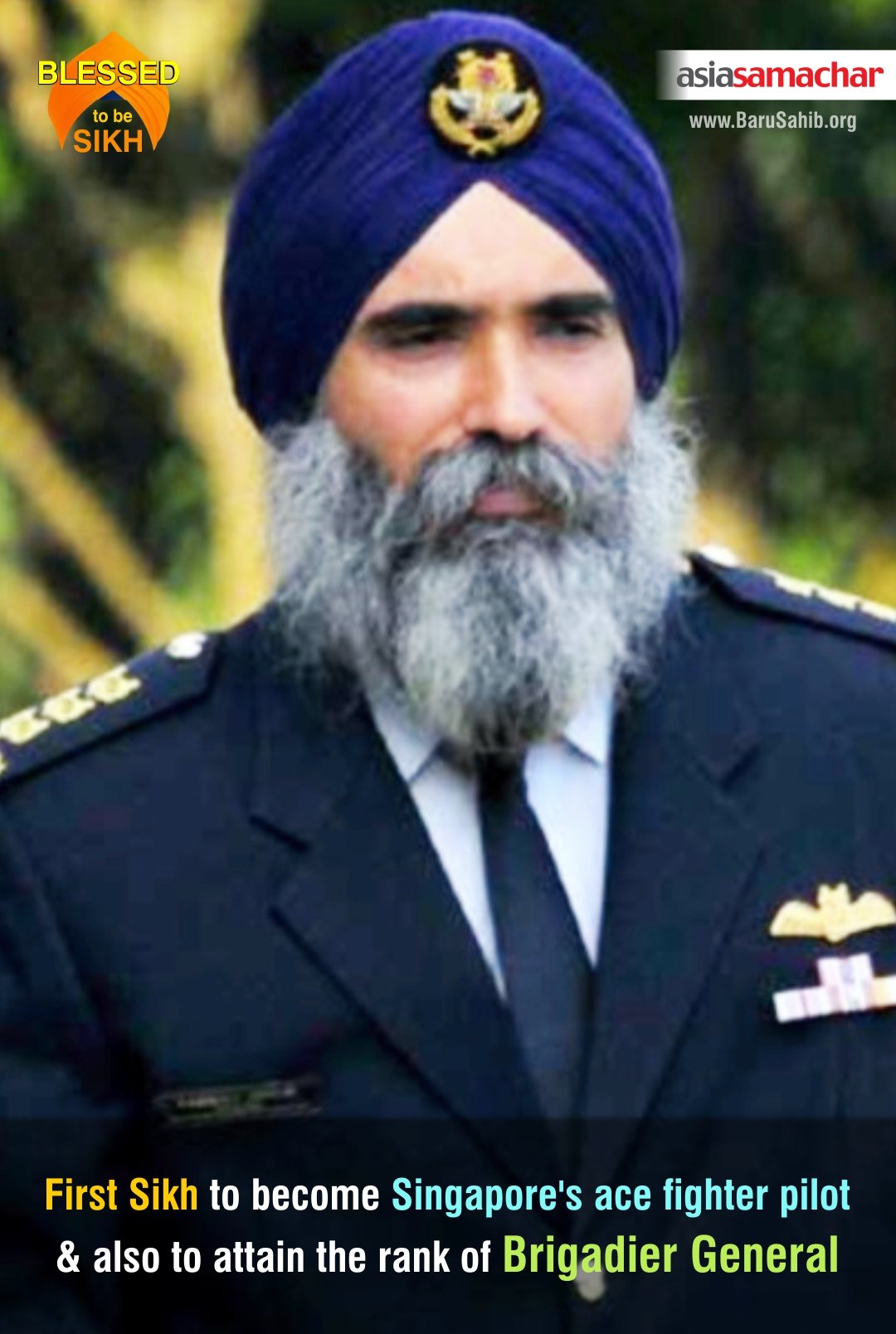
Planes cannot take off or land if the runway is hit by mortars and rockets. A damaged runway that is not repaired in time can single-handedly curtail an air force’s operations. A seemingly minor hygiene lapse in the kitchen can similarly jeopardise the entire mission if pilots, technicians, security forces, are down with food poisoning. Issues like these were starkly clear to Brigadier General (Retired) Sarbjit Singh during his tenure as the Commander of the Air Power Generation Command (APGC), the position with which he culminated an illustrious career of almost 32 years of service in the Republic of Singapore Air Force (RSAF).

Having clearly recognised the breadth of such issues, Sarbjit set out to address them with an equal measure of clear-headedness. For a long time, the general view harboured by many across the various APGC communities was that only the aircrew conducted operations while the rest merely played supporting roles. Naturally, this yielded lackadaisical attitudes on the part of those who believed themselves to be such. Together with his commanders, Sarbjit set out to change this mindset. He made the different communities across APGC realise how they too were “doing operations in their own right” and that should Singapore ever face hostilities, they too would be “at the frontline of operations, fighting the war.” [Interview with Brigadier General (Retired) Sarbjit Singh, August 28, 2015].

While the officers in his headquarters were regularly blazed with doctrines and concepts, Sarbjit’s efforts were targeted at energising all the communities in APGC and getting them on the bandwagon of an operational mindset. He went the whole nine yards, from visiting units to better understand ground realities to renaming squadron names to better reflect the operational roles that they undertake, and even initiating a “tribal dance” that unified all vocations of the APGC. As a consequence of his efforts, he has been highly commended for shaping APGC into a command that truly is capable of generating and sustaining effective and robust air power.

Despite this enduring legacy that Sarbjit leaves the RSAF with, his colleagues attest to how he always redirected the credit to his people. He was driven not by the promise of self-acclaim but by the sincere desire to reduce Singapore’s vulnerability by ensuring that the people at APGC understand their operations and have the capability and confidence to do what it takes if they are ever called into action. His ability to get things done is matched by his abiding humility. While good-natured about it, Sarbjit gently avoided discussion of his strengths.

As much as he is respected as a leader, Sarbjit also occupied an enviable position as an ace fighter pilot. His superb flying skills earned him respect and admiration.

CHASING PLANES

Sarbjit recalls how as a young boy, he “was very interested in planes” and that “somewhere along the years, (he) knew that (he) wanted to be a pilot”. He vividly recollects an incident that is etched into his memory from days even before primary school. He was so taken by chasing planes in the sky that he did not even notice a drain and fell into it. It cost him a broken nose.

With full support from his parents to pursue his passion, Sarbjit started applying to the then-Singapore Junior Flying Club to obtain a private pilot’s licence while he was still studying at Catholic Junior College. He did this in order to “get a leg up to enter the air force.” However, his applications were rejected because he could not get past the medical examinations. What held him back was his heart rate, which refused to come down, due to the sheer thrill he felt of being so close to realising his dream of flying during these medical tests.

Unfazed by the rejections, Sarbjit then applied directly to the RSAF. This time, however, he went for the selection process equipped with the breathing tips that his father had shared with him to calm down and control his heartbeat. Sarbjit was duly accepted into the RSAF well before finishing the first year of junior college. Soon after completing junior college, he joined the force on 17 January 1983, which marked the first date of his long-standing romance with the RSAF. Sarbjit emerged as the top trainee graduating from the 48th Fixed Wing Course, which had a success rate of only 13 percent for fighter pilots. He went on to emerge as the top trainee – and the only graduate – in yet another course, the 15th Tiger Conversion Unit Course.

Sarbjit went on to serve as an operational pilot on the F-5 and later the F-16 aircraft. He progressed on to become a Pilot Attack Instructor and an Officer Commanding before attending the Air Command & Staff College in Maxwell AFB, Montgomery, Alabama, in 1996. On his return, he took over command of the Squadron in Paya Lebar Air Base and, thereafter, became a Branch Head of the Operations Planning Group in Air Operations Department. He attended the Air War College in the United States in 2002 and returned to assume the appointment of Deputy Head Air Operations (Operations Planning) in 2004. Subsequently, he assumed the appointment of Deputy Commander of the Tengah Airbase before becoming the first Commander of the UAV Command when it was stood-up in February 2007. Sarbjit played an instrumental role in the standing up of this brand new command within the RSAF, an unprecedented command which had surprised and bemused many, and has even stirred international interest.

HIGHEST DISTINCTION

Sarbjit graduated with a Bachelor of Science (Political Science), summa cum laude, from Auburn University Montgomery, Alabama, United States. In recognition of his outstanding contributions and dedicated service, Sarbjit has been awarded several military medals throughout his career, including the Public Administration Medal (Bronze) (Military) in 2008.

Sarbjit’s deep passion for people under his command was reflected in the length of his debrief sessions. His penchant for lengthy debrief sessions, which were, at times, dreaded, but on the whole appreciated, showed how his fighter-pilot sharpness did not leave him when he left the cockpit. His constructive dissatisfaction during meetings ensured that he upheld the most stringent standards, expecting nothing short of the best from his teams. Not only did he hold others to high standards, but also did he lead by example: it is in Sarbjit that meticulousness and clarity of expression, so prized in most jobs, find their fully expressed potential. He took pains to undertake detailed reviews of mundane things which were important to his people, ranging from ensuring high standards in both the work and the rest environments to reviewing individual posting plans.

As part of the effort to forge the Air Force tribe, Sarbjit led his team in the successful organisation of the SAF Day Parade 2009 and 2013, the RSAF Open House 2011, the National Service 45th Anniversary Dinner, the RSAF 45th Anniversary Parade, the RSAF45@Singapore Airshow and the RSAF45@Heartlands events.

As the leader that he was, who always had his people close to heart, Sarbjit introduced multiple initiatives to nurture individuals into competent airmen. He instituted an engagement framework to raise the commitment and competency of national servicemen through meaningful employment, dedicated training roadmap, and empowerment of the individual. He also initiated a Family-at-Work programme, which allowed family members to witness what their loved ones do while at work. The initiative also sought to express gratitude for the families’ love and support – the love and support that Sarbjit is only too familiar with in the form of his wife, Bhupinder Kaur, their two daughters, Namjot Kaur and Anand Kaur, and son, Mohkam Singh.

Sarbjit retired from the RSAF on 29 October 2014. He has made history as the first Sikh in the world to have become an operational pilot on the F5 and F16 aircraft, the first Sikh in Singapore to have commanded a fighter squadron initially and later two commands, and the first Sikh in the RSAF to have attained the rank of a Brigadier General.

Source- AsiaSamachar

अमृतसर के अनमोल शेर सिंह बेदी सिविल सेवा परीक्षा में दूसरे नंबर पर रहे

अमृतसर के अनमोल शेर सिंह बेदी सिविल सेवा परीक्षा में दूसरे नंबर पर रहे. खास बात ये है कि उनका ये पहला ही प्रयास था. वे भारतीय विदेश सेवा में जाना चाहते हैं. टॉपर्स में उनका नाम शामिल होने के बाद से लड्डू खाने और बधाइंया मिलने का जो सिलसिला उनके साथ में शुरू हुआ […]

अमृतसर के अनमोल शेर सिंह बेदी सिविल सेवा परीक्षा में दूसरे नंबर पर रहे. खास बात ये है कि उनका ये पहला ही प्रयास था. वे भारतीय विदेश सेवा में जाना चाहते हैं. टॉपर्स में उनका नाम शामिल होने के बाद से लड्डू खाने और बधाइंया मिलने का जो सिलसिला उनके साथ में शुरू हुआ है, वो खत्म होने का नाम नहीं ले रहा.

पुरुषों में नंबर वन बने अनमोल

अनमोल शेर सिंह बेदी पंजाब के अमृतसर के रहने वाले हैं. 23 साल के अनमोल ने इस साल की सिविल सेवा परीक्षा में पुरूषों में नंबर वन रहे. खास बात ये है कि उन्होंने ये कारनामा पहले ही प्रयास में कर दिखाया है. उन्होंने दिल्ली में रहकर सिविल सेवा परीक्षा की तैयारी की थी. शुरु से ही उनका ध्यान किताबों की तरफ रहा है. खाली वक्त में उन्हें किताबें पढ़ना बेहद पसंद है.

उन्होंने 12वीं तक पढ़ाई अमृतसर के स्प्रिंगडेल स्कूल से की है. इसके बाद उन्होंने राजस्थान के BITS पिलानी से कंप्यूटर इंजीनियरिंग की पढ़ाई की है. उनका कहना है कि वे भारतीय विदेश सेवा में जाना चाहते हैं. अनमोल के पिता पेशे से प्रोफेसर हैं और मां एक एनजीओ के साथ काम करती हैं. जब से उन्हें उनके रिजल्ट के बारे में सुना है, उनकी खुशी का ठिकाना नहीं है. दोनों ने अनमोल की इस सफलता का श्रेय भगवान को दिया है. उनका कहना है कि उनकी बहन ने इस मुकाम पर पहुंचने में उनकी काफी मदद की है.

1099 छात्रों ने पास की है ये परीक्षा

UPSC की सिविल सेवा परीक्षा से देश में IAS, IFS और IPS अफसर चुने जाते हैं. इस बार 1099 छात्रों ने ये परीक्षा पास की है. जिसमें से 180 छात्र IAS बनेंगे. 45 छात्र IFS यानि भारतीय विदेश सेवा का हिस्सा होंगे, वहीं 150 छात्र IPS बनाए जाएंगे और इनके अलावा 834 छात्रों को सेंट्रल ग्रुप के ए और बी सर्विस का हिस्सा बनाया जाएगा.

अमृतसर के अनमोल शेर सिंह बेदी सिविल सेवा परीक्षा में दूसरे नंबर पर रहे

अमृतसर के अनमोल शेर सिंह बेदी सिविल सेवा परीक्षा में दूसरे नंबर पर रहे. खास बात ये है कि उनका ये पहला ही प्रयास था. वे भारतीय विदेश सेवा में जाना चाहते हैं. टॉपर्स में उनका नाम शामिल होने के बाद से लड्डू खाने और बधाइंया मिलने का जो सिलसिला उनके साथ में शुरू हुआ […]

अमृतसर के अनमोल शेर सिंह बेदी सिविल सेवा परीक्षा में दूसरे नंबर पर रहे. खास बात ये है कि उनका ये पहला ही प्रयास था. वे भारतीय विदेश सेवा में जाना चाहते हैं. टॉपर्स में उनका नाम शामिल होने के बाद से लड्डू खाने और बधाइंया मिलने का जो सिलसिला उनके साथ में शुरू हुआ है, वो खत्म होने का नाम नहीं ले रहा.

पुरुषों में नंबर वन बने अनमोल

अनमोल शेर सिंह बेदी पंजाब के अमृतसर के रहने वाले हैं. 23 साल के अनमोल ने इस साल की सिविल सेवा परीक्षा में पुरूषों में नंबर वन रहे. खास बात ये है कि उन्होंने ये कारनामा पहले ही प्रयास में कर दिखाया है. उन्होंने दिल्ली में रहकर सिविल सेवा परीक्षा की तैयारी की थी. शुरु से ही उनका ध्यान किताबों की तरफ रहा है. खाली वक्त में उन्हें किताबें पढ़ना बेहद पसंद है.

उन्होंने 12वीं तक पढ़ाई अमृतसर के स्प्रिंगडेल स्कूल से की है. इसके बाद उन्होंने राजस्थान के BITS पिलानी से कंप्यूटर इंजीनियरिंग की पढ़ाई की है. उनका कहना है कि वे भारतीय विदेश सेवा में जाना चाहते हैं. अनमोल के पिता पेशे से प्रोफेसर हैं और मां एक एनजीओ के साथ काम करती हैं. जब से उन्हें उनके रिजल्ट के बारे में सुना है, उनकी खुशी का ठिकाना नहीं है. दोनों ने अनमोल की इस सफलता का श्रेय भगवान को दिया है. उनका कहना है कि उनकी बहन ने इस मुकाम पर पहुंचने में उनकी काफी मदद की है.

1099 छात्रों ने पास की है ये परीक्षा

UPSC की सिविल सेवा परीक्षा से देश में IAS, IFS और IPS अफसर चुने जाते हैं. इस बार 1099 छात्रों ने ये परीक्षा पास की है. जिसमें से 180 छात्र IAS बनेंगे. 45 छात्र IFS यानि भारतीय विदेश सेवा का हिस्सा होंगे, वहीं 150 छात्र IPS बनाए जाएंगे और इनके अलावा 834 छात्रों को सेंट्रल ग्रुप के ए और बी सर्विस का हिस्सा बनाया जाएगा.

This Sacred Shrine in Delhi has become more than a place of Worship!

“Bangla Sahib Road,” I would tell the cab driver, adding, quite unnecessarily, “Wahan jo gurudwara hai, na? Wahin.” (You know the gurudwara there?). Despite staying more than once at a hotel across the road from the famous Sikh shrine and having lived in New Delhi for some years, and spending many aimless hours at the […]

“Bangla Sahib Road,” I would tell the cab driver, adding, quite unnecessarily, “Wahan jo gurudwara hai, na? Wahin.” (You know the gurudwara there?). Despite staying more than once at a hotel across the road from the famous Sikh shrine and having lived in New Delhi for some years, and spending many aimless hours at the nearby Connaught Place, I never once made it to the Bangla Sahib. Till a recent trip, when my husband and I had a quiet evening to ourselves, I found myself messaging a friend to ask if she might suggest a gurudwara that we could visit. Bangla Sahib and Rakab Ganj, she said. Go early in the morning, she added, or late in the evening, when it is less crowded, and sit by the beautiful Sarovar.

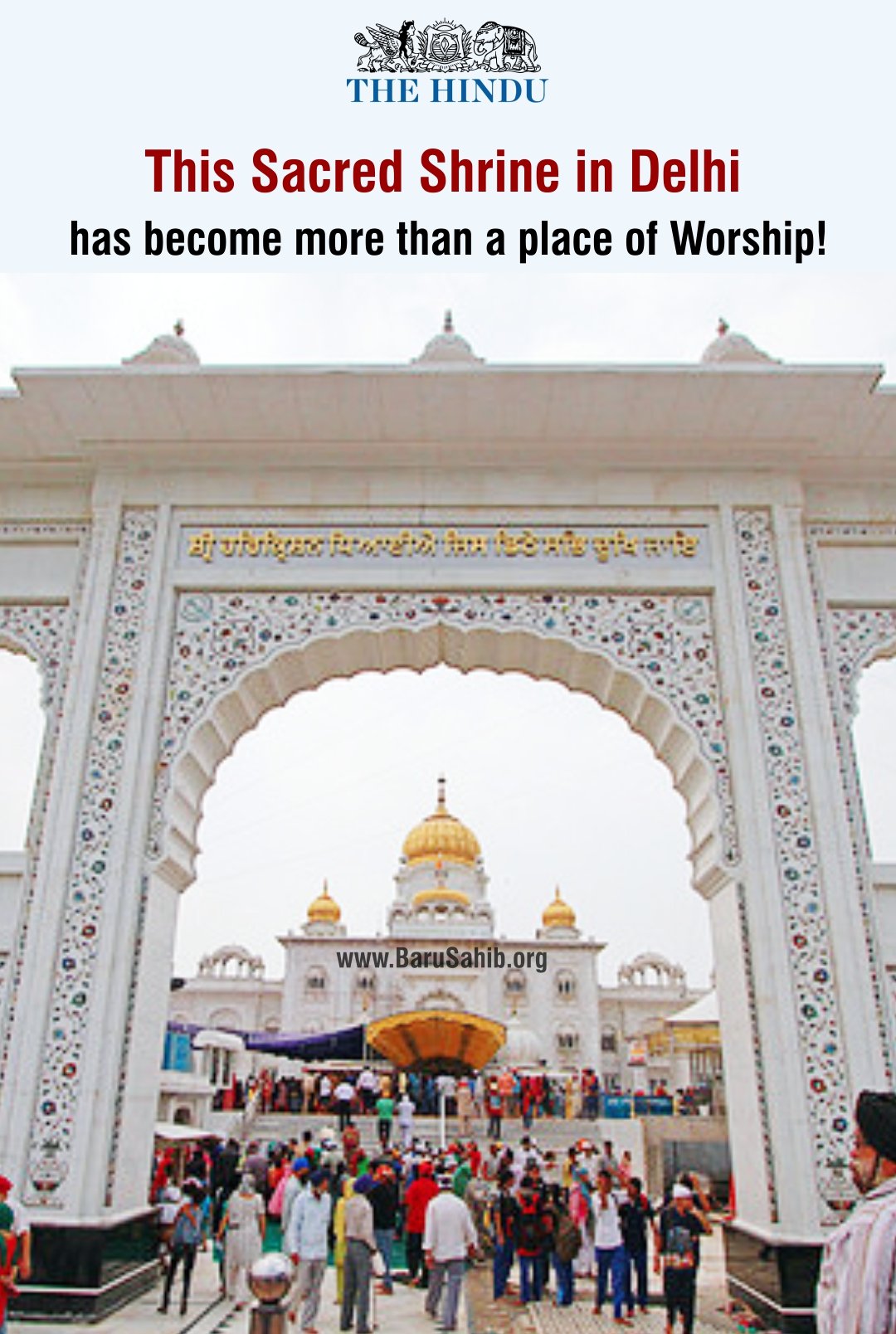
Bangla Sahib is actually situated in a magnificent old estate at the eastern intersection of Baba Kharak Singh Marg and Ashoka Road and, somewhat late on a weekday evening, we joined a ceaseless flow of devotees past enormous arches set with splendid marble inlay work into a vast, self-contained complex in the heart of the national capital.

Open round the clock, offering shelter in the spirit of service, the impeccably tidy gurudwara complex also houses a library, school, hospital, art gallery, and the Baba Baghel Singh Sikh Heritage Museum, named after the warrior who supervised its construction.

Bangla Sahib was once the 17th century haveli or bungalow (thus the name) of Mirza Raja Jai Singh, an important military overlord of the Mughal emperor Aurangzeb. Also known as the Jaisinghpura Palace, the historic neighbourhood was demolished by the British to create the circular Connaught Place shopping district, displacing most of its original residents. The saffron-draped Nishan Sahib, the flagstaff signifying the presence of a gurudwara, is befittingly imposing here.

We had just reached the counter manned by karsevaks to hand over our footwear when everyone fell silent in prayer. The sevaks too turned away from the counter to offer their obeisance to the Guru. A dapper Sikh office-goer standing next to us, with laptop bag hung over one shoulder, gestured politely for silence. The routine was restored shortly and we continued up the short flight of stairs towards the gilded hall of worship.

Remarkably, we weren’t once heckled or hurried even though many sought darshan. I was once again struck by the bedrock of spiritual courage and quiet acceptance that prevails in gurudwaras, whether large or small. I had felt it in the modest Army-maintained Gurudwara Charan Kamal Sahib by the freezing banks of the Suru in Kargil, where Guru Nanak Dev, the first of the ten great Sikh gurus, stayed on his journey from Kashmir to Punjab and in bustling Gurudwara Sahib Manikaran in Himachal Pradesh’s Kullu Valley, where the founder guru of Sikhism discovered hot springs in which food could be cooked in the absence of fire.

My memory of a visit to Harminder Sahib, the iconic Golden Temple in Amritsar, is unfortunately lost to the fuzziness of childhood, and serves to remind me that I must go again.

The freshly prepared karah parshad (tokens may be purchased for multiples of Rs. 10) is a delicious halwa made of wheat flour, sugar and ghee. A simple vegetarian meal of rotis, dal, vegetables and kheer is served by volunteers at the langar, the Sikh tradition of offering food as an act of devotion to anyone who needs it.

It was wonderful to sit among families listening to a group of statuesque Khalsas rendering kirtans sonorously under the canopy by the Granth Sahib and, later still, to spend time by the huge Sarovar, full of plump fish. This sacred tank, known to have medicinal qualities, was once the well from which the eighth guru Har Krishan drew water as he cared for the many who took ill in an epidemic of smallpox and cholera in 1664, and he too succumbed in the same year. Raja Jai Singh later donated the grand property as a tribute to the selfless guru.

When we returned to collect our footwear, we found the Sikh gentleman whom we had met earlier behind the counter, volunteering with a jaunty wave of recognition. We were smiling as we made our way out.

Source- The Hindu

This Sacred Shrine in Delhi has become more than a place of Worship!

“Bangla Sahib Road,” I would tell the cab driver, adding, quite unnecessarily, “Wahan jo gurudwara hai, na? Wahin.” (You know the gurudwara there?). Despite staying more than once at a hotel across the road from the famous Sikh shrine and having lived in New Delhi for some years, and spending many aimless hours at the […]

“Bangla Sahib Road,” I would tell the cab driver, adding, quite unnecessarily, “Wahan jo gurudwara hai, na? Wahin.” (You know the gurudwara there?). Despite staying more than once at a hotel across the road from the famous Sikh shrine and having lived in New Delhi for some years, and spending many aimless hours at the nearby Connaught Place, I never once made it to the Bangla Sahib. Till a recent trip, when my husband and I had a quiet evening to ourselves, I found myself messaging a friend to ask if she might suggest a gurudwara that we could visit. Bangla Sahib and Rakab Ganj, she said. Go early in the morning, she added, or late in the evening, when it is less crowded, and sit by the beautiful Sarovar.

Bangla Sahib is actually situated in a magnificent old estate at the eastern intersection of Baba Kharak Singh Marg and Ashoka Road and, somewhat late on a weekday evening, we joined a ceaseless flow of devotees past enormous arches set with splendid marble inlay work into a vast, self-contained complex in the heart of the national capital.

Open round the clock, offering shelter in the spirit of service, the impeccably tidy gurudwara complex also houses a library, school, hospital, art gallery, and the Baba Baghel Singh Sikh Heritage Museum, named after the warrior who supervised its construction.

Bangla Sahib was once the 17th century haveli or bungalow (thus the name) of Mirza Raja Jai Singh, an important military overlord of the Mughal emperor Aurangzeb. Also known as the Jaisinghpura Palace, the historic neighbourhood was demolished by the British to create the circular Connaught Place shopping district, displacing most of its original residents. The saffron-draped Nishan Sahib, the flagstaff signifying the presence of a gurudwara, is befittingly imposing here.

We had just reached the counter manned by karsevaks to hand over our footwear when everyone fell silent in prayer. The sevaks too turned away from the counter to offer their obeisance to the Guru. A dapper Sikh office-goer standing next to us, with laptop bag hung over one shoulder, gestured politely for silence. The routine was restored shortly and we continued up the short flight of stairs towards the gilded hall of worship.

Remarkably, we weren’t once heckled or hurried even though many sought darshan. I was once again struck by the bedrock of spiritual courage and quiet acceptance that prevails in gurudwaras, whether large or small. I had felt it in the modest Army-maintained Gurudwara Charan Kamal Sahib by the freezing banks of the Suru in Kargil, where Guru Nanak Dev, the first of the ten great Sikh gurus, stayed on his journey from Kashmir to Punjab and in bustling Gurudwara Sahib Manikaran in Himachal Pradesh’s Kullu Valley, where the founder guru of Sikhism discovered hot springs in which food could be cooked in the absence of fire.

My memory of a visit to Harminder Sahib, the iconic Golden Temple in Amritsar, is unfortunately lost to the fuzziness of childhood, and serves to remind me that I must go again.

The freshly prepared karah parshad (tokens may be purchased for multiples of Rs. 10) is a delicious halwa made of wheat flour, sugar and ghee. A simple vegetarian meal of rotis, dal, vegetables and kheer is served by volunteers at the langar, the Sikh tradition of offering food as an act of devotion to anyone who needs it.

It was wonderful to sit among families listening to a group of statuesque Khalsas rendering kirtans sonorously under the canopy by the Granth Sahib and, later still, to spend time by the huge Sarovar, full of plump fish. This sacred tank, known to have medicinal qualities, was once the well from which the eighth guru Har Krishan drew water as he cared for the many who took ill in an epidemic of smallpox and cholera in 1664, and he too succumbed in the same year. Raja Jai Singh later donated the grand property as a tribute to the selfless guru.

When we returned to collect our footwear, we found the Sikh gentleman whom we had met earlier behind the counter, volunteering with a jaunty wave of recognition. We were smiling as we made our way out.

Source- The Hindu

Malaysia is the 3rd country in the WORLD to depict Gurdwara Sahib on a Stamp

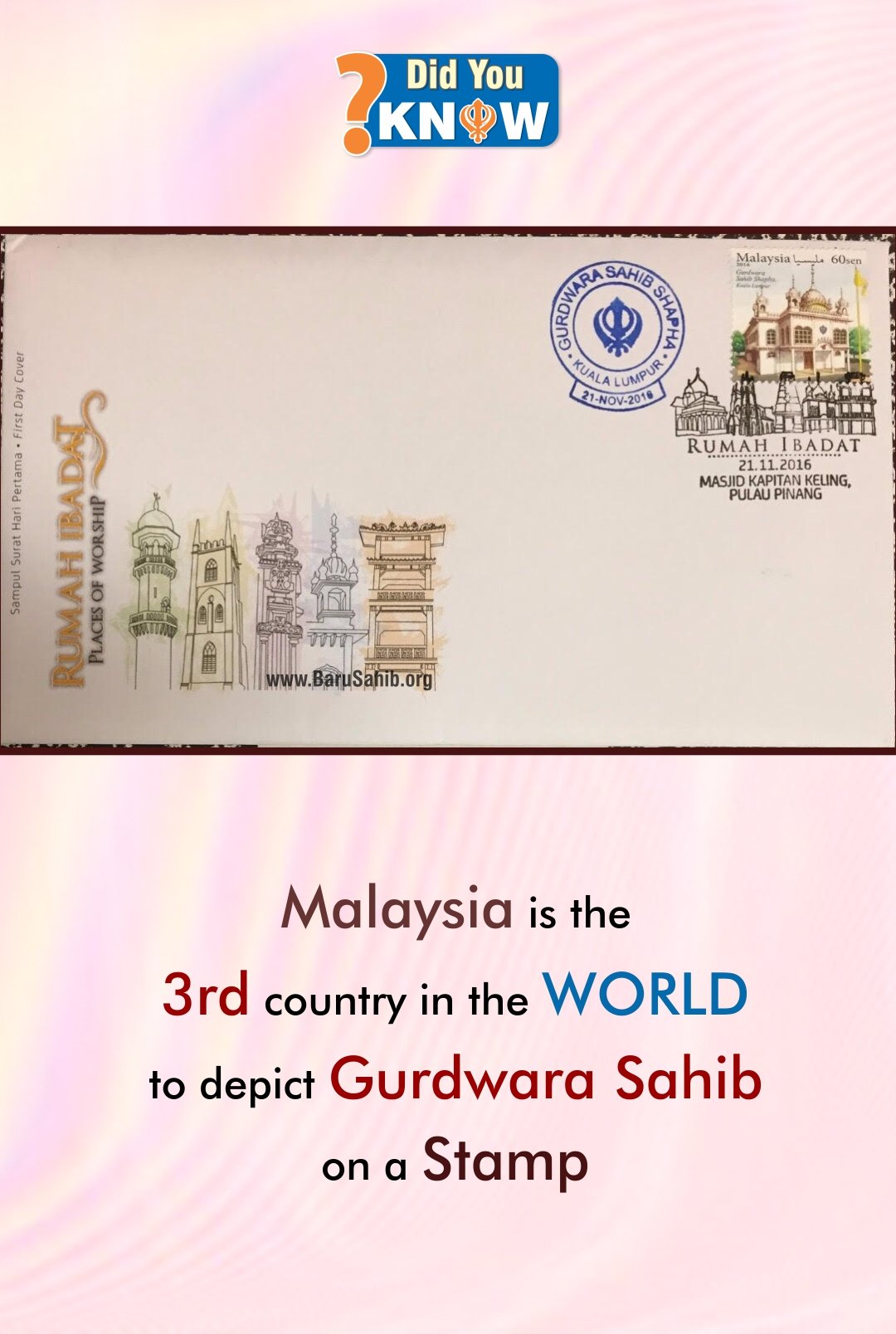
The Malaysian Government and the Postal Department has gratefully honored the Sikh community by depicting Gurdwara Sahib Shapha on the RM 0.60 postage stamp. It was officially launched on the 21st November 2016 at Masjid Kapitan Kling, Penang. A First Day Cover (FDC) depicting the five major places of worship namely Islam, Buddhism, Christianity, Hinduism […]

The Malaysian Government and the Postal Department has gratefully honored the Sikh community by depicting Gurdwara Sahib Shapha on the RM 0.60 postage stamp.

It was officially launched on the 21st November 2016 at Masjid Kapitan Kling, Penang. A First Day Cover (FDC) depicting the five major places of worship namely Islam, Buddhism, Christianity, Hinduism and Sikhism was released on the same date.

It is of historic interest that Malaysia is the third country in the world (outside of India) to depict the Gurdwara Sahib on a postal stamp. The first country was Pakistan which issued Rupees 5 postage stamp of Gurdwara Dera Sahib, Lahore in 2006 to commemorate the 400th Anniversary of the Martyrdome of Sri Guru Arjun dev Ji (1606 – 2006). The second country was Uganda which issued the 3,400 shillings postage stamp in 2014 to commemorate the centenary of Gurdwara Sri Guru Singh Sabha (1913 – 2013) in Kampala.

In the last 80 years, India has only issued postage stamps depicting five (5) Gurdwara’s in India and one (1) in Pakistan.

Gurdwara Sahib Shapha was built in the early 1930s in Jalan Chan Sow Lin to serve the religious needs of the Sikh community in this area. Most of the Sikhs were employed in the engineering workshops (known as Shapha in Punjabi)

This Gurdwara Sahib was relocated by the Government to its present site in Jalan Sungai Besi in the year 1987. The building was extensively renovated between 2009 to 2011. The facade of the Gurdwara Sahib is based on traditional Sikh architecture which is reminiscent of the Gurdwaras in Punjab, India.

The Sikh Holy Scripture , Sri Guru Granth Sahib Ji is enshrined in the Darber Sahib (prayer hall) of this Gurdwara Sahib. The xantic (Besanti) colored Nishan Sahib (Flag) in the compound of the Gurdwara signifies that this is a place of worship and becons as a sign of welcome.

The Malaysian Governments depiction of the Gurdwara Sahib Shapha on a postage stamp is a testimony of its tolerance of the freedom of worship of not only Islam but all other religions as well.

The Sikh community, though a small number, has always served this country with distinction. The writer, Saran Singh, is honored to have played a role in this important event on behalf of the Sikh community in Malaysia. He was approached by the postal services to help identify Gurdwaras that would fit the tough selection criteria set by the government and postal services. Various Gurdwaras were selected and submitted. The final decision of course lay in the hands of the Malaysian Postal Services. Saran Singh was recognized by the Sikh Community in December’ 2016 for this very special service to the community.

All the Sikh stamps and FDC were sold out within the very first day.