10 things Everyone Should Know About Sikhism – By Simranjeet Singh

Despite being one of the world’s largest world religions, Sikhism remains one of the most unknown traditions in America. The lack of understanding has led to serious consequences, including discriminatory policies, bigoted stereotypes, traumatic school bullying and violent hate crimes. Here is a list of 10 things that the global community ought to know about […]

Despite being one of the world’s largest world religions, Sikhism remains one of the most unknown traditions in America. The lack of understanding has led to serious consequences, including discriminatory policies, bigoted stereotypes, traumatic school bullying and violent hate crimes.

Here is a list of 10 things that the global community ought to know about its Sikh neighbors.

1. Sikhism is an independent religion.

A number of people mistakenly think Sikhism is an offshoot of Hinduism, an offshoot of Islam, or a blend of the two religions.While the category of religion is itself problematic, scholars and practitioners alike classify Sikhism as an independent religion.

The Sikh tradition carries the basic markers of organized religion, including its own founder-prophet (Guru Nanak), scripture (Guru Granth Sahib), discipline and ceremonies (rahit), and community centers (gurdwara). There are more than 27 million Sikhs worldwide, making it the fifth largest world religion.

2. Rooted in oneness and love, Sikh theology encourages a life of spirituality and service.

Oneness and love serve as the foundations of Sikh theology — these are both the objective and process. Sikhs aim to recognize the divinity within everyone and everything they encounter, and this daily practice helps the individual cultivate and embody the qualities of oneness and love.

Sikhs believe that the Creator permeates all of Creation and that every individual is filled with the same divine potential. The Sikh tradition emphasizes the collective family hood of all humanity and challenges all social inequalities, including those on the basis of class, caste, gender, and profession.

Realizing oneness and love within one’s life also compels the individual to seek unity with the world around them. The tradition urges its followers to live as a sant-sipahi (warrior-saint), one who strikes a balance of cultivating spirituality while also contributing socially through community service.

3. The real meaning of “guru.”

The word “guru” literally means “enlightener,” and while it has come to refer to an expert in any domain (e.g., basketball guru, real estate guru), it carries a particular institutional meaning within the Sikh tradition. In Sikhism, “guru” refers to the line of authority, beginning with a set of 10 prophets who established and led the Sikh community. The first of these, Guru Nanak, was born in 1469 CE, and the tenth in his line, Guru Gobind Singh, breathed his last in 1708 CE.

Before he passed, Guru Gobind Singh passed the leadership to joint entities — the Guru Granth Sahib (the scriptural canon) and the Guru Khalsa Panth (the community of initiated Sikhs). Sikhs revere these two as occupying the throne of the Guru for eternity.

4. The Guru Granth Sahib is a unique scripture.

The authority accorded to the Guru Granth Sahib certainly sets it apart from other scriptural texts of the major world religions. The Guru Granth Sahib also defies common expectations of scripture in other ways.

The Guru Granth Sahib was compiled by the Sikh Gurus themselves and is primarily comprised of writings composed by the Gurus. This collection also includes the devotional writings of other religious figures, including Muslim Sufis and Hindu Bhaktas.

Unlike the prose narratives that make up a majority of western scriptures, the Guru Granth Sahib is made up entirely of devotional poetry, most of which is set to music. These writings are primarily made up of expressions of divine experiences and wisdom on religious cultivation. These writings have played a central role in Sikh practice since the time of Guru Nanak — Sikh worship consists of singing these compositions in both private and congregational settings.

5. The Sikh Gurus presented a pluralistic worldview.

As evidenced by the inclusion of writings from other religious figured within the Guru Granth Sahib, the Sikh Gurus did not believe in religious exclusivism. Rather, their pluralistic worldview posited that one could reach the Realization from any religious tradition. Sikhism teaches that diverse paths can lead to the divine, as long as the individual traverses the path with love. Because of this pluralistic outlook, Sikhism has no real history of missionizing or proselytizing.

While some misinterpret this pluralism as promoting cultural relativism, it is important to note that the Gurus also emphasized the importance of following an accomplished leader and maintaining religious discipline. Sikhism does not encourage the increasingly popular models of “a la carte religion” or “spiritual-but-not-religious,” though admittedly Sikh jurisprudence is relatively less complex than most religious traditions.

6. Sikhs have a long history of standing for justice.

Guru Nanak modeled social engagement by critiquing social inequalities, building institutions that serve and empower the disenfranchised, and publicly critiquing political oppression. The subsequent Gurus preserved and built upon the foundations laid by Guru Nanak. For example, the ninth among them, Guru Tegh Bahadur, observed Mughal state authorities forcefully converting its Hindu constituents. Although this oppression targeted a religious community to which he did not belong and whose beliefs he did not share, Guru Tegh Bahadur stood up firmly for their right to practice religion freely — and the state responded by publicly executing Guru Tegh Bahadur.

The Sikh community has drawn inspiration and guidance from such examples over the years, and it has demonstrated a commitment to justice in various ways. Sikhs are taught to defend the defenseless and have historically led responses to political oppression. Sikhs have therefore been regularly targeted by the political elite, a cycle that continues to play out in present-day India.

7. Sikhs maintain a unique identity.

Since the formative moments of the tradition, Sikhs have maintained a physical identity that makes them stand out in public, even in the context of South Asia. This identity includes five articles of faith — kesh (unshorn hair), kanga (small comb), kara (steel bracelet), kirpan (religious article resembling a knife), and kachera (soldier-shorts) — and distinguishes someone who has formally committed to the values of the faith by accepting initiation.

While many have attempted to ascribe functionalist rationales for each of these articles, these understandings do not capture the connections that Sikhs have with these articles. Perhaps the best analogy (though admittedly an imperfect one) is that of a wedding ring: one cannot reduce the significance of a wedding ring to its instrumental value; rather, one cherishes the wedding ring because it is a gift of love from one’s partner. Similarly, Sikhs cherish their articles of faith primarily because they see them as a gift from their beloved Guru. Trying to understand these articles on the basis of their function is missing the point.

Perhaps the most visible aspect of the Sikh identity is the turban, which can be worn by men and women alike. The turban was historically worn by royalty in South Asia, and the Gurus adopted this practice as a way of asserting the sovereignty and equality of all people. For a Sikh, wearing a turban asserts a public commitment to maintaining the values and ethics of the tradition, including service, compassion, and honesty.

8. Sikhism believes in absolute equality.

Sikhism was founded on the concept of oneness and justice, and the Gurus adamantly rejected all social inequalities. While women continue to be subjugated in modern South Asia, the Sikh Gurus rebuked discriminatory practices that marginalized women (e.g., sati, purdah) and openly placed women in leadership positions.

Along these lines, the Gurus established new practices to challenge social norms, such as India’s caste system, that perpetuated social inequalities. For instance, the tenth Guru asked all Sikhs to abandon their last names — which identified one’s caste — and asked them all to take on a collective last name reserved for royal families to signify the inherent equality and nobility of every individual: Kaur for women and Singh for men. Similarly, the Gurus established the institution of langar, a free meal provided at the gurdwara that is open to one and all. During this meal, everyone sits together on the ground, regardless of caste, social status, gender, or religious background.

9. Darbar Sahib of Amritsar is the epicenter of the Sikh psyche.

Known to westerners as the Golden Temple, Darbar Sahib of Amritsar, Punjab has served as the center for the Sikh community since its founding more than four centuries ago. Sikh theologian Sirdar Kapur Singh referred to Darbar Sahib as “the theo-political capital of Sikhs.” This phrase captures the role of this site as both a spiritual center where the community gathers to worship as well as a political throne where collective decisions have been made.

It is inaccurate to refer to Darbar Sahib as “a sacred space” or as “Sikhism’s holiest site.” Sikh theology recognizes that divinity permeates the entire world equally and therefore does not recognize any particular space to be uniquely sacred or holy. At the same time, Darbar Sahib does occupy a special place in the collective Sikh psyche. The site has witnessed a number of significant historical events, from the return of the sixth Guru after a stint in prison and the first public enthronement of the Sikh scripture during the 17th century to massacres of thousands of civilians and the burning of historical artifacts and relics by the Indian Army in 1984.

10. Sikhs have made immense contributions to American society.

From the time of their arrival in the late 1800s, Sikh men and women have been making notable contributions to American society. Early immigrants settled in the western frontier, where they played a major role in building America’s railroads. Sikh Americans like Bhagat Singh Thind served in the U.S. military during the World Wars, and the first Asian American Congressman was a Sikh American elected to office in 1957. The inventor of fiber optics is a Sikh American, as is the country’s largest peach grower, the mayor of Charlottesville, Virginia, and Morgan Freeman’s personal physician. Sikh American women continue to make diverse contributions, such as Grammy-winning artist Snatam Kaur, commercial airline pilot Arpinder Kaur, and Columbia University professor Supreet Kaur.

By Simranjeet Singh

~ Source: www.faithstreet.com

Surprising Results of Meditation Enthralled the Harvard Scientists!

It turns out meditating is good for more than just quiet time: It can actually help us fight the cripplingly high stress levels we experience during our busy lives, in the office or elsewhere. Scientists from Harvard University and the University of Sienna recently found that meditation is so powerful it can change the physiology […]

It turns out meditating is good for more than just quiet time: It can actually help us fight the cripplingly high stress levels we experience during our busy lives, in the office or elsewhere.

Scientists from Harvard University and the University of Sienna recently found that meditation is so powerful it can change the physiology of a person’s brain, resulting in positive changes like a decrease in anxiety and depression.

The science: Scientists put 24 participants with no history of meditation through an eight-week course on best practices for “mindfulness-based stress reduction (MBSR),” fancy science talk for meditation. The course consisted of 2.5 hour sessions each week where participants learned “body scanning, sitting meditation, walking meditation and mindful stretching movements.” The scientists also requested each participant perform at least 45 minutes of meditation each day. MRIs were performed before and after the meditation boot camp, and each participant answered a series of psychological evaluations to determine their stress and anxiety levels before and after the MBSR course as well.

The team compared these results to a control group who went through no meditation training at all during the eight weeks.

The comparison demonstrated “an increase of cortical thickness in the right insular lobe and somatosensory cortex” of the meditation group. In layman’s terms, meditation made parts of the brain corresponding to emotion and perception thicker. This ultimately resulted in “a significant after-training reduction of several psychological indices related to worry, state anxiety, depression and alexithymia.”

So ultimately, meditation made people more emotionally attuned and less depressed — a pretty good argument to spend time solemnly reflecting each day.

The takeaway: We live in a society where depression, anxiety, and stress are increasingly part of our lives. Stress levels among Americans have risen by up to 30%, and it’s not much better in Europe or Asia, where anxiety and depression is growing at alarming rates. Instead of solving the root causes of these problems, Americans are resorting to antidepressants at a higher rate than ever before. One in 10 Americans is now taking a prescription antidepressant.

Meditation, while not a panacea, can help us deal with such a society by decreasing our stress levels and increasing our abilities to emotionally relate to ourselves and others. And with further research, it could provide an alternative to being constantly doped to the gills in order to be happy (or just less sad).

~ Source: mic.com

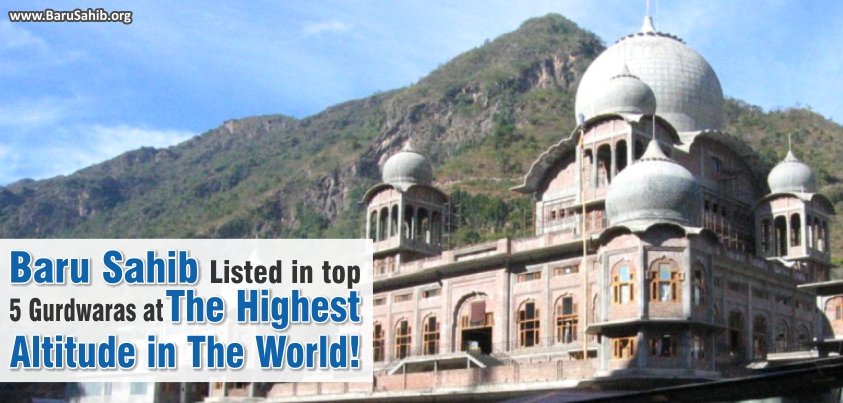
Baru Sahib ranked 4th highest amongst top 6 Gurdwaras at The Highest Altitude in The World!

Among the top 6 Gurdwaras located at the highest altitude in the world, Baru Sahib Gurdwara is ranked 4th as the Valley of Divine Peace, Baru Sahib is located 1900M – 6233 FT Above Sea Level. Others in the list include: Gurdwara Sri Hemkund Sahib, Uttrakhand- 49,200M 15,000 Ft Above Sea Level Gurdwara Dang Maar […]

Among the top 6 Gurdwaras located at the highest altitude in the world, Baru Sahib Gurdwara is ranked 4th as the Valley of Divine Peace, Baru Sahib is located 1900M – 6233 FT Above Sea Level.

Others in the list include:

Gurdwara Sri Hemkund Sahib, Uttrakhand-
49,200M 15,000 Ft Above Sea Level

Gurdwara Dang Maar Sahib, Sikkim –
5,210M 17,100FT Above Sea Level

Gurdwara Pathar Sahib, Leh –
4,000M 13,100FT Above Sea Level

Colorado Singh Sabha Commerce City
1,574M 5,164 FT Above Sea Level

Gurdwara Nanak Sabha, Switzerland –
430M 1,411 FT Above Sea Level

Source: http://dailysikhupdates.com/

Tribute To Guru Tegh Bahadur Sahib by Students of Akal Academy, Gomptipul!

Paying a tribute to the Martyrdom of Sri Guru Tegh Bahadur ji, Akal Academy Gomtipul celebrated a Gurmat Samagam at Gurdwara Sahib. The programme began with a bhog of Sri Sehaj Paath sahib. After the bhog ceremony, the students performed various programs saluting to the great deeds of Sri Guru Tegh Bahadur Sahib Ji. Poems […]

Paying a tribute to the Martyrdom of Sri Guru Tegh Bahadur ji, Akal Academy Gomtipul celebrated a Gurmat Samagam at Gurdwara Sahib.

The programme began with a bhog of Sri Sehaj Paath sahib. After the bhog ceremony, the students performed various programs saluting to the great deeds of Sri Guru Tegh Bahadur Sahib Ji.

Poems were sung by small kids in memory of the Great Guru who sacrificed his entire family for securing the religious freedom of our country.

Speeches on the Martyrdom of Guru ji were delivered by the students evoking respect and salute to the Greatness of Guru Tegh Bahadur Sahib Ji.

Kavishri was performed by the boys of the senior classes titled as “Faiyda” and “Khede-de Gobind Rai Baapu Kol Aake te” and girls titled as “Nauve Gura nu Shaheed hunda vekh k”. Shabad kirtan was also performed by the students in the presence of Sahib Shri Guru Granth Sahib Ji in utmost devotion, paying homage to Guru Sahib.

All the students were filled up with deep sorrow, remembering to the great sacrifice done by our Ninth Guru, Guru Tegh Bahadur Ji.

~ Tapasleen Kaur
~ New Delhi, 26th Nov ’14

Glenwood’s Sikh community wants to cycle with their Turbaned attire!

THE Sikh community is exempt from wearing helmets when riding a bicycle in Queensland, South Australia and Victoria and want the same law to apply in NSW. Sikh community representatives presented a petition of over 400 signatures to Blacktown Council asking for an exemption to the law, citing religious and practical reasons. They also won […]

THE Sikh community is exempt from wearing helmets when riding a bicycle in Queensland, South Australia and Victoria and want the same law to apply in NSW. Sikh community representatives presented a petition of over 400 signatures to Blacktown Council asking for an exemption to the law, citing religious and practical reasons. They also won support from Blacktown Council to change the law in NSW.

Australian Sikh Association’s Glenwood branch general secretary, Jasbir Singh and Atwar Singh are asking for an exemption on helmet laws.

The Singhs added “We have a lot of old retired or semi-retired people who live around our temple (in Glenwood),” Mr Singh said. “They can’t drive the car and there are no buses so it’s easier for them to ride a bike to temple. We are not asking to ride on the roads like the M4 or anything like that without a helmet. Most of the bicycle is riding on the footpath.”

The law in NSW requires all cyclists to wear a helmet, creating difficulty for Sikhs who wear turbans that vary in size and shape and cannot be removed easily. “We have for years been asking every politician who visits the temple for this change,” Mr Singh said. “During World War I and World War II, Sikh people fought without helmets. “Our community is very law abiding we don’t want to break the law … what we want is to make it legal.”

~ Source: www.dailytelegraph.com.au

Akal Academy, Bhadaur Students Honor Guru Tegh Bahadur Sahib on Shahidi Diwas!

To honor of the Great Sacrifice of Shri Guru Tegh Bahadaur Ji, a religious programme was organized in the Akal Academy, Bhadaur after Nitnem. It was conducted by Amul House with the co-operation of Music, Div. and Punjabi Department. The Stage was conducted by Ribaljot Kaur of IX B clas. The programme started with the […]

To honor of the Great Sacrifice of Shri Guru Tegh Bahadaur Ji, a religious programme was organized in the Akal Academy, Bhadaur after Nitnem. It was conducted by Amul House with the co-operation of Music, Div. and Punjabi Department. The Stage was conducted by Ribaljot Kaur of IX B clas. The programme started with the shabad by students “ਧਰਮ ਹੇਤ ਸਾਕਾ ਜਿਨ ਕੀਆਂ”ਅਤੇ “ਜਾ ਕੋ ਹਰਿ ਰੰਗ ਲਾਗਹੁ ਇਸ ਜਗੁ ਮਹਿ” Students recited a beautiful poem”ਮੈ ਹਾਂ ਛੋਟੀ ਬੱਚੀ”

“ਤੇਗ ਬਹਾਦਰ ਸਿਮਆਿਂ ਘਰ ਨਉ ਨਿਧਿ ਆਵੈ ਧਾਇ”
“ਇਨ ਹੀ ਕੀ ਕਿਰਪਾ ਸੇ ਸਜੇ ਹਮ”

The programme met with its end with a speech delivered by Mr. Jatinderpal Singh who motivated the students to take Amritpan and enlightened the sikh Itihaas and the sacrifice of Shri Guru Tegh Bhadaur Ji.

~ Tapasleen kaur
~ New Delhi, 25th Nov ’14

Students of Akal Academy, Dhugga Kalan hold a rally on Drug Addiction!

To spread awareness about the ill effects of drug addiction, an event was organised at Akal Academy, Dhugga Kalan on 22nd Nov’14. It was discussed how easily the youth was falling prey to a range of drugs and what measures could be taken to bring this to an end. The youth of Punjab is getting […]

To spread awareness about the ill effects of drug addiction, an event was organised at Akal Academy, Dhugga Kalan on 22nd Nov’14. It was discussed how easily the youth was falling prey to a range of drugs and what measures could be taken to bring this to an end. The youth of Punjab is getting ruined in the swamp of drug abuse.

Students from Junior Classes, along with their class teachers, prepared charts, posters and slogans regarding based on the theme ‘Saying no to drugs’. The students held anti-addiction slogans in their hands and hailed the messages in a loud voice to create awareness about addiction amongst the people.The students spread their power of words in the adjoining villages spanning approximately 6 Km of road rally on foot. The villages echoed with the loud enthusiastic words of the students.

Drug addiction amongst the youth is a critical challenge and each citizen alongside members of political, religious and social groups, need to come together to take a combative stance to tackle the problem.

This is the way how with the Grace of Akal Purakh and initiative of Principal, staff and Students, Akal Academy Dhugga Kalan did their bit to help in social welfare.

These kinds of efforts from the young ones has led to 127 villages opting to be liquor-free in 2014 in Punjab.

~ Tapasleen Kaur
~ New Delhi, 25th Nov ’14

Gurpurab Celebration at #Akal Academy Chak Mander in full religious spirit!

Chak Mander celebrated Prakash Purab of Guru Nanak Dev ji keeping the dignity and sanctity alive. Students of all age groups contributed by participating in various speeches, religious poems highlighting the preachings of Guru Nanak Dev ji. Students were enlightened with the divine knowledge about Sikhism and lives of the Gurus. The students bowed their […]

Chak Mander celebrated Prakash Purab of Guru Nanak Dev ji keeping the dignity and sanctity alive. Students of all age groups contributed by participating in various speeches, religious poems highlighting the preachings of Guru Nanak Dev ji.

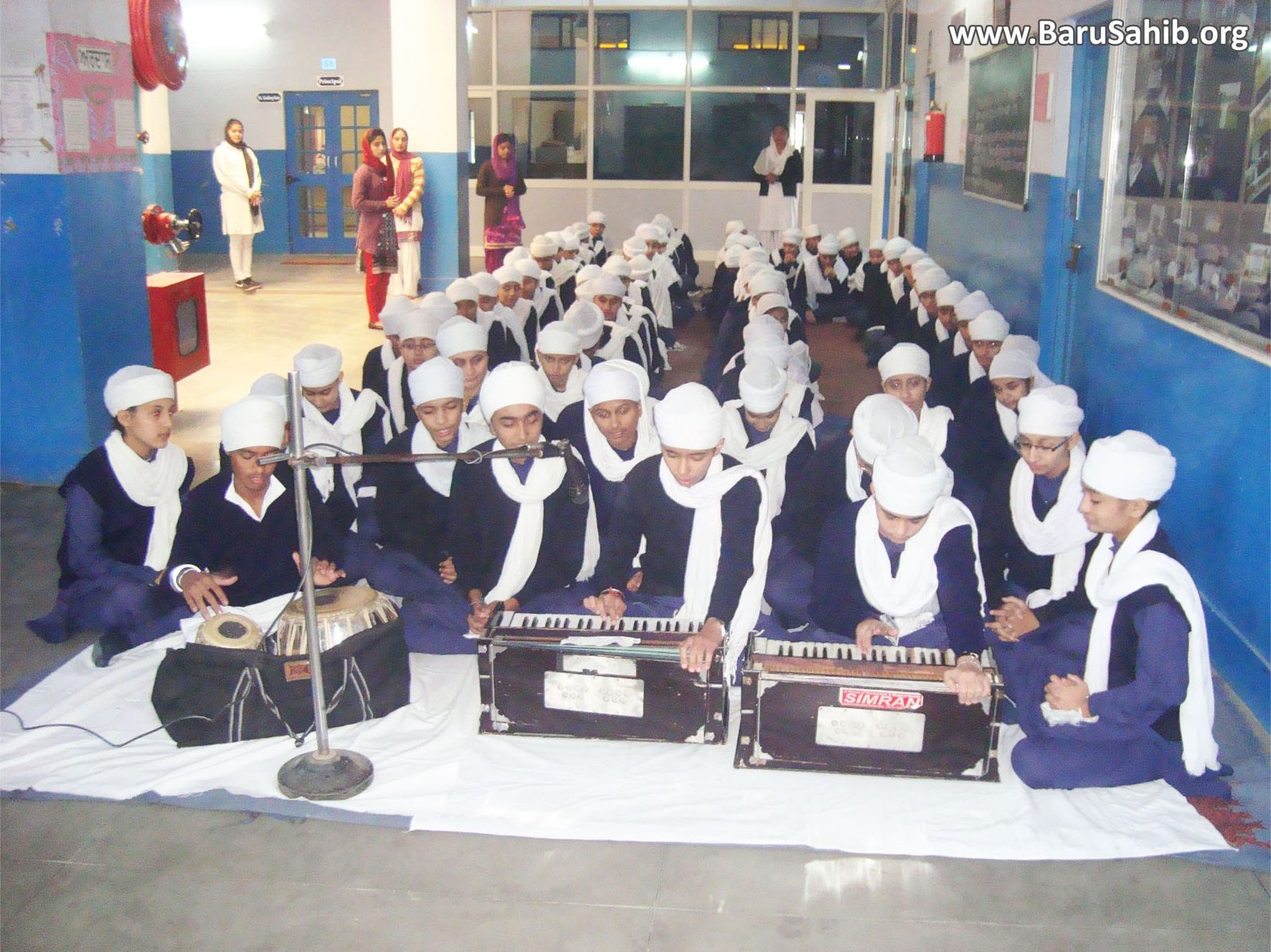
Students were enlightened with the divine knowledge about Sikhism and lives of the Gurus. The students bowed their heads to honor the Great Guru. Kirtan rendered by children enthralled the Sangat. Pure souls singing the glory of Guru Maharaj added to the atmosphere of spirituality. Their white attires further added to the aura of purity.

The students imbibed the spirit of service and humility as preached by the Guru Maharaj and such a generation is carved by Akal Academies portraying a peaceful, prosperous and healthy society rising above the parochial considerations of the society.

~ Tapasleen Kaur
~ New Delhi, 25th Nov ’14

Prof. Pandit Rao supports petition on #RenameAurangzebRoad – Registers his protest!

Prof Paditrao is a Non- Sikh Professor who originally hails from Karnataka. He deeply feels that the World should open their eyes to the Unparalleled and Supreme Humanitarian Sacrifice made by Guru Tegh Bahadur Ji. He stands up saluting the Sikh Faith and continues in his journey to spread the message of Sikhism worldwide. Pandit […]

Prof Paditrao is a Non- Sikh Professor who originally hails from Karnataka. He deeply feels that the World should open their eyes to the Unparalleled and Supreme Humanitarian Sacrifice made by Guru Tegh Bahadur Ji. He stands up saluting the Sikh Faith and continues in his journey to spread the message of Sikhism worldwide.

Pandit Rao Dharennavar who was recently in news to recite Sri Jap Ji Saheb on “Har Ki Paudi”, has reached to Delhi to demand “Aurangzeb Road” to be renamed as “Guru Tegh Bahadur Road”. He has written Memorandum to Prime Minster of India, Sri Narender Modi, in which Panditrao has given logical reason for his demand. Panditrao who is Assistant professor in Govt College has conducted Mini research in Chandigarh and Ajitgarh of 200 people in which he has found that 90 percent of people are very much aware of Aurangzeb whereas only 30 percent people are aware of great sacrifice made by Sri Guru Tegh Bahadar ji. The shocking research findings made him go to Delhi and protest on the road of Aurangzeb in a silent manner. He has a plan to go to Parliament on “Martyrdom Day” of Sri Guru Tegh Bahadur, 24th Nov 2014.

Panditrao Dharennavar who has translated Sri Jap Ji Saheb, Sri Sukhmani Saheb and Zafar Nama, has said that one-day world will bend down in front of Gurus who made the supreme sacrifice to save humanity.

We respect his efforts that being a Non-Sikh, he persistently attempts in spreading Sikh Faith worldwide.

Muslim woman’s Emotional Take on Chaar sahibzaade!

Hifzha Shaheen’s Facebook status gives her insight of the movie “So, I’ve finished watching Chaar Sahibzade…and as promised here are my thoughts. “I’m Muslim. I’m British-Pakistani. I didn’t watch this movie because of religious reasons. I didn’t watch this movie because of the hype. I watched it because I fell in love with the passion […]

Hifzha Shaheen’s Facebook status gives her insight of the movie “So, I’ve finished watching Chaar Sahibzade…and as promised here are my thoughts.

“I’m Muslim. I’m British-Pakistani. I didn’t watch this movie because of religious reasons. I didn’t watch this movie because of the hype. I watched it because I fell in love with the passion surrounding it. After watching the trailer, I fell in love with the characters. The script…and above all, the story.

At times it made me laugh. At times it made me cry and at times it left me heartbroken. But I’m a firm believer that there are certain things that actually support the world; the learning of the wise, the justice of the great, the prayers of the good, and the valor of the brave. And this movie had all of those. I’m very fortune that, from a very early age, my parents taught me the difference between right and wrong.

My faith teaches me that the best of mankind are those who have the most benefit to mankind…and that is what I found in this movie. Sikh history is relatively short in the scope of history, yet incredibly rich and powerful, full of stories of sacrifice and unending faith. However, the deep emotional chronicles of the story is depicted in a manner which is accessible to all ages, faiths and cultures to understand.

Obviously, there are certain aspects of the movie which need improving, but these are all visual aspects. Altogether though, after watching the film, the lessons of truth, morale and humanity are deeply embedded into each scene, principles which I have always abided by, and was today reminded of. Take a bow Dharam Seva Records, you’ve done your religion proud.‪ ChaarSahibzade ”

Source: https://www.facebook.com/hifzha.shaheen