How a Muslim Man turns into a Baptised Sikh, inspired by SIKHISM

Syed Prithipal Singh (né Mushtaq Hussein) was the only son of Mujafar Hussein, and the grandson of Pir-Bakur Shah of the famous family of Mirpur, Kashmir. The period from 1927 to 1930 was the most revolutionary in his life. During this time, his father decided to go to the Hajj and convinced his son to […]

Syed Prithipal Singh (né Mushtaq Hussein) was the only son of Mujafar Hussein, and the grandson of Pir-Bakur Shah of the famous family of Mirpur, Kashmir. The period from 1927 to 1930 was the most revolutionary in his life. During this time, his father decided to go to the Hajj and convinced his son to also go to Mecca-Medina for higher Islamic education.

While doing research at a university in Medina, Mushtaq Hussein came across a handwritten manuscript, Siyahto Baba Nanak Fakir, in a library.

This manuscript was written by an Arabic and Persian writer named Taajudin Naqshabandhi. Taajudin joined Guru Nanak in his journey around Undlas, a town between Erar and Baghdad. While living with Guru Nanak, he kept a diary—the Siyahto Baba Nanak Fakir manuscript—which he submitted to the library in Medina around 1512 AD1 that Guru Nanak Dev Ji was in the Middle East—in Mecca and Baghdad—for roughly one-and-a-half to two years in and around the years 1511 to 1513 AD.

Upon his return to Mirpur in 1930, Mushtaq was deeply saddened by communal violence stoked in Kashmir by Sheikh Abdulla’s supporters, and in Jammu, by his own father, Mujafar Hussain. In this region, the Sikh Gurduara of Kirtangarh was made the target of arson and destruction. This gurduara was constructed by Sant Baba Sunder Singh to care for the congregation and to promote education.

Rioters fuelled by feelings of animosity towards Dogra ruler Maharaja Pratap Singh made the Sikh community their first target. Witnessing the destruction first hand, Mushtaq was troubled by these acts of persecution in the name of Islam. His appeals for peace fell on deaf ears.

Mushtaq had been touched by Taajudin’s accounts of Guru Nanak’s journeys, which were intended to promote the welfare of all humanity. Through these same accounts, he had also seen the ugly face of religious fanaticism, which resulted in the torture and death of Rukn-ud-din, a respected religious leader of Kaaba.

Disappointed, Mushtaq decided to leave for Lahore with his wife, Gulzar Begum, and his son, Mohamad Nazir. At Lahore, he initially studied the Arya Samaj sect, and then Christianity. Finally, he researched Sikhism carefully at the gurdwara built at the site of Guru Arjun Dev ji’s martyrdom.

It was at this gurdwara that he received Khande di Pahul (Sikh initiation) from Giani Achhar Singh (later Singh Sahib Achhar Singh), after many persistent appeals to the Giani. Mushtaq became a Sikh on the fourth of Jeth (a month in the Indian calendar which roughly corresponds to May/June) in 1935, and later achieved renown as Sant Syed Prithipal Singh of Patiala. He dedicated his life in the service of the Panth.

Sant Syed helped in acquiring land and in establishing a gurdwara at the place where Sikh men and women were martyred in Lahore. Around 1950, he worked with Akali Kaur Singh in India and abroad. Later, he served at the Gurdwara Ghat Sahib in Ropar. He then went to England to help build the gurdwara in South Hall. In 1966, he was at the forefront of the campaign to return Guru Gobind Singh ji’s personal weapons to India. He completed his successful human journey in Kanpur while organizing the anniversary celebrations of the birth of Guru Nanak Dev Ji. He is survived by his family living in England and in Patiala.

Publishing Syed Prithipal Singh ji’s notes from Mecca, Kunwarajit Singh has done praiseworthy work. This publication will bolster Sikhs’ knowledge and faith in the Guru. I congratulate Sardar Kunwarajit Singh for this service.

Shared via DailySikhUpdates

सिखों जैसा कोई नहीं, ये देश का गौरव: सुप्रीम कोर्ट

सुप्रीम कोर्ट में एक जनहित याचिका (पीआईएल) की सुनवाई के दौरान दिल्ली सिख गुरुद्वारा मैनेजमेंट कमेटी (DSGMC) से राय मांगी है। यह पीआईएल सिखों पर बनने वाले चुटकुलों पर प्रतिबंध लगाने के मकसद से दायर की गई है। सुनवाई के दौरान कोर्ट ने कहा कि सिख भारत के लिए हमेशा से गौरवांवित करने वाले रहे […]

सुप्रीम कोर्ट में एक जनहित याचिका (पीआईएल) की सुनवाई के दौरान दिल्ली सिख गुरुद्वारा मैनेजमेंट कमेटी (DSGMC) से राय मांगी है। यह पीआईएल सिखों पर बनने वाले चुटकुलों पर प्रतिबंध लगाने के मकसद से दायर की गई है।

सुनवाई के दौरान कोर्ट ने कहा कि सिख भारत के लिए हमेशा से गौरवांवित करने वाले रहे हैं, वह देश का गौरव हैं। सुनवाई के दौरान अपनी टिप्पणी में कोर्ट ने यहां तक कहा कि सिख समुदाय जैसा दूसरा कोई नहीं है।

इस दौरान कोर्ट ने यह भी कहा कि आने वाले समय में अगले चीफ जस्टिस भी एक सिख ही हैं। सिखों पर बनने वाले चुटकुलों को प्रतिबंधित करने के इस मामले में कोर्ट ने DSGMC को छह सप्ताह के अंदर इस मामले में राय देने को कहा है।

कोर्ट ने पूछा है कि वह कानून के दायरे में रहते हुए बताएं कि किस तरह से इस तरह के चुटकुलों पर प्रतिबंध लगाया जा सकता है।

Source- naidunia.jagran.com

Young KAUR gives an Emotional Tribute to Chaar Sahibzaade will move you to tears!

Little Kaur recites a heart touching poetry in remembrance of the unforgettable sacrifices given by the Sahibzaade for the Sikh Path. They laid down their lives without giving a second thought. Share & Spread this poignant reminder to all!

Little Kaur recites a heart touching poetry in remembrance of the unforgettable sacrifices given by the Sahibzaade for the Sikh Path. They laid down their lives without giving a second thought.

Share & Spread this poignant reminder to all!

Sikhism is now a legally recognized religion in ‪Chile after 4 yrs!

Chile has over 200 legally recognized spiritual paths. But until January 25th 2016, the Sikh religion was not one of them. After 4 years of consistent effort, however, the fledgling Sikh community in Chile achieved legal recognition of Sikh Dharma as a religion. “Now we will be protected, with more safety in our jobs, in […]

Chile has over 200 legally recognized spiritual paths. But until January 25th 2016, the Sikh religion was not one of them.

After 4 years of consistent effort, however, the fledgling Sikh community in Chile achieved legal recognition of Sikh Dharma as a religion.

“Now we will be protected, with more safety in our jobs, in our health system and political system,” Rupinder Kaur Khalsa of Sikh Dharma Chile said of the legalization. “That is very good news for all of us…We can have the right to have gatherings in public places, also.

“We started the legalization process 4 years ago. Creating legal documents that describe what a turban is, what Sikh Dharma is, who we are, what do we want to legalize for Sikh Dharma Chile, and what our values are as Sikhs. Then, the legal process was about waiting for the government to approve this.”

The Chilean government did so in January.

Source- Sikhnet.com

When King Akbar met Guru Amar Das Ji

ਨਾ ਕੋਊ ਰਾਜਾ ਨਾ ਭੇਖਾਰੀ ਗੁਰ ਕੇ ਲੰਗਰ ਕੇ ਸਬ ਆਹਾਰੀ Akbar was a famous king of India. He was a kind and good king and respected the Sikh Gurus for their sensible practises and their fair and just teachings. In the year 1569, Akbar came to the Punjab and wanted to seek the Darshan […]

ਨਾ ਕੋਊ ਰਾਜਾ ਨਾ ਭੇਖਾਰੀ
ਗੁਰ ਕੇ ਲੰਗਰ ਕੇ ਸਬ ਆਹਾਰੀ

Akbar was a famous king of India. He was a kind and good king and respected the Sikh Gurus for their sensible practises and their fair and just teachings. In the year 1569, Akbar came to the Punjab and wanted to seek the Darshan of Guru Sahib.

So he sent a message to Guru Amar Das ji that he was coming to visit him. The Sikhs were very happy at the news. Some Sikhs thought that special arrangements should be made to welcome the king. But the Guru said, “Akbar is as much a human being as others are. The Guru’s place is open to all. The king and his subjects, the Hindus and the Muslims, the rich and the poor are all equal here. So Akbar will be welcomed like all other visitors to the Guru’s place and special arrangements need not be made.”

“Caste has no power in the next world; Only the humble are exalted there. It is only the good who are honoured for good acts.” (Guru Nanak (SGGS p469))

The king, along with the Rajah of Haripur, arrived in Goindwal where the Guru lived. The Guru and a few Sikhs received them warmly. They were shown round the place. Akbar was interested to know how the Guru’s Langar was run. Simple food was served to all in the Guru’s Langar. It remained open day and night.

Travellers, beggars, and strangers, as well as the followers of the Guru, were all served with food. Whatever was left was thrown to the cattle and birds so that nothing was wasted. The Guru had given an order that all persons coming to visit his place must have their food in the Langar (when hungry). There they were to sit in rows (Pangat) as equals and were to be served simple food in turn. Akbar and the Rajah of Haripur took their meals in the Guru’s Langar. They sat among the common people in a row as the Sikhs served them food. They enjoyed the simple food and were very happy. Akbar liked the working of the Guru’s Langar very much.

Before leaving, Akbar said to the Guru,
“I like Guru Nanak’s religion very much and I respect you for your teachings. I want to make a grant of land for running the Langar. Would you mind it!”.

The Guru replied,

“Dear Akbar, I am very glad you like the path of Baba Nanak. I am also grateful to you for your offer of a grant of land for the Langar, but I am sorry I cannot accept it because the Guru likes all to work hard to earn (Kirt Karni) and to share their honest earnings (Wand Chakna) with others, by giving something to the Langar from their honest earnings to help others.

As such, the Guru’s langar is the people’s (Sangat’s) Langar and it must be run on people’s free gifts and not on a royal grant. That is why all share equally in the Guru’s Langar and no one is looked upon as an outsider. In the Guru’s Langar, each gives as much as we can spare and takes as much as he/she needs. Here, there is no difference between kings and beggars. All sit together; and eat simple food served with loving care.” Akbar liked the Guru’s idea very much.

Akbar had made up his mind to do something for the house of Nanak. He presented the land of Amritsar to Bhani the daughter of Guru Amar Das as gift in her marriage.

Source- Sikhiwiki.com

BBC titles Gurmeet Singh as a Messiah for Abandoned Sick in India

This is the question Gurmeet Singh usually asks when he enters a hospital ward in the northern Indian city of Patna. It is a damp and grubby facility with lime-green walls and stained tiled floors. Half a dozen gurneys for sick patients are scattered all over the ill-lit place. A fetid smell of urine and […]

This is the question Gurmeet Singh usually asks when he enters a hospital ward in the northern Indian city of Patna.

It is a damp and grubby facility with lime-green walls and stained tiled floors. Half a dozen gurneys for sick patients are scattered all over the ill-lit place. A fetid smell of urine and stale food fills the air. When night falls, rats slink out of a defunct fireplace and scurry for food.

The food – dinner comprises rice, lentil soup and some vegetable gruel – is insipid. A doctor and a nurse come on their rounds a couple of times a day. At other times, the patients appear to be left to their fate.

Appalling name
The place has the appalling moniker of the ward for lawaris or the abandoned. Put simply, it treats patients who have no family or have been rejected by them. When they recover, they are usually sent away to rehab homes – or returned to the streets.

For its inmates, the ward can be their home for months on end, for the streets, where they usually live and forage for food and shelter, can be a harsher place.
Tonight, it appears, nobody is hurting.

On a bed, lies a young woman who has had her limbs amputated after she was hit by a train. She’s also pregnant.
The nurses call her Manju. Questions about her family, home and the father of the baby draw a blank. Some nights ago, they found her weeping on the cold floor after she was bitten by rats.

But when Mr Singh enters the ward, her face lights up, and she smiles wanly.
In the bed opposite her, a bedraggled woman with wild hair and wearing a dirty green jacket over a torn cotton gown trembles all the time. Tonight, she’s holding a loaf of bread that the hospital gave in the morning. One night, other inmates say, she fell off the bed and lay on the floor for a while.

Across the room, Tapan Bhattacharya, 40, lies in a bed with his leg in traction. He says he landed up here with a broken femur after the auto-rickshaw he was travelling in overturned.
“Can you find me a job?” he asks. “I have nobody and nowhere to go to.”

In another room, across the ward, two patients, Sudhir Rai and Farhan, appear to be lost in their own world, hoarding bread and fruit from breakfast and waiting for their next meal.

Farhan became an amputee a fortnight ago after he was hit by a train near Patna. Sudhir does not tell me what is wrong with him. There are no doctors or bed charts to check with. There’s a stream of pale blood and urine flowing on the floor under his bed.

But, as soon as Mr Singh waddles into the ward, there’s a frisson of excitement among its inmates. Their weary faces light up, some even manage to break into a smile.

By day, Mr Singh, a genial 60-year-old man, works at the family-owned clothes shop in a bustling city market.
By night, he is a veritable messiah to the residents of this foul kingdom of disease and disability, tucked away in a corner of a vast 90-year-old 1,760-bed state-run Patna Medical College and Hospital, one of the largest in the state of Bihar.

For more than 20 years now, Mr Singh has been visiting the abandoned patients’ ward every night with food and medicines. He hasn’t been on a vacation or stepped out of Patna for the past 13 years because, he says, he cannot abandon the abandoned.

The unfailing devotion to his patients is matched by Mr Singh’s unchanging routine. Around nine every evening, he leaves his modest apartment – all his five brothers live on a floor in one of the city’s oldest high-rises – and heads to the hospital.

He picks up some money to pay for medicines – the five brothers put away 10% of their monthly earnings in a donation box at home to pay for Mr Singh’s patients – that are not provided by the hospital, where treatment is free.
On the way he stops at one of the many cheap hole-in-the-wall eateries that dot Patna to pick up bread, vegetables, salad, eggs and curd to feed to his patients.

‘Dignity and care’

Once Mr Singh reaches the ward, he enquires about the patients’ condition, playing, at once, nurse, doctor, provider and kin. He goes through their prescriptions and pays for the more expensive medicines, tests, scans, and chemotherapy for cancer patients. He also donates “a lot of” blood. Then he takes out the shining steel plates, and caringly serves the food.

Tonight the menu is piping hot bread, vegetables, curd and a sweet. The gruel that the hospital provides for dinner is usually left uneaten. In a bit, the patients are wolfing down their first proper meal of the day.

“All they need is some dignity and some care. The government is not even able to provide that. In the past 22 years that I have been coming here, nothing has improved in this ward. Nothing,” says Mr Singh.

So doctors and nurses are scarce and treatment is scanty. The state of the hospital is a reflection of Bihar’s dreadful public health services: hospitals have less than half the nurses they need; and only 2,289 of the sanctioned 4,851 jobs of doctors have been filled up.

On the other hand, bed occupancy rates regularly exceed 100%, forcing patients to be treated on the floor.

Mr Singh’s involvement began some two decades ago when a woman selling plastic bags turned up at his shop carrying a badly scalded boy in her arms.

“It was a hot day. I saw tears in her eyes. Then I saw her boy who had got burnt. I took them to this hospital, and found that there was nobody to treat him. The doctors were on strike. The poor and the abandoned were the worst affected. I was very angry. I decided to do something about it.”

Authorities want to fete him for his work and have sent him letters of admiration, but the Good Samaritan prefers to shun the spotlight. Tonight, he is busy feeding the dishevelled woman, who is having her first proper meal of the day. Then he’ll tuck her under a blanket for the night.

“He is like God,” comes a voice from the ward, as the diminutive Sikh man puts out the light and shuts the door to keep the cold out.

He will be back again tomorrow night.

Source- www.bbc.com

ਅਕਾਲ ਅਕਾਦਮੀ ਕਜਰੀ ਦੇ ਵਿਦਿਆਰਥਿਆਂ ਨੇ “Creative Writing Competition” ਰਾਹੀਂ ਆਪਣੇ ਬਹਾਦੁਰੀ ਦੇ ਕਾਰਨਾਮੇ ਬਖਾਣੇ

(ਉਸ ਕਮ ਨੂੰ ਕਰਨ ਲਈ ਬਹਾਦੁਰੀ ਚਾਹੀਦੀ ਜਿਹਨੂੰ ਤੁਹਾਡੇ ਆਸ ਪਾਸ ਕੋਈ ਨਾ ਕਰ ਸਕੇ) ਅਕਾਲ ਅਕਾਦਮੀ ਕਜਰੀ ਦੇ ਵਿਦਿਆਰਥਿਆਂ ਨੇ 13 ਫਰਵਰੀ ਨੂੰ ਸਕੂਲ ਦੀ ਲਾਇਬ੍ਰੇਰੀ ਵਿਖੇ ਹੋਏ “ਰਚਨਾਤਮਕ ਲੇਖਨ ਮੁਕਾਬਲੇ” ਵਿਚ ਹਿੱਸਾ ਲਿੱਤਾ| ਇਹ ਪ੍ਰੋਗ੍ਰਾਮ੍ “ਅਜੈ ਹਾਊਸ” ਦਾ ਉਪਰਾਲਾ ਸੀ| ਬਚਿਆਂ ਨੇ ਆਪਣੀ ਜਿੰਦਗੀ ਵਿਚ ਕੀਤੇ ਕਿਸੀ ਬਹਾਦੁਰੀ ਦੇ ਕਾਰਨਾਮੇ ਦਾ ਬਖਾਨ ਕੀਤਾ| […]

(ਉਸ ਕਮ ਨੂੰ ਕਰਨ ਲਈ ਬਹਾਦੁਰੀ ਚਾਹੀਦੀ ਜਿਹਨੂੰ ਤੁਹਾਡੇ ਆਸ ਪਾਸ ਕੋਈ ਨਾ ਕਰ ਸਕੇ)

ਅਕਾਲ ਅਕਾਦਮੀ ਕਜਰੀ ਦੇ ਵਿਦਿਆਰਥਿਆਂ ਨੇ 13 ਫਰਵਰੀ ਨੂੰ ਸਕੂਲ ਦੀ ਲਾਇਬ੍ਰੇਰੀ ਵਿਖੇ ਹੋਏ “ਰਚਨਾਤਮਕ ਲੇਖਨ ਮੁਕਾਬਲੇ” ਵਿਚ ਹਿੱਸਾ ਲਿੱਤਾ| ਇਹ ਪ੍ਰੋਗ੍ਰਾਮ੍ “ਅਜੈ ਹਾਊਸ” ਦਾ ਉਪਰਾਲਾ ਸੀ| ਬਚਿਆਂ ਨੇ ਆਪਣੀ ਜਿੰਦਗੀ ਵਿਚ ਕੀਤੇ ਕਿਸੀ ਬਹਾਦੁਰੀ ਦੇ ਕਾਰਨਾਮੇ ਦਾ ਬਖਾਨ ਕੀਤਾ| ਸ਼੍ਰੀ ਅਸ਼ੋਕ ਸਿੰਘ ਗੁਲੇਰੀਆ, ਮੁਖਿਆ “ਅਜੈ ਹਾਊਸ” ਸ੍ਰੀ ਸੁਧੀਰ ਕੁਮਾਰ, ਸ੍ਰੀ ਫ਼ਿਲਿਪ ਜੇਵੀਅਰ, ਮੀਡੀਆ ਕੋਆਰਡੀਨੇਟਰ, ਸ੍ਰੀਮਤੀ ਨਵਦੀਪ ਕੌਰ, ਸ੍ਰੀਮਤੀ ਨਵਨੀਤ ਕੌਰ, ਸ੍ਰੀਮਤੀ ਕਿਰਨਜੀਤ ਕੌਰ ਨੇ ਇਸ ਪ੍ਰੋਗਰਾਮ ਨੂੰ ਸਫਲ ਬਣਾਉਣ ਲਈ ਯੋਗਦਾਨ ਕੀਤਾ| ਪ੍ਰਿੰਸੀਪਲ ਸ੍ਰੀਮਤੀ ਸਿਮਰਨ ਕੌਰ ਥਿੰਦ ਨੇ ਇਸ ਰਚਨਾਤਮਕ ਲੇਖਨ ਮੁਕਾਬਲੇ ਦਾ ਆਯੋਜਨ ਕਰਨ ਲਈ “ਅਜੈ ਹਾਊਸ” ਦੀ ਤਾਰੀਫ਼ ਕੀਤੀ|

ਜੇਤੂ ਵਿਦਿਆਰਥਿਆਂ ਦੇ ਨਾਂ ਨਿਚੇ ਦਿੱਤੇ ਗਏ ਹਨ

ਨਾਮ ਹਾਊਸ ਕਲਾਸ
ਜ੍ਸ਼੍ਨਪ੍ਰੀਤ ਕੌਰ ਅਮੂਲ VIIIA
ਲਵਪ੍ਰੀਤ ਕੌਰ ਅਮੂਲ VIIIB
ਸਤਵਿੰਦਰ ਕੌਰ ਅਤੁਲ VIII C
ਪ੍ਰਭਜੀਤ ਕੌਰ ਅਭੈ VIIIB
ਅਰਸ਼ਦੀਪ ਸਿੰਘ ਅਭੈ VIIIA

-Jasvinder Kaur
18th Feb 2016

SC agrees to examine possible guidelines to curb ‘Sardar Jokes’

The Supreme Court today sought the suggestions of Delhi Sikh Gurdwara Managing Committee (DSGMC) and other PIL petitioners as to how the judiciary could stop Sardar jokes. A Bench headed by Chief Justice TS Thakur was hearing a plea for a ban on websites hosting Sardar jokes, thereby promoting enmity among various sections of society. […]

The Supreme Court today sought the suggestions of Delhi Sikh Gurdwara Managing Committee (DSGMC) and other PIL petitioners as to how the judiciary could stop Sardar jokes.

A Bench headed by Chief Justice TS Thakur was hearing a plea for a ban on websites hosting Sardar jokes, thereby promoting enmity among various sections of society.

Arguing for DSGMC, senior counsel RS Suri and SS Ahluwalia pleaded that the Sikh community was being made butt of jokes despite the fact that many from the community had made it to the top level. They cited the examples of eminent personalities like late President Zail Singh and ex-Prime Minister Manmohan Singh.

At this, the Bench said the country also had Vikram Singh, a Sikh, as Army Chief and soon another Sikh, Justice JS Khehar, would head the Indian judiciary as CJI.

But the problem was enforcement of any Court order banning Sardar jokes. If two individuals exchange jokes, how could it be stopped by the judiciary, it asked.

The Bench asked the petitioners to give their suggestions within six weeks on this aspect.

~ Source: Tribune

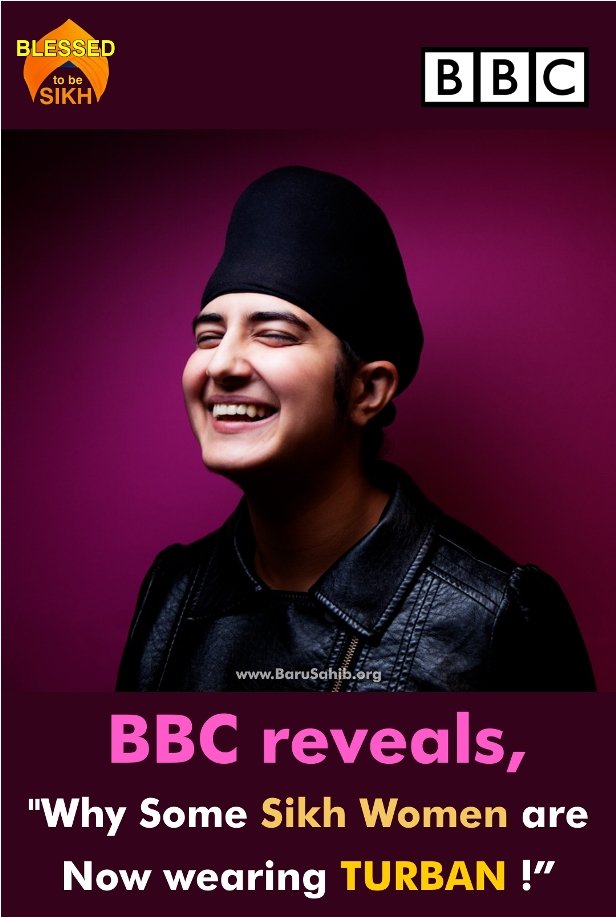
BBC reveals, “Why Some Sikh Women are Now wearing TURBAN !”

Traditionally the turban is worn by millions of Sikhs preferably Male Members. Now many Sikh women are donning it, too. Why? The turban is the one thing that identifies a Sikh more than any other symbol of their faith. Devinder is in her early 40s. She’s a slender, tall British-Indian Sikh woman. She works as […]

Traditionally the turban is worn by millions of Sikhs preferably Male Members. Now many Sikh women are donning it, too. Why?

The turban is the one thing that identifies a Sikh more than any other symbol of their faith.

Devinder is in her early 40s. She’s a slender, tall British-Indian Sikh woman. She works as a teaching assistant at her local school in Ilford, north-east London. You can’t help but notice that she wears a turban, or what’s commonly known within Sikhism as a dastar.

“Doing this has helped me stay grounded and focused on what my responsibilities are as a human being.”

An edict handed down in 1699 by the 10th Sikh Guru, Gobind Singh, requires Sikhs to not cut their hair. The turban, part of the Bana or military uniform at that time, was used to help keep the long hair and protect a Sikh’s head.

However, in line with its military tradition, it’s something that has always been a masculine symbol and almost exclusively worn by men, not women. That is until now, it seems.

“I wasn’t always like this,” says Devinder holding up a photo album of her younger years. “I used to have cut black curls, wear makeup – go out and do what people do on nights out… but it never sat comfortably with me even then.”

Seven years ago Devinder decided to become fully baptised into the Sikh faith. She stopped cutting her hair, and began wearing a tall white wrapped turban.

“People told me I shouldn’t do it and that it will hold me back. The elders felt it’s something that Sikh women didn’t do. But wearing my turban, I feel free and it pushes me forwards to be the best I can be every day.”

As well as wearing the turban, Devinder lets her facial and bodily hair grow naturally as well. It’s something she speaks confidently about.

“Asian women are naturally hairy so it was difficult to let go at first and let go of the expectations society places upon what a woman should look like,” she says.

“But letting it go was so empowering. It’s a way of saying this is who I am, this is how God made me and putting that above what society expects of me.”

It impossible to know exactly how many Sikh women are now wearing the turban, but at a time when some Sikh men are deciding to cut their hair, Devinder is among a growing number of Sikh women deciding to wear one.

Doris Jakobs, professor in religious studies at Waterloo University in Canada, has done some of the most in-depth research in this area. She says that women tying turbans are mostly Sikhs living outside of their traditional homeland of the Punjab in India.

“This is something that the younger generation in the diaspora is doing. It’s a sign of religiosity in which some Sikh women are no longer content with just wearing a chuni (headscarf). Wearing a turban is so clearly identifiable with being Sikh and so women now also want that clear visual sign that they are also Sikh as well. It’s a play on the egalitarian principle of Sikhism.”

Post-9/11, many Sikhs faced discrimination and have even been attacked after being mistaken for Muslims. Some in the community say have turned to the turban as they feel it helps give them an individual identity.

An Indian Sikh devotee plays a musical instrument as he walks with Punj Pyara holding flags of the Sikh religion during a procession from Sri Akal Takhat at the Golden Temple in AmritsarImage copyrightGetty Images

There are 20 million Sikhs in the world, most of whom live in the Punjab province of India. The 2011 census recorded 432,000 Sikhs in the UK

Jasjit Singh, a research fellow at Leeds University, has spent the last few years interviewing women who have begun to wear the turban. He says there are many reasons why they are doing it.

“Some say it helps with meditation and others say its part of a Sikh’s uniform,” he says.

“I found that many young girls see this as a way of reclaiming equality within the religion. The Punjabi community is still very patriarchal but these girls tell me that Guru gave a uniform to all Sikhs – and so why shouldn’t they wear the turban as well.”

The idea is an interesting one. Some might find it curious that, in order to seek equality, a woman might dress like a traditional Sikh man. But others argue a woman wearing a turban is a sign of empowerment.

Sarabjoth Kaur, 25, from Manchester, is one of them. She began wearing a turban two years ago. She appears draped in royal blue robes with a matching tightly wrapped turban. It has a metal shaster, a type of ancient Vedic weapon wedged into the front.

Sarabjoth, a former bhangra dancer, says her faith became stronger after she witnessed devout white Sikhs wearing the turban whilst worshipping in India. She strongly defends the right for women to wear the turban.

“People in my family weren’t comfortable with it. They thought it would be difficult to get a job or how would I find a good husband,” she says. “Before we had to change to fit in with British society.

“Sikh women are meant to be strong. They’re still khalsa (saint soldiers of the Guru) and the Khalsa isn’t differentiated on gender. When I tie my turban every morning I want to see my Guru. I feel a great sense of pride when I see my reflection as I think this is what my Guru looked like, this is what the khalsa looks like.”

~ Source: BBC

Study Reveals 90% of Punjabis & 61% of Non-Punjabis support BAN SIKH JOKES

The independent research was conducted by Punditrao Dharenavar, assistant professor, post graduate government college, sector-46 Chandigarh, to know the public opinion about Sikh Sardar ji jokes to be banned or not. The total number of 637 closed ended questioners were filled by different sections of society. Professor, Advocates, Students and general public were interview in […]

The independent research was conducted by Punditrao Dharenavar, assistant professor, post graduate government college, sector-46 Chandigarh, to know the public opinion about Sikh Sardar ji jokes to be banned or not. The total number of 637 closed ended questioners were filled by different sections of society. Professor, Advocates, Students and general public were interview in selected districts of Punjab and Union Territory of Chandigarh. Moga, Rajpura, Chunni, SAS Nagar, and Chandigarh were covered to know the diverse opinion.

The first question which was to know whether Sardar ji Jokes to banned, 90 percent of Punjabi and 61 percent of Non Punjabis expressed their strong views to ban jokes on Sardar ji. 86 percent of both Punjabi’s and Non-Punjabi in total felt that all jokes related to Sardar ji should be banned. When asked whether it is insulting to joke on some community then, 84 percent of people felt it is absolute insulting to joke on some community. When it is asked to give opinion about Hon’ble Supreme Courts suggestions for Sikh Community to Ban jokes then 83% people felt that Sardar Community should demand to ban jokes on Sardar Ji. The question which was related to Jokes diminishing image of community, 82% of people produced opinion in favour. In one of the interesting questions that whether everybody must read great history of Sikh Sardar Ji then 84% people felt the necessity of reading Sikh History. When asked whether Hon’ble Supreme Court must ban all jokes on Sikh Sardar Ji then 79% of both Punjabis and Non-Punjabis expressed their strong view that Hon’ble Supreme Court must ban all jokes on Sardar Ji. In another question, whether contribution of Sardar Ji in the nation building should be in the Syllabi of all the school, college and universities then 87% people felt the necessity to include lessons about Sikh History in the curriculum.

The districts wise analyze of the data revealed that Moga, S.A.S. Nagar & Rajpura of Punjab expressed their 100% support to ban all jokes of Sardar Ji. Whereas Chunni Tehsil of Fatehgarh Sahib District express 71% and GCG Govt. College, Sector-11 expressed 83% support to ban jokes on Sardar Ji. When the data was collected from particular community such as teachers and advocates, the positive result emerged. 86% of teachers of Chandigarh Colleges and 85% of Advocates from District Court Chandigarh supported to ban the jokes related to Sardar Ji.

In order to make comparative study the samples were collected from ITFT, the private Institute in Punjab where non-Punjabi study; the results were again positive in a low percentage such as only 57% of people supported to ban the jokes but 86% of people expressed their opinion to add lessons on Sardar Ji in the curriculum.

The comparative result of research shows that 90% of Punjabis feel to ban jokes on Sardar Ji whereas only 57% of non-Punjabi support to ban the jokes on Sardar Ji. To bring the awareness about the great contributions of Sardar Ji, both Punjabis and Non-Punjabis seem to express their opinion with 88% and 80% respectively.

To conclude, the research comes up with the suggestion to ban jokes on Sikh Sardar Ji, which are directly attacking the community. The suggestions emerged from sections of the society felt that there is deliberate attempt to create literature about Sikh Sardar in the form of Santa-Banta, sites on Internet, Serials etc. There are jokes on many communities but the joking literature is being deliberately created only on Sikh Sardar Ji. Therefore, there is urgent need to put an end to the deliberate attempt of some Anti-Social elements.

~ Panditrao Dharenavar
Assistant Professor, PG Govt. College,
Sector-46, Chandigarh, M: 9988151695