
Punjabi Jagran Highlights Baba Iqbal Singh Ji’s Honour
Punjabi Jagran Highlights Baba Iqbal Singh Ji’s Global Recognition
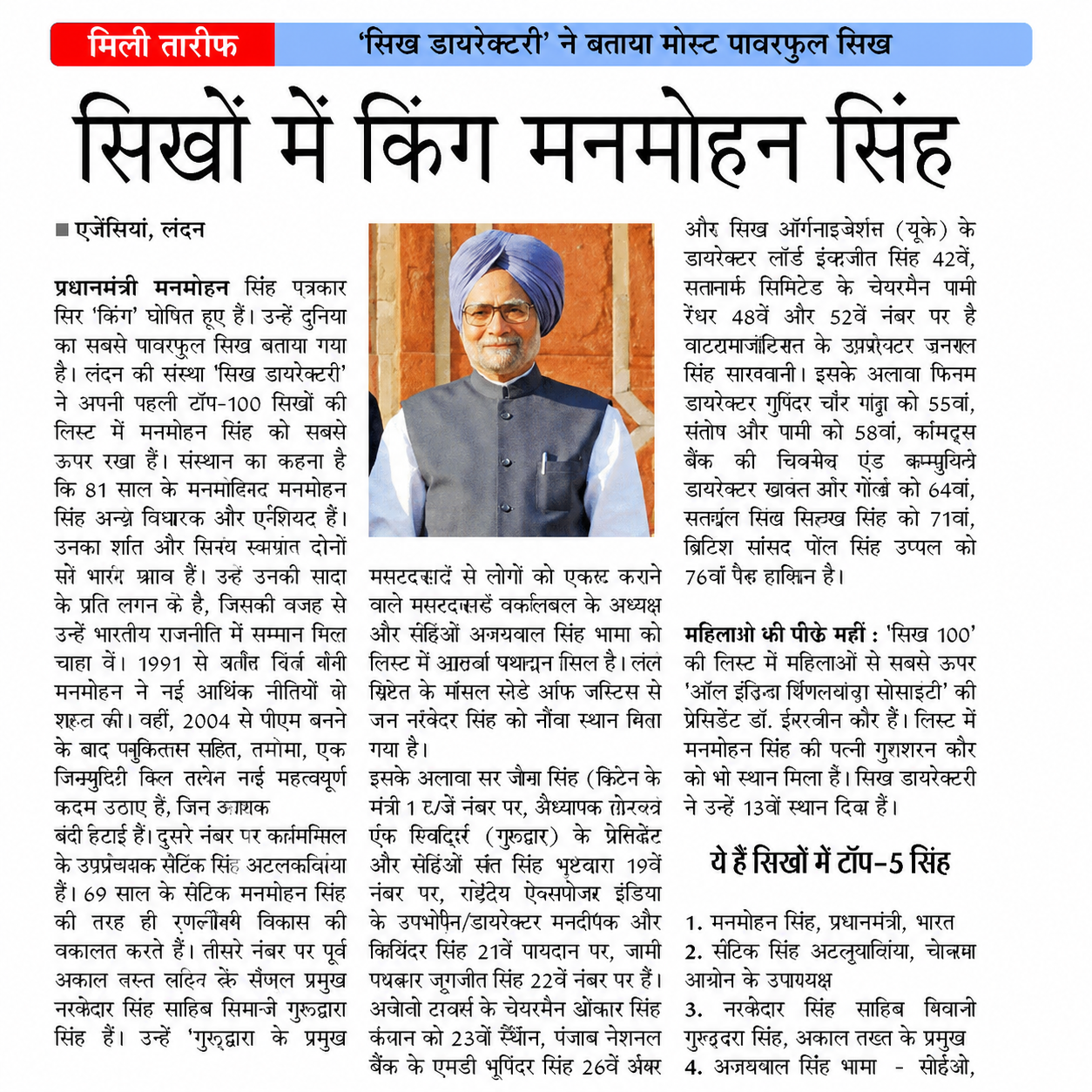
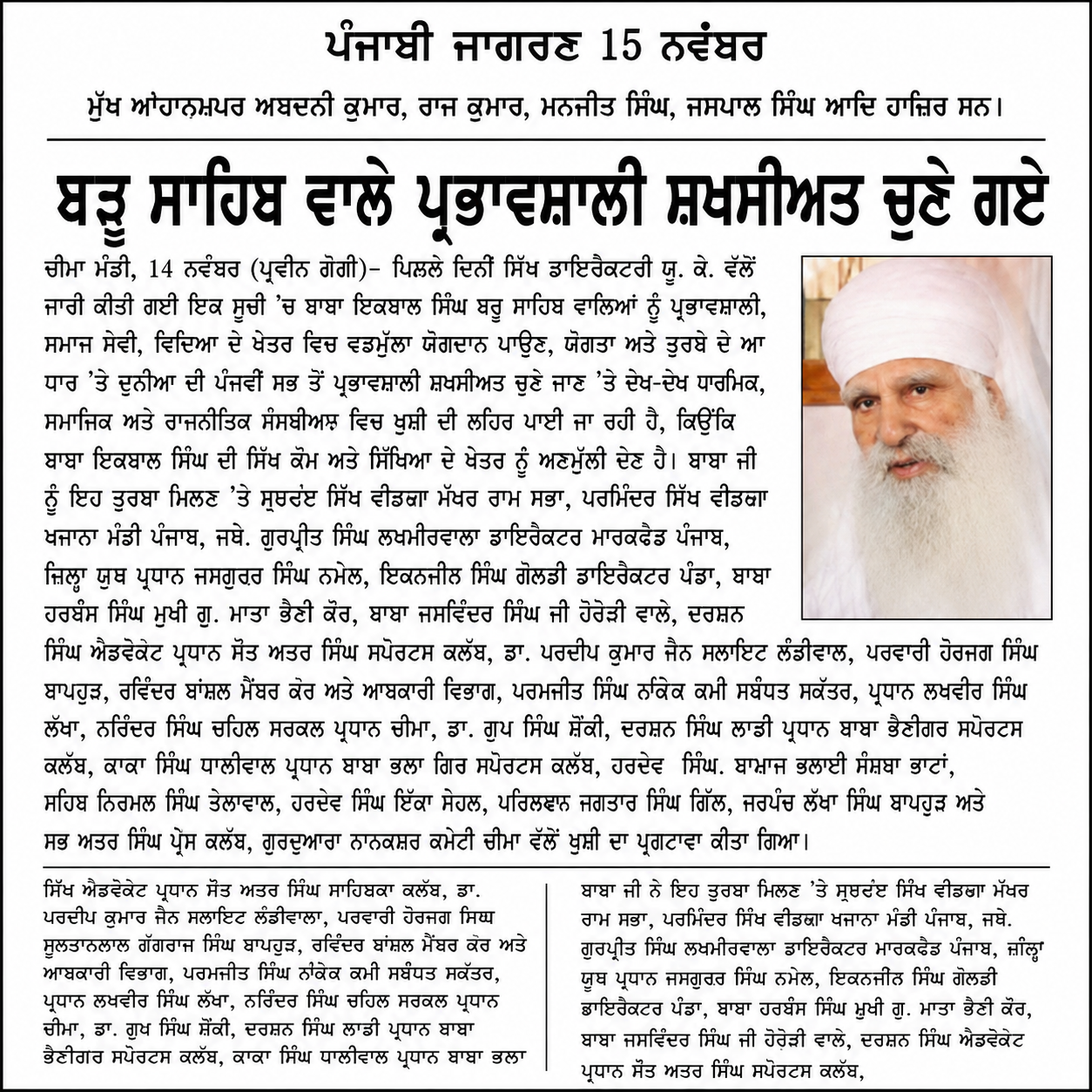
Punjabi Jagran Baba Iqbal Singh Ji coverage recorded a proud milestone for Punjab’s educational and Sikh communities when the leading Punjabi daily reported that Baba Iqbal Singh Ji of Baru Sahib had been recognised among the world’s five most influential Sikhs in the inaugural Sikh 100 Ranking published by Sikh Directory UK. The newspaper presented the honour as recognition of a lifetime dedicated to education, social service and community leadership rather than individual acclaim.
Published in its 15 November edition, Punjabi Jagran reported that the announcement sparked celebrations throughout Punjab. Religious organisations, educational institutions, social bodies and political leaders welcomed the recognition, describing Baba Iqbal Singh Ji’s contribution to society as invaluable. For readers across the region, the news represented more than an international ranking—it was an acknowledgement of decades of quiet service devoted to transforming rural education.
According to the newspaper, the international recognition was awarded after evaluating influence, contribution to education, humanitarian service, leadership and public standing. Baba Iqbal Singh Ji’s inclusion among the world’s Top Five Sikhs demonstrated that meaningful social impact can earn global respect while remaining firmly rooted in local communities.
Why Punjabi Jagran Covered This Historic Achievement
Punjabi Jagran highlighted that Baba Iqbal Singh Ji’s work extended far beyond the boundaries of a traditional educational institution. Through visionary leadership and unwavering commitment to service, he established an educational movement that enabled thousands of children from rural and economically disadvantaged families to access quality English-medium education without compromising their cultural and spiritual values.
The newspaper explained that the honour reflected years of dedication to building institutions that focused equally on academic excellence, ethical values and character development. Unlike awards recognising temporary achievements, the Sikh 100 Ranking celebrated sustained contribution and measurable impact on society.
For Punjabi Jagran readers, the story reinforced the belief that education remains one of the most powerful instruments for social transformation. Baba Iqbal Singh Ji’s recognition illustrated how a life devoted to serving others could receive appreciation at the international level while continuing to inspire communities at home.
Community Leaders Welcome the Honour
The report described widespread happiness among religious, social and political organisations after the announcement. Leaders from different backgrounds congratulated Baba Iqbal Singh Ji, recognising his lifelong commitment to educational reform and humanitarian service.
Punjabi Jagran specifically mentioned congratulatory messages from Rajya Sabha Member Sukhdev Singh Dhindsa, Punjab Finance Minister Parminder Singh Dhindsa and several respected community leaders, directors, village sarpanches, sports club representatives and social workers from the Sangrur and Cheema region.
The broad range of well-wishers demonstrated that Baba Ji’s influence reached every section of society. His work was appreciated not only within educational circles but also among public representatives and community organisations that had witnessed the positive impact of his institutions over many years.
The Importance of the Sikh 100 Ranking
The Sikh 100 Ranking, published by Sikh Directory UK, was introduced as one of the first comprehensive international rankings recognising influential Sikh personalities across the world. The selection process considered multiple dimensions of leadership, including influence, effectiveness, contribution to society, integrity, achievements and long-term public impact.
For Baba Iqbal Singh Ji, this recognition acknowledged decades of educational leadership rather than a single accomplishment. It recognised the institutions he established, the students whose lives were transformed and the communities strengthened through access to value-based education.
From Baru Sahib to International Recognition
Although the honour received international attention, its roots lay in the peaceful surroundings of Baru Sahib. After retiring as Director of Agriculture in Himachal Pradesh, Baba Iqbal Singh Ji dedicated his life to building an educational movement that combined academic excellence with moral and spiritual values.
Beginning with a single institution, his vision gradually evolved into one of North India’s largest rural education initiatives. This remarkable journey demonstrated that transformative leadership begins with a clear purpose and a lifelong commitment to serving humanity.
Punjabi Jagran’s coverage therefore celebrated more than an individual achievement. It recognised the success of an educational philosophy that continues to empower students through knowledge, discipline, compassion and service.
From a Single School to a National Educational Movement
The recognition highlighted in Punjabi Jagran Baba Iqbal Singh Ji coverage cannot be understood without appreciating the extraordinary educational journey that began at Baru Sahib in Himachal Pradesh. After retiring as the Director of Agriculture, Baba Iqbal Singh Ji dedicated the next phase of his life to building an educational system that would empower rural children through knowledge, discipline and values.
Inspired by the vision of Sant Attar Singh Ji and Sant Teja Singh Ji, Baba Iqbal Singh Ji believed that education should shape the complete personality of a child. Academic excellence, ethical conduct, spiritual awareness and service to humanity became the four pillars of the educational philosophy that later guided every institution established under The Kalgidhar Trust.
What began as a single educational initiative gradually expanded into one of India’s largest charitable rural education movements. Today, the institutions established under his leadership continue transforming the lives of students who otherwise might never have received access to quality education.
Expanding Educational Opportunities Across Rural India
One of Baba Iqbal Singh Ji’s greatest achievements has been making quality education accessible to children living in villages and remote communities. Rather than concentrating educational institutions only in major cities, he focused on rural regions where educational opportunities were often limited.
Through the network of Akal Academy schools, thousands of students from farming families and economically disadvantaged backgrounds receive modern English-medium education while remaining connected to their cultural roots and moral values.
The schools combine science, mathematics, technology, languages and digital learning with character education, environmental awareness, discipline and community service. This balanced approach has helped students excel academically while developing into responsible citizens capable of contributing positively to society.
Punjabi Jagran’s report recognised that this educational model had become an inspiration for educators and communities throughout Punjab and neighbouring states.
The Kalgidhar Trust’s Lasting Contribution
The international recognition reported by Punjabi Jagran also reflects the broader contribution of The Kalgidhar Trust to India’s educational landscape. Under Baba Iqbal Singh Ji’s leadership, the Trust developed schools, universities, teacher education programmes, healthcare initiatives and social welfare projects that collectively serve thousands of families every year.
These institutions have become recognised for maintaining high academic standards while preserving values of honesty, compassion, equality and selfless service. The Trust’s mission demonstrates that educational excellence and ethical leadership can grow together rather than exist separately.
Students graduating from these institutions have gone on to pursue successful careers in engineering, medicine, agriculture, research, civil services, defence, entrepreneurship and higher education. Many continue contributing to society through community service inspired by the values they learned during their education.
Value-Based Education That Continues to Inspire
Baba Iqbal Singh Ji consistently emphasised that true education extends beyond textbooks and examinations. He believed schools should prepare students not only for employment but also for leadership, responsibility and lifelong service.
This philosophy remains central to every institution established under The Kalgidhar Trust. Students are encouraged to develop critical thinking, compassion, integrity, discipline and respect for all communities while achieving academic excellence.
Punjabi Jagran’s coverage highlighted that these values were among the reasons Baba Iqbal Singh Ji earned international recognition. His educational vision created institutions capable of producing both successful professionals and responsible human beings.
Why Global Recognition Was Well Deserved
The Sikh 100 Ranking recognised individuals whose influence produced meaningful and measurable benefits for society. Baba Iqbal Singh Ji’s inclusion among the world’s five most influential Sikhs reflected decades of sustained educational leadership rather than temporary public recognition.
His contribution can be measured through thousands of students educated, rural communities empowered, educational institutions established and opportunities created for future generations. These achievements continue expanding long after the original recognition was announced.
For Punjabi Jagran readers, the honour demonstrated that genuine influence is created through consistent service rather than publicity. Baba Ji’s work stands as an example of how one person’s vision can transform entire communities through education.
A Legacy That Continues Through Future Generations
The educational mission initiated by Baba Iqbal Singh Ji continues inspiring students, teachers, researchers and social leaders across India. Every new academic session welcomes another generation of learners into institutions built upon the principles of knowledge, humility and service.
The international recognition reported by Punjabi Jagran therefore represents more than a historical achievement. It continues reminding society that lasting progress begins with education rooted in values and guided by a commitment to improving the lives of others.
As new generations graduate from institutions established under his vision, Baba Iqbal Singh Ji’s legacy continues to grow—proving that the greatest measure of leadership is the positive impact left on future generations.
Why Punjabi Jagran’s Coverage Still Matters Today
Punjabi Jagran Baba Iqbal Singh Ji coverage remains an important historical reference because it documents both the international recognition and the overwhelming response from Punjab’s educational, social and religious communities. While international rankings acknowledge achievement, regional newspapers preserve how communities celebrated those milestones, making such reports valuable records for researchers and future generations.
The newspaper demonstrated that Baba Iqbal Singh Ji’s influence extended well beyond education. Community leaders, public representatives and citizens viewed the honour as recognition of a lifetime devoted to serving humanity through knowledge, compassion and institution building. The report reflected the pride felt across Punjab as one of its most respected educationists received global acknowledgement.
Today, these newspaper archives continue helping historians, educators and researchers understand how Baba Iqbal Singh Ji’s educational movement gained recognition both nationally and internationally.
What Makes This Recognition Unique?
Unlike awards based primarily on popularity or public visibility, the Sikh 100 Ranking evaluated measurable contribution, leadership, influence, effectiveness and long-term social impact. Baba Iqbal Singh Ji’s inclusion among the world’s five most influential Sikhs recognised decades of educational reform, humanitarian service and institution building.
The honour also highlighted the importance of value-based education as a powerful force for social transformation. Baba Ji demonstrated that educational institutions rooted in ethics, compassion and excellence can influence society far beyond the classroom.
For Punjabi Jagran readers, the recognition served as proof that quiet, selfless service can earn worldwide respect while continuing to inspire local communities.
Frequently Asked Questions
Why did Punjabi Jagran report Baba Iqbal Singh Ji’s recognition?
Punjabi Jagran reported the story after Baba Iqbal Singh Ji was recognised among the world’s five most influential Sikhs in the Sikh 100 Ranking published by Sikh Directory UK. The newspaper also highlighted the widespread celebrations across Punjab following the announcement.
What is the Sikh 100 Ranking?
The Sikh 100 Ranking is an international publication released by Sikh Directory UK. It recognises influential Sikh personalities based on leadership, contribution to society, public influence, achievements and long-term impact.
Why was Baba Iqbal Singh Ji selected?
He was recognised for his lifelong contribution to rural education, value-based learning, humanitarian service and institution building through The Kalgidhar Trust and its educational initiatives.
What is The Kalgidhar Trust?
The Kalgidhar Trust is a charitable educational organisation founded at Baru Sahib. It operates educational institutions and social initiatives dedicated to expanding quality education, ethical leadership and rural development.
Why is Punjabi Jagran’s report historically important?
The report preserves an important public record of Baba Iqbal Singh Ji’s international recognition while documenting the appreciation expressed by Punjab’s educational, social and political leadership.
Related Resources
References
- Punjabi Jagran Newspaper – Published 15 November (Historical Newspaper Archive).
- Sikh Directory UK – Sikh 100 Ranking.
- The Kalgidhar Trust – Educational initiatives and institutional history.
Conclusion
Punjabi Jagran Baba Iqbal Singh Ji coverage recorded a defining moment in the history of rural education by highlighting his recognition among the world’s five most influential Sikhs. The newspaper celebrated not only an international honour but also the values of education, humility and service that shaped Baba Ji’s lifelong mission.
By documenting the enthusiastic response from religious organisations, community leaders and public representatives, Punjabi Jagran preserved an authentic historical account of how Punjab celebrated one of its most respected educationists. The report illustrates that genuine leadership is measured not by titles or publicity but by the positive impact created in the lives of others.
Today, the article continues serving as an important historical record within the wider archive of newspaper coverage documenting Baba Iqbal Singh Ji’s remarkable legacy. It reminds readers that quality education rooted in ethical values remains one of the strongest foundations for building stronger communities and a better future.
This article has been prepared as part of the historical media archive documenting newspaper coverage of Baba Iqbal Singh Ji’s international recognition. It expands upon the original published report with additional historical context for educational, archival and research purposes while preserving the factual essence of the news coverage.