Glenwood’s Sikh community wants to cycle with their Turbaned attire!

THE Sikh community is exempt from wearing helmets when riding a bicycle in Queensland, South Australia and Victoria and want the same law to apply in NSW. Sikh community representatives presented a petition of over 400 signatures to Blacktown Council asking for an exemption to the law, citing religious and practical reasons. They also won […]

THE Sikh community is exempt from wearing helmets when riding a bicycle in Queensland, South Australia and Victoria and want the same law to apply in NSW. Sikh community representatives presented a petition of over 400 signatures to Blacktown Council asking for an exemption to the law, citing religious and practical reasons. They also won support from Blacktown Council to change the law in NSW.

Australian Sikh Association’s Glenwood branch general secretary, Jasbir Singh and Atwar Singh are asking for an exemption on helmet laws.

The Singhs added “We have a lot of old retired or semi-retired people who live around our temple (in Glenwood),” Mr Singh said. “They can’t drive the car and there are no buses so it’s easier for them to ride a bike to temple. We are not asking to ride on the roads like the M4 or anything like that without a helmet. Most of the bicycle is riding on the footpath.”

The law in NSW requires all cyclists to wear a helmet, creating difficulty for Sikhs who wear turbans that vary in size and shape and cannot be removed easily. “We have for years been asking every politician who visits the temple for this change,” Mr Singh said. “During World War I and World War II, Sikh people fought without helmets. “Our community is very law abiding we don’t want to break the law … what we want is to make it legal.”

~ Source: www.dailytelegraph.com.au

Akal Academy, Bhadaur Students Honor Guru Tegh Bahadur Sahib on Shahidi Diwas!

To honor of the Great Sacrifice of Shri Guru Tegh Bahadaur Ji, a religious programme was organized in the Akal Academy, Bhadaur after Nitnem. It was conducted by Amul House with the co-operation of Music, Div. and Punjabi Department. The Stage was conducted by Ribaljot Kaur of IX B clas. The programme started with the […]

To honor of the Great Sacrifice of Shri Guru Tegh Bahadaur Ji, a religious programme was organized in the Akal Academy, Bhadaur after Nitnem. It was conducted by Amul House with the co-operation of Music, Div. and Punjabi Department. The Stage was conducted by Ribaljot Kaur of IX B clas. The programme started with the shabad by students “ਧਰਮ ਹੇਤ ਸਾਕਾ ਜਿਨ ਕੀਆਂ”ਅਤੇ “ਜਾ ਕੋ ਹਰਿ ਰੰਗ ਲਾਗਹੁ ਇਸ ਜਗੁ ਮਹਿ” Students recited a beautiful poem”ਮੈ ਹਾਂ ਛੋਟੀ ਬੱਚੀ”

“ਤੇਗ ਬਹਾਦਰ ਸਿਮਆਿਂ ਘਰ ਨਉ ਨਿਧਿ ਆਵੈ ਧਾਇ”
“ਇਨ ਹੀ ਕੀ ਕਿਰਪਾ ਸੇ ਸਜੇ ਹਮ”

The programme met with its end with a speech delivered by Mr. Jatinderpal Singh who motivated the students to take Amritpan and enlightened the sikh Itihaas and the sacrifice of Shri Guru Tegh Bhadaur Ji.

~ Tapasleen kaur
~ New Delhi, 25th Nov ’14

Students of Akal Academy, Dhugga Kalan hold a rally on Drug Addiction!

To spread awareness about the ill effects of drug addiction, an event was organised at Akal Academy, Dhugga Kalan on 22nd Nov’14. It was discussed how easily the youth was falling prey to a range of drugs and what measures could be taken to bring this to an end. The youth of Punjab is getting […]

To spread awareness about the ill effects of drug addiction, an event was organised at Akal Academy, Dhugga Kalan on 22nd Nov’14. It was discussed how easily the youth was falling prey to a range of drugs and what measures could be taken to bring this to an end. The youth of Punjab is getting ruined in the swamp of drug abuse.

Students from Junior Classes, along with their class teachers, prepared charts, posters and slogans regarding based on the theme ‘Saying no to drugs’. The students held anti-addiction slogans in their hands and hailed the messages in a loud voice to create awareness about addiction amongst the people.The students spread their power of words in the adjoining villages spanning approximately 6 Km of road rally on foot. The villages echoed with the loud enthusiastic words of the students.

Drug addiction amongst the youth is a critical challenge and each citizen alongside members of political, religious and social groups, need to come together to take a combative stance to tackle the problem.

This is the way how with the Grace of Akal Purakh and initiative of Principal, staff and Students, Akal Academy Dhugga Kalan did their bit to help in social welfare.

These kinds of efforts from the young ones has led to 127 villages opting to be liquor-free in 2014 in Punjab.

~ Tapasleen Kaur
~ New Delhi, 25th Nov ’14

Gurpurab Celebration at #Akal Academy Chak Mander in full religious spirit!

Chak Mander celebrated Prakash Purab of Guru Nanak Dev ji keeping the dignity and sanctity alive. Students of all age groups contributed by participating in various speeches, religious poems highlighting the preachings of Guru Nanak Dev ji. Students were enlightened with the divine knowledge about Sikhism and lives of the Gurus. The students bowed their […]

Chak Mander celebrated Prakash Purab of Guru Nanak Dev ji keeping the dignity and sanctity alive. Students of all age groups contributed by participating in various speeches, religious poems highlighting the preachings of Guru Nanak Dev ji.

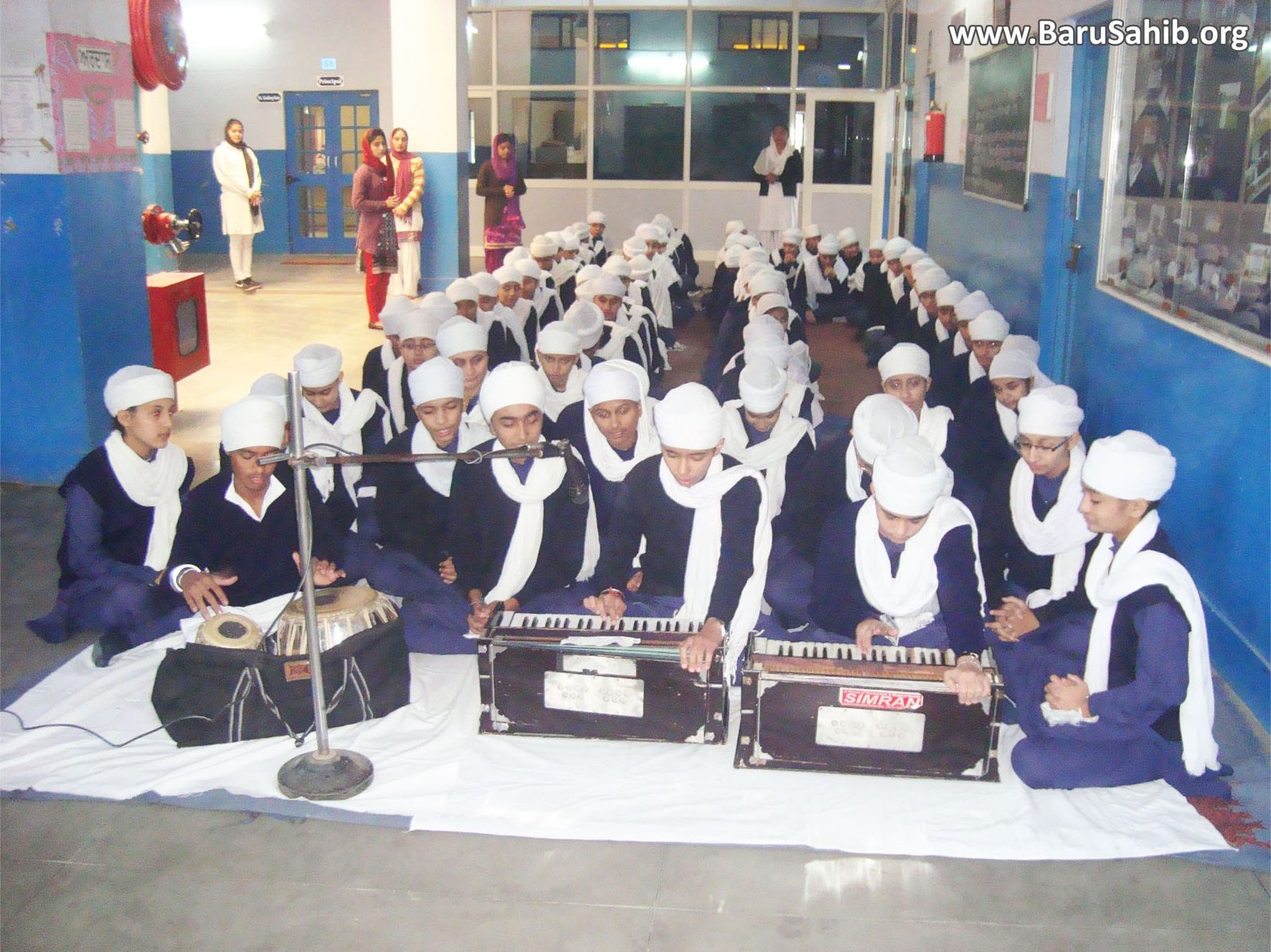
Students were enlightened with the divine knowledge about Sikhism and lives of the Gurus. The students bowed their heads to honor the Great Guru. Kirtan rendered by children enthralled the Sangat. Pure souls singing the glory of Guru Maharaj added to the atmosphere of spirituality. Their white attires further added to the aura of purity.

The students imbibed the spirit of service and humility as preached by the Guru Maharaj and such a generation is carved by Akal Academies portraying a peaceful, prosperous and healthy society rising above the parochial considerations of the society.

~ Tapasleen Kaur
~ New Delhi, 25th Nov ’14

Prof. Pandit Rao supports petition on #RenameAurangzebRoad – Registers his protest!

Prof Paditrao is a Non- Sikh Professor who originally hails from Karnataka. He deeply feels that the World should open their eyes to the Unparalleled and Supreme Humanitarian Sacrifice made by Guru Tegh Bahadur Ji. He stands up saluting the Sikh Faith and continues in his journey to spread the message of Sikhism worldwide. Pandit […]

Prof Paditrao is a Non- Sikh Professor who originally hails from Karnataka. He deeply feels that the World should open their eyes to the Unparalleled and Supreme Humanitarian Sacrifice made by Guru Tegh Bahadur Ji. He stands up saluting the Sikh Faith and continues in his journey to spread the message of Sikhism worldwide.

Pandit Rao Dharennavar who was recently in news to recite Sri Jap Ji Saheb on “Har Ki Paudi”, has reached to Delhi to demand “Aurangzeb Road” to be renamed as “Guru Tegh Bahadur Road”. He has written Memorandum to Prime Minster of India, Sri Narender Modi, in which Panditrao has given logical reason for his demand. Panditrao who is Assistant professor in Govt College has conducted Mini research in Chandigarh and Ajitgarh of 200 people in which he has found that 90 percent of people are very much aware of Aurangzeb whereas only 30 percent people are aware of great sacrifice made by Sri Guru Tegh Bahadar ji. The shocking research findings made him go to Delhi and protest on the road of Aurangzeb in a silent manner. He has a plan to go to Parliament on “Martyrdom Day” of Sri Guru Tegh Bahadur, 24th Nov 2014.

Panditrao Dharennavar who has translated Sri Jap Ji Saheb, Sri Sukhmani Saheb and Zafar Nama, has said that one-day world will bend down in front of Gurus who made the supreme sacrifice to save humanity.

We respect his efforts that being a Non-Sikh, he persistently attempts in spreading Sikh Faith worldwide.

Muslim woman’s Emotional Take on Chaar sahibzaade!

Hifzha Shaheen’s Facebook status gives her insight of the movie “So, I’ve finished watching Chaar Sahibzade…and as promised here are my thoughts. “I’m Muslim. I’m British-Pakistani. I didn’t watch this movie because of religious reasons. I didn’t watch this movie because of the hype. I watched it because I fell in love with the passion […]

Hifzha Shaheen’s Facebook status gives her insight of the movie “So, I’ve finished watching Chaar Sahibzade…and as promised here are my thoughts.

“I’m Muslim. I’m British-Pakistani. I didn’t watch this movie because of religious reasons. I didn’t watch this movie because of the hype. I watched it because I fell in love with the passion surrounding it. After watching the trailer, I fell in love with the characters. The script…and above all, the story.

At times it made me laugh. At times it made me cry and at times it left me heartbroken. But I’m a firm believer that there are certain things that actually support the world; the learning of the wise, the justice of the great, the prayers of the good, and the valor of the brave. And this movie had all of those. I’m very fortune that, from a very early age, my parents taught me the difference between right and wrong.

My faith teaches me that the best of mankind are those who have the most benefit to mankind…and that is what I found in this movie. Sikh history is relatively short in the scope of history, yet incredibly rich and powerful, full of stories of sacrifice and unending faith. However, the deep emotional chronicles of the story is depicted in a manner which is accessible to all ages, faiths and cultures to understand.

Obviously, there are certain aspects of the movie which need improving, but these are all visual aspects. Altogether though, after watching the film, the lessons of truth, morale and humanity are deeply embedded into each scene, principles which I have always abided by, and was today reminded of. Take a bow Dharam Seva Records, you’ve done your religion proud.‪ ChaarSahibzade ”

Source: https://www.facebook.com/hifzha.shaheen

Gurgaddi Purab of Guru Gobind Singh Ji!

Guru Gobind Singh ji was born as “Gobind Rai” and was the tenth and last of the ten human form Gurus of Sikhism. He became our Guru on November 24, 1675 at the age of nine, following in the footsteps of his father Guru Teg Bahadur ji. In1675, Aurangzeb who had ordered the forced conversion […]

Guru Gobind Singh ji was born as “Gobind Rai” and was the tenth and last of the ten human form Gurus of Sikhism. He became our Guru on November 24, 1675 at the age of nine, following in the footsteps of his father Guru Teg Bahadur ji.

In1675, Aurangzeb who had ordered the forced conversion of all Hindus and thought that if the respected Kashmiri brahmins under the leadership of Pandit Kirpa Ram accepted Islam, others in the country would be easily converted. They had been given six months to decide or suffer the consequences. Time was running out. The Brahmans mad in desperation by the religious fanaticism visited Anandpur to seek Guru Tegh Bahadur’s advice.

As the Guru sat reflecting what to do, young Gobind Rai, arriving there in the company with his playmates, asked why he looked so preoccupied. The father, as records Kuir Singh in his Gurbilas Patshahi 10, replied, “Grave are the burdens the earth bears. She will be redeemed only if a truly worthy person comes forward to lay down his head. Distress will then be expunged and happiness ushered in.”
“None could be worthier than you to make such a sacrifice,” remarked Gobind Rai in his innocent manner.

Guru Tegh Bahadur advised the brahmins to return to their village and tell the authorities that they would accept Islam if Guru Tegh Bahadur could first be persuaded to do so.
Soon afterwards the Guru with a few followers proceeded to the imperial capital, Delhi. After watching the tortured deaths of three of his followers, he as well, refused to convert and was beheaded on November 11, 1675.

The 13-year-old Gobind Rai, ordained as the next Guru before his father departed Anandpur, was formally installed as Guru Gobind Singh on the Baisakhi day of March 1676. In the midst of his engagement with the concerns of the community, he gave attention to the mastery of physical skills and literary accomplishment. He had grown into a comely youth spare, lithe of limb and energetic.

He had a natural genius for poetic composition and his early years were assiduously given to this pursuit. The Var Sri Bhagauti Ji Ki, popularly called Chandi di Var. written in 1684, was his first composition and his only major work in the Punjabi language. The poem depicted the legendary contest between the gods and the demons as described in the Markandeya Purana. The choice of a warlike theme for this and a number of his later compositions such as the two Chandi Charitra, mostly in Braj, was made to infuse martial spirit among his followers to prepare them to stand up against injustice and tyranny.

For the first 20 years or so of his life, Guru Gobind Singh lived peacefully at Anandpur practicing arms and exercises to complete his training as a soldier. He also studied Persian and Sanskrit and engaged 52 poets to translate the Hindu epics. Stories of ancient heroes were translated into Punjabi in order to create the martial spirit among the Sikhs. The Guru also wrote several compositions including Jaap Sahib, Akal Ustat and Sawayas during this period. He also established a Gurdwara at Paonta Sahib on the banks of the river Jamuna.

~ Source: Sikhiwiki.org

The Kalgidhar Society wins the Champion League’14 of India Giving Challenge!

The Kalgidhar Society wins the Champion League’14 of India Giving Challenge with your consistent support and blessings! Thank you for gifting us your Trust!

The Kalgidhar Society wins the Champion League’14 of India Giving Challenge with your consistent support and blessings!

Thank you for gifting us your Trust!

Jyoti Jyot Purab of Shri Guru Tegh Bahadur Sahib Ji!

This was an extremely important event in Sikh history that had a profound impact on the future direction of Sikhism, the religion of the Sikhs. Guru Tegh Bahadar, the ninth Sikh Guru undertook the supreme sacrifice for the protection of the most fundamental of human rights – the right of a person to freely practice […]

This was an extremely important event in Sikh history that had a profound impact on the future direction of Sikhism, the religion of the Sikhs.

Guru Tegh Bahadar, the ninth Sikh Guru undertook the supreme sacrifice for the protection of the most fundamental of human rights – the right of a person to freely practice his or her religion without interference or hindrance.

In the modern times we tend to take this freedom for granted – but in 1675, millions of people were denied this basic right. There was forced conversion of religion; many thousands were killed for refusing to change their religion.

Unique sacrifice

To give ones life for a cause is a difficult and highly challenging undertaking. Many in past human history have given their lives for their own personal reason; however, what is astonishing in the case of the ninth Sikh Guru is the fact that the Guru was not protecting the right of his “own people” called the Sikhs to practise their religion but instead the rights of the non-Sikhs, the peace-loving people from Kashmir.

These people from Kashmir were very respected Hindus pundits (scholars) who were being threatened with conversion to Islam, under the threat of death by the “Muslim” Emperor, Aurangzeb. In 1669, the Mughal ruler Aurangzeb departed from the policy of tolerance practised by his predecessors and unleashed instead a policy of religious persecution against non-Muslims. This caused large-scale demoralisation, fear and panic among the people.

The commitment by the Sikh Guru to protect and support the liberty of all the people of a country was unprecedented. This type of supreme sacrifice had never previously been recorded in human history. On May 25, 1675 in answer to an appeal of a large group of revered Kashmiri Pandits, Guru Tegh Bahadur made the momentous decision that has forever changed the level of moral commitment, dedication and sacrifice required by followers of God. The Guru made this critical decision to risk laying down his life if necessary to protect the right of the Hindus to follow their religion freely without interference or duress.

Introduction

The Guru by this act has set a yardstick by which the Sikh must gauge their devotion to their religion. It is now not acceptable to say that: “I believe in the right of others to practise their faith peacefully” – this does not even get near the level of awareness required for the followers of Sikhism. The Guru has by his example taught the followers to maintain a high level of morality.

It is not even acceptable to say: “I, as a Sikh respect and honour other religions” – even this does not get the Sikh to the required threshold of “wakefulness” (“Surat”). The Sikh mind-set has to get to a position of consciousness where he or she will be able to say: “I as a Sikh am ready to die to protect the right of the people of all faiths”. The ability to advance to these reaches of awareness (Surtee or Surat) is a gift obtainable from the Almighty, and was the lesson taught by Guru Tegh Bahadur to the followers of Sikhism. Not only does the Guru’s words mention this clearly in Gurbani, but the life of the Gurus also actually reinforces these words of Bani.

It should be remembered that the Gurus did not believe in the practises of the Hindu religion and had issued various holy Shabads denouncing various Hindu practises like Sati, Purdah, Idol worship, etc. However, this had no bearing when it came to the decision to protect these Kashmiri Hindus – for the right of a person to freely practise their religion was considered to be predominant over their own personal beliefs and preferences.

Guru Gobind Singh recorded his father’s martyrdom with these words:

Theekar fore dilees sir, Prabh par kiyo payan,
Tegh Bahadur si kriya, Kari na kinhoo aan.
Tegh Bahadur ke chalat, Bhayo jagat main sog.
Hai hai hai sab jag bhayo, Jai jai jai sur log.

He burst the bonds of mortal clay
And went on to the abode of God.
No one ever performed an act as noble
As did Tegh Bahadur.

With the departure of Tegh Bahadur
The world was stricken with sorrow.
A wail of horror rent the earth,
A victor’s welcome by the dwellers of heaven.

Bichitra Natak

To bring to the attention of all human beings in greater India and to record in world history the barbaric ways of the Mughal Empire, Guru Tegh Bahadar escalated the consciousness of the Sikh psyche to a newer level. It was now not acceptable for a God loving people to protect just their own kind, but it was the duty of all God loving people to protect the rights of all the people of God, no matter what their chosen religion may be. Guru Tegh Bahadar put into practise the profound message of Gurbani that had been existant since Guru Nanak Dev’s time:

Emperor Aurangzeb was a barbaric ruler of the Mughal Dynasty who came to power in 1658 and ruled for 49 years until his death in 1707. When he came to power in 1658, he killed or had killed his three brothers and imprisoned his father and forcibly converted Lakhs (hundreds of thousands) of Hindus to Islam. He is commonly considered the last of the “grand” Mughal emperors. His last 25 years were spent in the Deccan fighting a war of attrition against the Marathas which practically bankrupted the Mughal Empire, which never rose again to its onetime splendour. Thought the succeeding Mughal Emperors were even more blood thirsty in their attempts to wipe out the Hindu and Sikh religions, they would soon fall to the perhaps, greater atrocities of the Persians, Afgaanis and the mixed blessings of the British conquerors that completed their demise.

The Kashmiri Pandits were Hindus renowned for their high intellect and education. They had a good relationship with the Sikhs and their Gurus. Guru Nanak Dev met Pandit Brahm Das who was an ancestor of Pandit Kripa Ram in Mattan. Kripa Ram had known the Ninth Guru and also taught Sanskrit classics to the young Gobind Rai. During the reign of Jehangir, Guru Hargobind came to Srinagar and met Kashmiri saintess Mata Bagh Bari, who lived at Rainawari. It is interesting to note that Mata Bagya Bari’s spiritual interaction with the sixth Sikh Guru is incredibly well-preserved in the Sikh religious tradition. In Pandit tradition Mata Bagya Bari is a person renowned for her high spiritual merits.

The Turning Point

In early 1675, the Kashmiri Pandits approached Guru Tegh Bahadar to seek his assistance in their acute hour of need. These Hindus from Kashmir had been given a deadline by Emperor Aurangzeb to convert to Islam or be killed. Pandit Kripa Ram with his large delegation met Guru Tegh Bahadar at Chak Nanki, Kahlur (now known as Anandpur Sahib). He explained their dilemma to the Guru in the open Sangat at the place where today stands Gurdwara Manji Sahib, in Anandpur Sahib.

“The Emperor had given us some time to decide to convert to Islam or to be executed. The time for deciding has expired. Now, we have to convert to Islam or die. What shall we do? Guru ji, we have no one else to turn to. We don’t have an army to protect us – We need your help. Please assist us”, said Kripa Ram.

Guru ji is said to have gone into deep thought after Pandit Kripa Ram’s request. At this point, it is said that Guru ji son, Gobind Rai walks into the Sangat to see Guru ji deep in thought.

“Guru ji, I see the acutely sad faces of the Sangat and you are silent and in deep thought. What is the problem?” asked Gobind Rai to his father. Gobind is about 9 years old at this stage.

Guru ji slowly turn to his son and explain the situation as concisely as possible.

Baata (Son), this is sangat from Kashmir. They are Hindus who have been friends of Sikhs since the time of Guru Nanak. They have a very serious problem on their hands” said Guru ji.

Gobind Rai replied, “Pita ji, you are the Guru of the entire world (“Jagat Guru”). You will know of a solution to all problems

Baata, Emperor Aurangzeb has given them an ultimatum – If they do not become Muslims, he will kill them all”, explained Guru ji.

Guru ji continued, “Some well-known Religion person (“Mahapurakh”) will have to make a sacrifice to stop this butchery. We have to find a supreme soul who will die so as to awaken the sleeping consciousness of the people of Hind”.

“Pita ji, there is an easy answer to this problem. You are the most spiritually aware person in whole of Hind. You can make that sacrifice”, answered Gobind Rai.

Guru ji was pleased to hear these words as it confirmed that his son had reached a suitable age to become the next Guru, and that Guru ji’s work on Earth had been completed.

Guru ji addressed the Pandits, “Go and tell Aurangzeb that if he can convert Guru Tegh Bahadar to Islam, they will all convert. Otherwise he should leave them alone

The Pandits were delighted that a solution was found and duly informed Emperor Aurangzeb of the decision.

Aurangzeb was delighted that by converting one person, he would without any further delay have the conversion of many 1000’s to Islam. Accordingly he summoned his officers to arrest Guru Tegh Bahadar.

~ Source: http://www.sikhiwiki.org/

Students of Akal Academy, Dhugga Kalan join in the Gurpurab Celebrations!

Akal Academy Dhugga Kalan celebrated Gurpurab of Sri Guru Nanak Dev Ji. Shri Guru Granth Sahib and the Palki Sahib were beautifully decorated. Students rendered Kirtan in their melodious voices, all singing the glory of the Great Guru. Sangat offered special prayers to Guru Sahib. The special features of the programme were sakhis, poems and […]

Akal Academy Dhugga Kalan celebrated Gurpurab of Sri Guru Nanak Dev Ji. Shri Guru Granth Sahib and the Palki Sahib were beautifully decorated. Students rendered Kirtan in their melodious voices, all singing the glory of the Great Guru.

Sangat offered special prayers to Guru Sahib. The special features of the programme were sakhis, poems and speeches.

The children devotionally listened to the preaching’s and teachings of Guru Nanak Dev Ji. Sangat gathered in a big number and celebrated with great enthusiasm, zeal. They were mesmerized by the spiritual Kirtan and blessed the innocent souls.

~ Tapasleen Kaur
~ New Delhi, 22nd Nov ’14