
Young Sikhs in Maryland fight bias with diplomacy in the classroom!

One recent afternoon, two dozen teenagers stayed late at Hoover Middle School in Potomac, Md., for a presentation on Jewish culture. They tasted matzoh brittle, spun dreidels, colored Purim masks and watched a video of a rabbi blowing a ram’s horn. Some clowned or texted, but one student named Hana Kaur kept a watchful eye […]

One recent afternoon, two dozen teenagers stayed late at Hoover Middle School in Potomac, Md., for a presentation on Jewish culture. They tasted matzoh brittle, spun dreidels, colored Purim masks and watched a video of a rabbi blowing a ram’s horn.

Some clowned or texted, but one student named Hana Kaur kept a watchful eye on the room. She shushed the gigglers, passed out the masks and read from a large screen that explained Passover and Rosh Hashanah.

Kaur, 14, is a Sikh. The daughter of immigrants from India, she wears waist-length braids and a silver bracelet as signs of her ancient faith, which male Sikhs honor by wearing turbans. She is the driving force behind the school’s new Cultural Awareness Club, and her leadership sends a subtle message.

The club is part of a polite but purposeful mission by Sikh community leaders in suburban Maryland to create a positive image of a religious minority that has long been the object of misunderstanding and hostility in the United States. Concern flared after the terror attacks of Sept. 11, 2001, when some Sikhs were mistaken for Muslims and harassed. It re-emerged on Aug. 5, 2012, when a white supremacist gunman attacked a Sikh temple in Wisconsin, killing six people before fatally shooting himself.

“After the second tragedy, we realized there was still much ignorance about us and our beliefs. People associated our turbans with fundamentalists who believe in violence against America,” said Rajwant Singh, a dentist and official of a Sikh temple in Rockville. “In schools, Sikhism was not taught in religion classes.”

So members of the community sought out teachers and encouraged their own children to help educate others about who they are. “If young Sikhs are seen as leaders now, people wearing turbans when they run for office will be more accepted,” Singh said.

Sikhism is a monotheistic South Asian religion, founded in the 15th century, which combines spartan self-control with meditative spiritualism. More than 90 percent of Sikhs — about 22 million — still live in India, but several hundred thousand have immigrated to the United States since the 1960s. In the Washington suburbs, many have been drawn to jobs in research and technology, settled down to raise families and built communities around domed temples called gurdwaras.

Rather than trying to blend into American society, many Sikhs have made a point of standing out. Men wrap bright yellow or orange turbans around never-cut hair, even at the cost of ridicule and danger. National Sikh organizations have fought aggressive legal battles with various government agencies, including the TSA and the Pentagon, over the right to wear turbans and other religious symbols during airport screenings and while serving in the military.

Sikhs expect their children to be equally proud of the faith symbols they wear, including topknots for younger boys and turbans for older ones. After 9/11, when some Sikh students were taunted as Muslim terrorists by classmates, the community’s response was not to ease up on the rigorous dress code, but to push for national anti-bullying laws and promote their faith more vigorously as distinctive but nonthreatening.

“We follow a code, and wearing the uniform is part of our mandate. It is not something you can discard for inconvenience,” said Rubin Pal Singh, a board member of the Guru Gobind Singh gurdwara in Rockville. “This uniform is what makes us unique. If a child does not want to wear it, it can be difficult for the family and the community.”

But Singh and other Sikh leaders in the Maryland suburbs are pursuing a more nuanced strategy of outreach to area schools. They have met with teachers, produced videos and texts on Sikhism and invited school officials to temples for training sessions and worship ceremonies. One result is that many Montgomery County middle and high schools now include lessons on Sikhism in their religion courses. Another is a new cadre of experts and allies within the system.

David Owens, a seventh-grade social studies teacher at Hoover, attended one of the training sessions at the Rockville gurdwara several weeks ago and said he learned a great deal.

“Now I am ready for any questions the students ask me,” he said, adding that the culture club “helps clear up misconceptions, helps overcome students’ uneasiness with other cultures and creates a more welcoming atmosphere so no one feels isolated.”

In some cases, students like Kaur are acting as ambassadors for their faith, partly through strong parental urging and partly from their own evolving commitment. In a recent interview, Kaur and a dozen other Sikh teenagers said school bullying was not a major problem for them, but several added that their parents had suffered from harassment as young immigrants and that they too still faced occasional insults or awkward moments.

Jagjot Battu, an 11th grader at Gaithersburg High School, said she feels comfortable being a Sikh in a diverse, multinational student body but is occasionally mistaken for a Muslim or a Hindu. Although she attributed the problem to misunderstanding rather than bias, she said feels a strong responsibility to set her schoolmates straight.

“Most of my friends know I am Sikh, but they don’t know what that means. It’s my job to teach them about it,” said Battu. “You can’t change people, but you can try to get the message out, to open their minds and build tolerance. The world is very interconnected now, and we need to understand each other.”

Kaur, tall and articulate, has emerged as a natural leader for young Sikhs in her area. At first, she said, she was motivated by the backlash against Sikhs after 9/11, when her younger brother was called names such as Osama. More recently, when the temple shooting in Wisconsin took place, she saw it as an opportunity to “shine a spotlight” on Sikhism at a moment of national attention and sympathy. First, she and her friends made a video for schools featuring interviews with young Sikhs. Then she persuaded officials at Hoover to let her start the culture club, which began meeting in January.
At the recent club meeting, there were scattered signs that the message was getting through. Most of the adolescents in the room had trouble remembering the finer points of Sikhism or mumbled something about long hair and bracelets. But the very normalcy of their interactions seemed telling.

While Kaur and a Jewish classmate stood next to a large screen, explaining dreidels and matzoh, three boys were joking and fooling around at a desk in the back. One was a Sikh named Amit, wearing a black cloth topknot on his head. The second was wearing a yarmulke. The third had red hair and freckles. Asked what he thought of Amit’s topknot, he glanced up and said, “It’s awesome!”

Kamaljeet Singh Dhindsa, Mayor of Southall, England donates for Akal Academy Dhindsa Gurdwara Construction!

Kamaljeet Singh Dhindsa, Mayor of Southall, England donates for Akal Academy Dhindsa Gurdwara ConstructionSamrala, 21st April (Baljeet Baghoria): Southall, England’s Mayor Kamaljeet Singh Dhindsa recently visited his native town near ‘Samrala’ where the people from the region and the village welcomed him.

During his visit to village Dhindsa, MrDhindsa stopped by at ‘Ravidas’ Gurdwara Sahib to pay his respects. He also donated Rs. 1.25 Lakh for the Gurdwara that is under construction at Akal Academy Dhindsa, to the organizing committee.

S. Kamaljeet was accompanied by his wife Amarjeet Kaur and Brother Gurpreet Singh Dhindsa. During his speech, organized at Dhindsa’s Govt. Primary School, Mr. Dhindsa shared that though his childhood and primary schooling started at this school, but due to his family’s business in England, he too had to leave for England in the year 1969, where he is serving as the Mayor of Southall since year 2013. He also revealed that though he is serving as a Mayor in the land of England, but he is still duly carrying on with the Social and the religious services, that he received through the Punjabi roots & Heritage.

On this occasion, Sukhwinder Singh Nagra, Chairman of Block Association, Manjeet Singh ‘Sarpanch’, Kuldeep Singh Dhindsa, Balwinder Singh ‘Numberdaar’, Ram Singh Garewal ‘Ex-Sarpanch’,  Malagar Singh Numberdaar, Jaswinder Singh Panch, Budh Singh Panch, Karnail Singh and Harjeet Singh were also present.

Hail the Positive Efforts. Appreciate the Good Will…

Surrey Cadet Corps are a PRIDE of B.C.’s Sikh Community

Like most teenagers his age, Sagar Singh Ghag loves his video games. Homework, chores and outdoor activities were all impediments to attaining supremacy in the challenges provided by the gaming console in his house. But something has triggered a different outlook in this 15-year-old from the North Delta Secondary School. “I loved staying home and playing […]

Like most teenagers his age, Sagar Singh Ghag loves his video games. Homework, chores and outdoor activities were all impediments to attaining supremacy in the challenges provided by the gaming console in his house. But something has triggered a different outlook in this 15-year-old from the North Delta Secondary School.

“I loved staying home and playing my video games but now I get to talk on radio and TV, make new friends and do lots of activities that I probably never would had got to do otherwise,” said Ghag.

Surrey cadet Corps: Jacob Hayes

Jacob Hayes, a 12-year-old from Banaccord Elementary in Surrey is also seeing some changes in his young life.
“I also wanted to spend less time playing video games and more time doing productive stuff.”

Thirteen year old Punit Pank of Surrey said she has found renewed confidence to be a role model for her community.

No there is nothing in the waters of Surrey that is transforming these kids.

They are members of the newly minted 3300 Royal Canadian Army Cadet Corps (RCACC) which is sponsored by the Surrey-based “Friends of Sikh Cadets Society” to provide a dynamic program for youth.

Surrey cadet Corps: Punnet Pank

Locally known as the Sikh Cadets, the 3300 RCACC, which is open to all aged between 12 and 18, is Canada’s first army cadet program sponsored by the Sikh community.

It was formally inaugurated last year and today is the fastest growing cadet unit in British Columbia.

This Saturday, members of the 3300 RCACC will be part of the Khalsa Day parade in Surrey adding another point of pride for the community.

Major Jim Blomme, the commanding officer for 3300 Army Cadet Program said the combined goal is to provide a premier program delivering leadership, teamwork and self discipline skills for youth.

The unit currently has 67 cadets with a growing waiting list.

Surrey cadet Corps: Sagar Singh Ghag

“We are growing fast and it’s very rewarding,” said Harbinder Singh Sewak, a Vancouver-based newspaper publisher who took his idea of a Sikh-sponsored cadet unit to General Walter John Natynczyk, the former Chief of the Defence Staff of the Canadian Forces.

“I hope what we have achieved and what we are doing can be used as a blueprint to increase the pluralism in Canada’s cadet corps,” said Sewak, who also chairs the Friends of the Sikh Cadet Society.

The 3300 RCACC’s formation has triggered interest as far away as London, England, which has a sizeable Sikh population.

For Maple Ridge lawyer Kirandeep Kaur Brar, the cadet corps has given her 15-year-old son Naunihal a “new attitude”.

“I am seeing a new discipline in Nuanihal,” said Brar who drives her son to the weekly drills every Thursday and waits in the car for two hours while her boy is instilled with a “new sense of sureness”.

Jatinder Kaur Saini said she cannot think of another activity that has made her son, Armaan Singh, 13 more astute and respectful.

Surrey cadet Corps: Simran Gillar

See what the other cadets have to say:

Bharbhoor Singh, age 17
“Since joining the cadets, my parents’ attitude towards me has change. They seem to believe in me and think I am more responsible now.”

Punit Pank, 13
“I joined because I wanted to gain more confidence and be a role model for my community and my school. This way I also get to strong, fit and healthy.”

Jacob Hayes,12
“I wanted to follow my father’s footsteps…I also wanted to spend less time playing video games and more time to do more productive stuff…The cadet corps is amazing I really enjoy it.”

Surrey cadet Corps: Gian Singh Mattharu

Sagar Singh Ghag, 15
“I have gained confidence and enjoy it so much. I want to become an electrician or do mechanics and this all inclusive all rounded program helps me be a better citizen and person”

Simran Gillar,16
“I had an interest in the army and coincidentally found out that cadets was a great opportunity for kids my age that’s when I decided to join this program”

Gian Singh Matharu, 12
“I joined the cadets to get some confidence. I never used to want to meet people or perform or make presentations at school.”
~ Source: http://www.vancouverdesi.com/


Day 2 update : FREE Medical Camp at Akal Charitable Hospital, Baru Sahib!

Great efforts come with fruitful results. The much talented team of more than 90 doctors, surgeons and specialists who landed at Baru Sahib from all corners of Punjab, Haryana and Delhi leaving behind their busy schedules have made a mark of their contribution to society by being a part of this Free Medical Camp. Day 2 update of the Free Medical Camp running at Akal Charitable Hospital, Baru Sahib saw 80 successful surgeries including one plastic surgery fo a patient suffering from burn injuries.

Cholithasis, hysterectomy, hernia, ENT and orthopedic surgeries amounted to around 89 successful operations and the doctors prescribed over 900 patients in the OPD during Day 2 of the Free Medical Camp!

“This Free medical camp is a boon for patients like me who cannot afford to visit expensive doctors. I came here in the bus full of patients that came here to Baru Sahib and I have been treated free of cost. This is a blessing for me and many others who were ailing since yesterday are now much better today!” Said, Mrs. Gurjeet Kaur, a patient from rural areas of Punjab.

“This time around there is a much better response to the medical camp organised by Baru Sahib. I am feeling oblidged to be a part of such noble cause of serving the poor that I am feeling much more satisfied and content in my life. This is the best feeling my profession could give.” said Dr. Gautam.

Checkout the pictures of the Day 2 update of the Free Medical Camp running at Baru Sahib.

Hail the great intentions!

News Coverage:

ਅੰਮ੍ਰਿਤ ਸੰਚਾਰ, ਗੁਰਦੁਆਰਾ ਬੜੂ ਸਾਹਿਬ

19 April 2014~BaruSahib:

ਗੁਰਦੁਆਰਾ ਬੜੂ ਸਾਹਿਬ ਵਿਖੇ ਸ਼ਨੀਵਾਰ ੧੯ ਅਪ੍ਰੈਲ ੨੦੧੪ ਨੂੰ ਅੰਮ੍ਰਿਤ ਸੰਚਾਰ ਕੀਤਾ ਗਿਆ, ਜਿਸ ਵਿਚ ੭੫ ਅੰਮ੍ਰਿਤ ਅਭਿਲਾਖੀਆਂ ਨੇ ਅੰਮ੍ਰਿਤ ਦੀ ਦਾਤ ਨੂੰ ਪ੍ਰਾਪਤ ਕਰਕੇ ਗੁਰੂ ਗੋਬਿੰਦ ਸਿੰਘ ਜੀ ਦੇ ਸਪੁੱਤਰ, ਸਪੁੱਤਰੀਆਂ ਹੋਣ ਦਾ ਮਾਨ ਹਾਸਿਲ ਕੀਤਾ।

ਅੰਮ੍ਰਿਤ ਅਭਿਲਾਖੀਆਂ ਵਿੱਚ ਬੜੂ ਸਾਹਿਬ ਵਿਖੇ ਟ੍ਰੇਨਿੰਗ ਕਰ ਰਹੇ ਟੀਚਰਾਂ ਤੋਂ ਇਲਾਵਾ ਅਕਾਲ ਅਕੈਡਮੀ ਬੜੂ ਸਾਹਿਬ ਅਤੇ ਗੁਰਮਤਿ ਸੰਗੀਤ ਵਿਦਿਆਲੇ ਦੇ ਵਿਦਿਆਰਥੀਆਂ ਨੇ ਹਾਜ਼ਰ ਹੋ ਕੇ ਸਿੱਖੀ ਦੀ ਪਹਿਲੀ ਰਹਿਤ ‘ਖੰਡੇ ਬਾਟੇ ਦੀ ਪਾਹੁਲ’ ਨੂੰ ਪ੍ਰਾਪਤ ਕਰਦਿਆਂ ਹੋਇਆਂ ਸਿੱਖੀ ਵਿਚ ਦਾਖਲਾ ਲੈ ਕੇ ਸਿੱਖੀ ਦੀ ਅਗਲੇਰੀ ਪੜ੍ਹਾਈ ਕਰਨ ਲਈ ਦ੍ਰਿੜ ਨਿਸ਼ਚਾ ਕੀਤਾ। ਇਨ੍ਹਾਂ ਅੰਮ੍ਰਿਤ ਅਭਿਲਾਖੀਆਂ ਵਿਚੋਂ ੫ ਅੰਮ੍ਰਿਤ ਅਭਿਲਾਖੀ ਉਹ ਸਨ, ਜਿਨ੍ਹਾਂ ਨੇ ਹਿੰਦੂ ਪਰਿਵਾਰ ਵਿਚੋਂ ਆ ਕੇ ਗੁਰਮਤਿ ਦੇ ਗਾਡੀ ਰਾਹ ਦੇ ਚੱਲਣ ਦਾ ਪ੍ਰਣ ਕੀਤਾ।


Area Sikhs, Bangladeshis celebrate Cultural heritage – Vaisakhi

Vaisakhi is both a religious and cultural holiday celebrated by two different south Asian groups every year in mid-April. Sikhs in South Jersey celebrated the holiday, which fell on Monday this year, as both a harvest festival as well as the founding day for their religion. It is often celebrated in temples as well as […]

Vaisakhi is both a religious and cultural holiday celebrated by two different south Asian groups every year in mid-April.

Sikhs in South Jersey celebrated the holiday, which fell on Monday this year, as both a harvest festival as well as the founding day for their religion.

It is often celebrated in temples as well as within the communities in the northern Indian state of Punjab with songs, dances and lots of food.

Harleen Kaur, 11, of Vineland, said she likes celebrating the occasion because it is a reminder of her roots.

Though it is a festival she has celebrated since she was born, Kaur first realized she had a different cultural heritage than her schoolmates in kindergarten, when no one else knew what Vaisakhi was.

“It made me feel special because I was the only one to celebrate it,” Kaur said. Later on though, as she grew older, she was less vocal about the celebration.

“It felt weird that everyone else had something in common and I didn’t,” Kaur said.

Kaur, along with a few other children and teens learn a lot about their culture and religion at the Sikh temple in Vineland. One skill Kaur has developed is being able to play the harmonium. The instrument is a combination of a mini organ and accordion which is a main component to traditional music in northern India.

“I feel relaxed when I’m playing,” Kaur said.

Bangladeshis and Benglais also celebrate Vaisakhi, which signifies the start of a new year.

Bangladeshis call the day Boisakhi, and also celebrate with food, dance and music. Boisakh is the first month of the Bengali calendar and so the first day, or new year, is Pohela Boisakh (first of the month).

The Bangladeshis in South Jersey celebrated Monday night with dances at a hotel in Egg Harbor Township, though celebrations in their home country began at the break of dawn.

They recreated a mini bazar with traditional foods and clothes on sale in the tennis complex at the Howard Johnson in West Atlantic City.

Many of the children participated in dances and a fashion show- showing off their culture.

Aritra Chowdhury, 12, of Atlantic City said he enjoys the celebration because its a time to meet up with his cousins and spend time with family.

Ahsanul Kabir, of Atlantic City, said he likes having the celebrations each year so that his toddler son is exposed to the culture even though he is growing up in South Jersey.

Atlantic City mayor Don Guardian stopped by briefly during the night.

~ Anjalee Khemlani
~ Source: http://www.pressofatlanticcity.com/

153 Sehaj Paath Sahib observed at Gurdwara located at Birth Place of Sant Attar Singh Ji – Cheema Sahib.

To celebrate the occasion of ‘Prakash Utsav’ of Sri Guru Angad Dev Ji and Sri Guru Teg Bahadur Ji and to thank Almighty for his graces, Gurdwara located at the birth place of Sant Attar Singh Ji – Cheema Sahib observed ‘Bhog’ of 153 Sehaj Paath Sahibs. The free Sewa of Sehaj Paaths was done by the ladies of nearby localities. Post ‘Bhog’, the Sangat was mesmerized with the Divine Kirtan performed by the Gurdwara’s ‘Kirtani Jatha’. For the event, ‘Sangat’ came from several villages to celebrate the occasion.

~ Deeksha Singh
~ New Delhi, 19th April ’14

New York’s Columbia University’s Super Enthusiast Volunteer Duo shares their love for Baru Sahib

Love and support from volunteers and members from across the globe has only grown stupendous over the recent years, its heartwarming to receive such great support & words of appreciation from overseas supporters like Angad Singh of New York’s Columbia University, who travelled all the way from New York to Baru Sahib with great enthusiasm and spirit to help promote the Akal Academies and its workings through his Blog & Video Log.

Angad Singh and his friend Chris Canales are students of Columbia University in the New York City, they visited Punjab, India in the summer of 2013 to film a documentary about the region’s sustainability crisis and its impact on local communities.

Watch their Video Log on Baru Sahib here

Read their document  at : http://www.college.columbia.edu/about/stories/documenting-sustainability-crisis-through-film

If you too wish to support or contribute to Baru Sahib through Sewa or Dasvandh visit Here

Participants of NAO Astronomy Olympiad – National Level Examination at Akal Academy Ajitsar Ratia.

NAO is one of the highly emerging concept among young generation. NAO stands for Journey to NASA – Astronomy Olympiad, being one of the unique and innovative platform, it also serves an opportunity to the students by providing them the exposure to astronomy and a chance to visit NASA.

Students of Akal Academy, Ratia participated in the examination and have been awarded with certificates.

‘Comment’ to appreciate the little efforts being put in by Akal Academies to help nurture students in a better way!

~ Deeksha Singh
~ New Delhi, 19th April ’14

A Fascinating Visual History of Sikhs in Old Shanghai

The stalls on Dongtai Lu, Shanghai’s antique market street, are packed with vintage curios, memorabilia of Chairman Mao and postcards of Old Shanghai. When I visited, the vendors waved Old Shanghai antiques at me, sensing that I was interested in the time when the city was the Far East’s hotspot dominated by Westerners, thanks to […]

e874bebb-84db-4743-a335-99715a1eb61d (43K)
The stalls on Dongtai Lu, Shanghai’s antique market street, are packed with vintage curios, memorabilia of Chairman Mao and postcards of Old Shanghai. When I visited, the vendors waved Old Shanghai antiques at me, sensing that I was interested in the time when the city was the Far East’s hotspot dominated by Westerners, thanks to the unequal Opium war treaties of the mid-1800s.

But I was looking for something rather specific: photographs that would help me piece together the forgotten lives of the Sikhs who lived in Shanghai for over half a century, starting from 1884.
1397287020-516_shanghai (89K)
I’ve been fascinated by Sikhs in Shanghai since 2010, when as an expatriate in that city I found a picture in a local guidebook mentioning a Sikh Gurudwara as a relic of the Old Shanghai days.

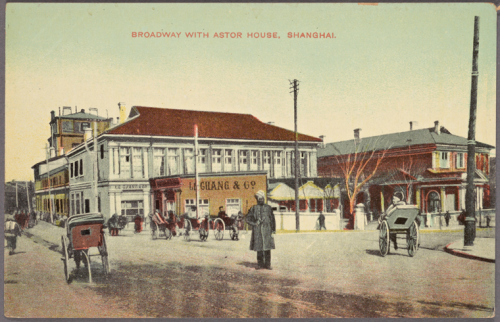
Shanghai has a tumultuous past. The treaty-port was split into foreign enclaves, each with their own judicial, economic and political laws and postal systems. Chinese residents lived in the walled portions of the city in grimy conditions. The International Settlement, a British zone with American leavening, was governed by Shanghai Municipal Council, an administrative body consisting of officials elected by taxpayers. The SMC also supervised the security of the International Settlement through the Shanghai Municipal Police.

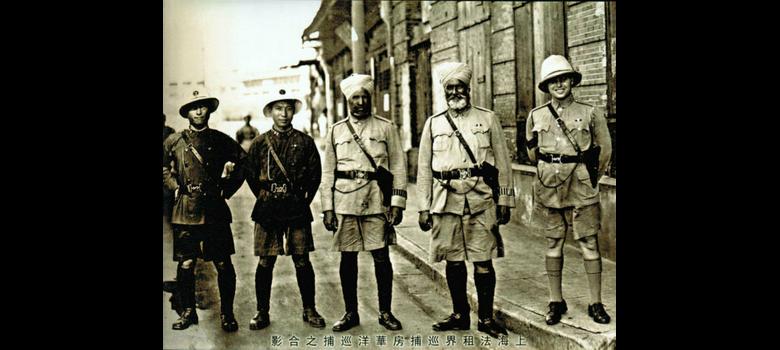
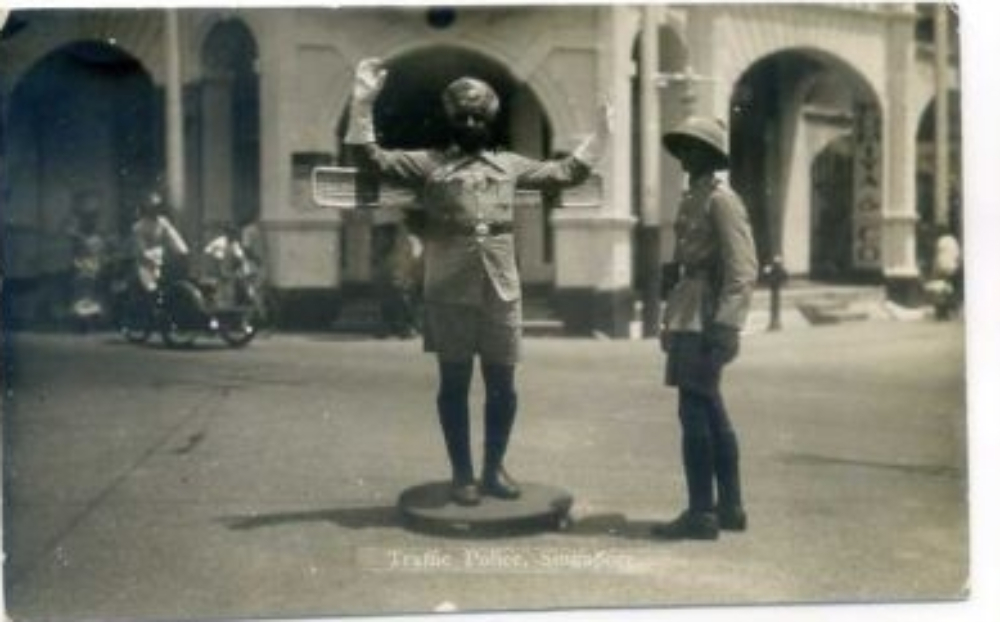
Since 1884, the Shanghai Municipal Police began recruiting Sikh men from British India to man the chaotic traffic intersections. Attired in khakis in summers and heavy, dark coats in winter, the Sikhs never failed to attract attention. Their imposing frame, bushy beards and red turbans added the picturesque element to the very international port city of Shanghai.

Broadway (158K)
In addition to finding employment as policemen, Sikhs worked as watchmen, earning money on the side as moneylenders. Indian Sikhs were also recruited for the British police force in Tientsin (Tianjin), Amoy (Xiamen) and Hankow (Hankou, Wuhan).

In the stalls of the Dongtai Lu vendors, I had to sift through stacks of photo postcards to find ones with Sikh policemen. In the eyes of Chinese, the Sikh policeman represents the humiliating British imperialism and thus earned the very derogatory sobriquet of Hong-Tou-A-san – turbaned number three, referring to their lowly placement in the social hierarchy of that era.

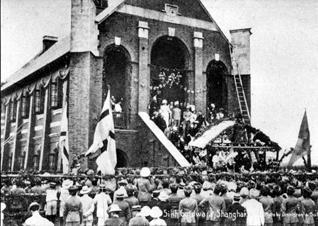
Unfortunately, for the very smartly bedecked Sikh policeman in Shanghai and elsewhere in China, their narratives are extremely blurred. The Sikh policeman who was a symbolic prop for the pompous British Empire in several of their colonies has remained very much in the periphery of historical chronicles and records. The dilapidated Gurudwara, more than a century old, is the only testimony to their presence here.

During that time, Shanghai’s Sikhs were enthusiastic supporters of the Ghadr Party’s fight of Indian freedom, as also for Subhas Chandra Bose’s Indian National Army.

sikh-gurdwara-1908 (21K)
Shanghai gurudwara, 1908, Denniston & Sullivan.

Sikhs weren’t the only Indians in Old Shanghai. Parsi opium traders also made lucrative profits there. However, the stories of Dr Cavas Lalkaka, who was shot accidentally in 1909 in London by freedom fighter Madan Lal Dingra, and the journeys of photojournalist Sam Tata aren’t as well known as the exploits of Jamshetji Jejeebhoy, the Readymoneys and the Wadias, who used the profits of their opium trading in China to fund infrastructure in Mumbai. In fact, Shanghai once had a Parsi agiary. Shanghai was also home to Punjabi Muslims, Ismaili Merchants, Gurkhas and Sindhis, who were also frequently misclassified as Sikhs.

Yet, a few incidents catapulted Shanghai Indians to fame, providing us with a tantalising peek of what lay beneath the dull and sketchy official accounts. After all, it was Old Shanghai, the Paris of the East and city of sin.

sikhMan (27K)
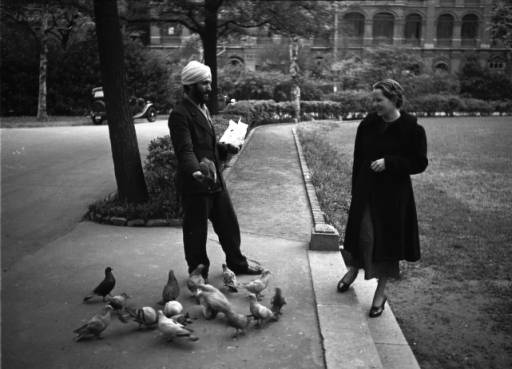
Sikh man and unknown woman, 1937.

One Shanghai Sikh who attained notoriety was Atma Singh, a policeman who brutally murdered another Sikh in 1936 for insulting his wife. He was sentenced to death. Most versions of Atma Singh’s story recall that the rope being used to hang him broke as he was on the gallows. He made headlines around the world for surviving the bungled hanging and was revered as a holy man by his compatriots, who considered it a miracle. Eventually, his sentence was commuted to life imprisonment.

In early 1940s, the Shanghai scene was enlivened by the presence of Princess Sumaire of Patiala, a cousin of painter Amrita Sher-gill and scam artist to boot. A bigamist with a flair for losing money, she hopped around in various (and at times) dubious social circles flaunting her wealth and fashion sense. She was also labelled a nymphomaniac and lesbian by a British police official investigating her antecedents. A collaborationist under Japanese occupied Shanghai, she married a Japanese-American without divorcing her first husband in India.

By 1949, most Indians left Communist China, heading either homeward, Hong Kong or to greener shores in the West. With their departure, only the pale footprints of their China sojourn remains. It is my hope that I can excavate the archives for the very interesting, still unexplored tales of Old Shanghai Indians.

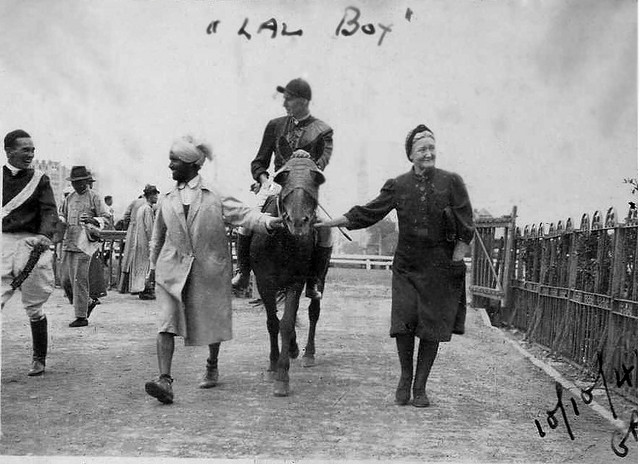
RaceCourse (89K)
Shanghai Race Course, 1944.
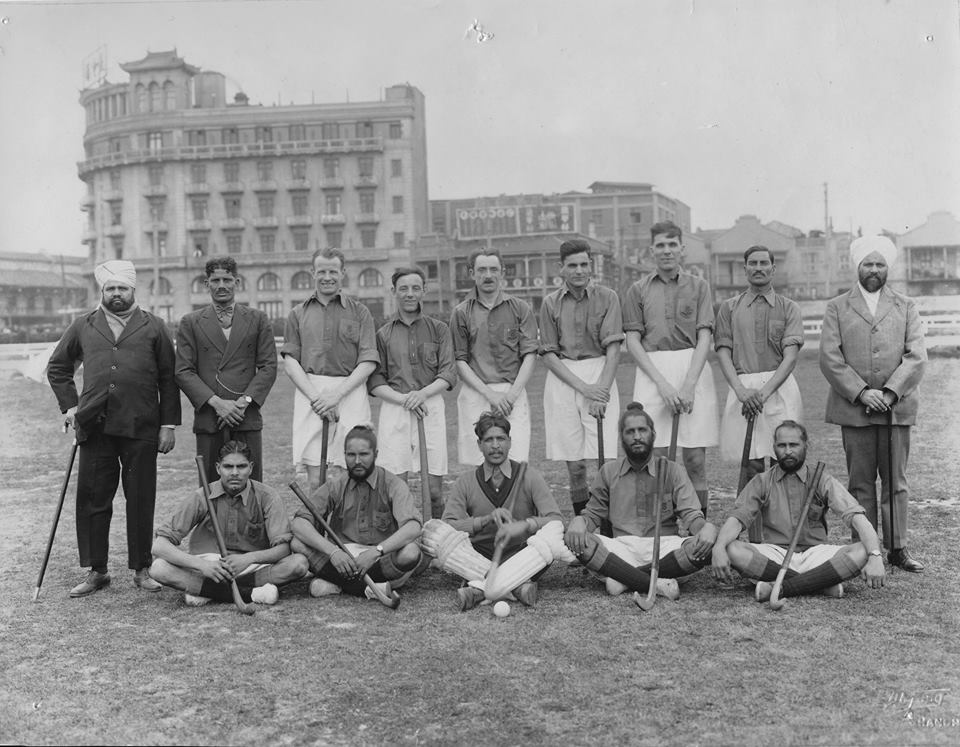
shanghaihockey (111K)
Hockey team.


Traffic (311K)
Traffic policeman.

Meena Vathyam displays her latest discoveries on her Sikhs in Shanghai blog. Follow her work on Facebook here.

by Meena Vathyam
Source: scroll.in