The untold story before Operation Bluestar!

It was a blistering April afternoon in 1984. A white Ambassador car drove into the driveway of a modest Lutyens Delhi bungalow, 1 Safdarjung Road, Prime Minister Indira Gandhi’s residence. A tall bespectacled man got out. He was known only as DGS or director general security, a key official in the Research and Analysis Wing […]

It was a blistering April afternoon in 1984. A white Ambassador car drove into the driveway of a modest Lutyens Delhi bungalow, 1 Safdarjung Road, Prime Minister Indira Gandhi’s residence. A tall bespectacled man got out. He was known only as DGS or director general security, a key official in the Research and Analysis Wing (RAW) who controlled a small air force and two covert paramilitary units, the Special Frontier Force and the Special Services Bureau. Three years earlier, DGS had raised another unit, called the Special Group or sg, for clandestine counter-terrorist missions in Punjab and Assam. For the past two months, SG personnel, all drawn from the Army, had been training in secret at a base near Delhi for a critical mission.

CRPF personnel take position for the siege of the Golden temple

DGS briefed Mrs Gandhi on a surgical mission that fell short of a military strike to evict the rebels. Operation Sundown, he explained, was a ‘snatch and grab’ job: Heliborne commandos would enter the Guru Nanak Niwas guesthouse near the Golden Temple and abduct the militant leader. The operation was so named because it was timed for past midnight when Bhindranwale and his guards would least expect it.

SG operatives had earlier infiltrated the Golden Temple, disguised as pilgrims and journalists, to study its layout. Then, for several weeks, over 200 SG commandos had rehearsed the operation on a wood and Hessian cloth mock-up of the two-storeyed resthouse at their base in Sarsawa in Uttar Pradesh. Commandos would rope down from two Mi-4 transport helicopters onto the guest house and make a beeline for Bhindranwale. Once they captured him, he would be spirited away by a ground assault team which would drive in. There was a possibility of a firefight with the militant leader’s bodyguards and civilians who could rush in to protect him.

Just two months later, Mrs Gandhi ordered the Army to flush militants out of the temple. Eighty-three armymen and 492 civilians died in Operation Bluestar, the single bloodiest confrontation in independent India’s history of civil strife. Machine guns, light artillery, rockets and, eventually, battle tanks were used to overwhelm Bhindranwale and his mini army and the Akal Takht, the highest seat of temporal authority of the Sikhs, was reduced to a smoking ruin. In the maelstrom of Bluestar, Sundown and its extensive preparations got buried in RAW’s secret archives.

Three decades later, Operation Sundown resurfaced in an unexpected location-London. On January 13, the United Kingdom was shocked by declassified letters dating to February 1984 that revealed that Margaret Thatcher’s government had helped India on “a plan to remove Sikh extremists from the Golden Temple”. This plan, according to a top-secret letter from the principal private secretary of then British foreign secretary Geoffrey Howe to the then home secretary Leon Brittan, was drawn up by an officer of the Special Air Services (SAS), UK’s elite commando force. The letter, written four months before Bluestar, sparked fears of a backlash from the UK’s Sikh community, prompting Prime Minister David Cameron to order an inquiry into the findings.

Festering Wound

Operation Bluestar still touches a raw nerve in India and abroad. On September 30, 2012, four Sikh youths attempted to murder retired Lt-Gen Kuldip Singh Brar on London’s Oxford Street. Brar, who led Bluestar, and a frequent visitor to London, survived. Two of his attackers were handed down a 14-year sentence in December last year. The new revelations about a possible British role in the build-up to Bluestar have already inflamed passions. “This obviously raises huge questions over the role of the British government at the time,” Labour MP Tom Watson told bbc on January 13. Watson’s constituency, West Bromwich East, has many Sikh constituents. New Delhi has so far not responded to the revelations. Brar calls reports of sas involvement in Bluestar “utter nonsense”.

At the Golden Temple after Bluestar

Though Sundown was aborted, some of the commandos who had trained for it spearheaded a near-suicidal frontal assault on the heavily fortified Akal Takht during Bluestar and stayed till the last militant was flushed out of the temple three days later. This is one reason those officers, long since retired, refuse to be identified. “My anonymity is my only protection,” says one of the officers who lives in a metro.

If Kao was unhappy with Mrs Gandhi’s rejection of Sundown, he didn’t show it. In fact, his thinking was in line with her extreme caution. Weeks earlier, RAW station chiefs in foreign capitals, particularly those with large Sikh expatriate populations, had warned Kao of the adverse fallout of a military operation to flush out the militants. Kao had personally led the parleys with overseas Sikh separatists to persuade Bhindranwale to vacate the Golden Temple. “They promised him a lot,” says a former RAW chief who is close to Kao, “but delivered nothing.” “Another possible reason for the commando operation being called off was the influence of a ‘soft group’ within the Congress headed by Rajiv Gandhi which favoured a negotiated settlement with Bhindranwale,” says Mandeep Singh Bajwa, a Chandigarh-based analyst.

In January 1984, the government had instituted secret talks with Bhindranwale at the behest of Rajiv. But within four months, hardliners on both sides prevailed. In late April 1984, Satish Jacob of bbc’s Delhi bureau saw trucks carrying construction material into the temple. He also saw a slim, fair man of medium height in a white salwar kameez and sporting a flowing beard. Major General Shabeg Singh was a war hero who had trained Mukti Bahini fighters in 1971 but was stripped of his rank and court-martialled on charges of corruption just before he was to retire in 1976. Now, as the military adviser of Bhindranwale, he oversaw conversion of the five-storeyed Akal Takht into a fortress. “We’re doing it for the community,” the soft-spoken former general told Jacob.

Indira Gandhi gives the Go-ahead

By May 1984, Punjab teetered on the brink. The daylight murder of dig A.S. Atwal inside the Golden Temple in April 1983 had paralysed Punjab Police into inaction. And the thousands of paramilitary personnel sent by Delhi after it dismissed the state government in October 1983 had failed to prevent the state’s descent into chaos. On May 11, 1984, Bhindranwale rejected the final settlement offered by Mrs Gandhi’s think tank led by Narasimha Rao to the Akali Dal. Soon after, Army chief General Arun Kumar Vaidya became a frequent visitor to Mrs Gandhi’s office. Her personal secretary and confidant R.K. Dhawan was present at one of those half-hour meetings. “Gen Vaidya assured her there would be no casualties and there would be no damage to the Golden Temple,” Dhawan told India Today. On June 2, talks with the Akalis collapsed.

As Mark Tully and Satish Jacob wrote in their 1985 book Amritsar: Mrs Gandhi’s Last Battle, “Mrs Gandhi was not a decisive woman, she was very reluctant to act, and she only fought back when she was firmly pinned against the ropes.” The Army was her last resort. She green-lit Operation Bluestar. Dhawan says two “extra-constitutional authorities” in Rajiv Gandhi’s inner circle, who would later become key figures in his Cabinet, were responsible for her change of mind. “They told her the military option was the only solution,” he says. The mantle fell on the Western Army commander, the flamboyant Lt-Gen Krishnaswamy Sundarji. He had briefly considered a plan to starve out the defenders but junked it fearing an uprising in the countryside.

Bluestar bloodbath

Shortly after 10.30 p.m. on June 5, 1984, 20 men in black dungarees stealthily entered the Golden Temple. They wore night-vision goggles, M-1 steel helmets, bulletproof vests and carried a mix of MP-5 submachine guns and AK-47 assault rifles. The men of sg’s 56th Commando Company were then the only force in India trained for room intervention, the specialised art of fighting in confined spaces. Each commando was a sharpshooter, diver and parachutist and could do 40-km speed marches. Some of them wore gas masks and carried stubby gas guns meant to launch CX gas canisters, a more potent tear gas. Three months before this night, the commandos had stayed around the temple and rehearsed for Operation Sundown. Some of them still sported the beards they had grown for their undercover work as volunteers in the Golden Temple’s langar. When the plan was called off, they returned to their base in Sarsawa. They had flown into Amritsar the previous day at the request of Lt-Gen Sundarji.

The three battalions that Lt-Gen Brar’s 9th Infantry Division sent into the Golden Temple that night were trained to fight a conventional combat on the plains of Punjab and in the deserts of Rajasthan. They would overwhelm the enemy by sheer force of numbers. The commandos, who spearheaded the assault, made use of stealth, speed and surprise to achieve results. Soon after arriving, one of the sg officers had briefed Lt-Gen Ranjit Singh Dayal, Sundarji’s chief of staff, on a plan to capture the Akal Takht by blowing off its rear wall. General Dayal, a paratrooper who had captured the Haji Pir pass in an unconventional operation in the 1965 war, immediately overruled it. “There must be no damage to the Akal Takht,” he said. The commandos were to capture the sacred building by using gas to flush out the militants, he said.

The Army had clearly underestimated the defences. As soon as they entered the temple, a sniper shot the unit’s radio operator clean through his helmet. The rest took cover in the long gallery of pillars that led to the Akal Takht. Light machine guns and carbines crackled from behind impregnable walls of the temple, their multiple gun flashes blinding the commandos’ night-vision devices, forcing them to take them off. The commandos and infantry soldiers cautiously advanced, sheltering behind rows of pillars. Those who tried to advance towards the Akal Takht were cut down on the marble parikrama. An armoured personnel carrier bringing in troops was immobilised by a rocket-propelled grenade. “Shabeg knew the Army’s Achilles heel,” says an SG colonel. “He knew we couldn’t fight in built-up areas.”

Post-midnight, remnants of the sg unit and the Army’s 1 Para huddled near a fountain at the base of the Akal Takht. The area between the Akal Takht and the Darshani Deori that led to the Golden Temple had turned into a killing zone, covered by Shabeg’s light machine guns. Attempts by the para-commandos to storm the defences were repeatedly beaten back. They lost at least 17 men, their black dungaree-clad bodies lying prone on white marble. Commandos who tried to fire the CX gas canisters discovered that the Akal Takht’s windows had been bricked up. The only openings were horizontal slots out of which machine guns poured deadly fire. The commandos neutralised two of the machine gun nests by dropping grenades into them but the Akal Takht was impregnable. Then, around 7.30 a.m. on June 5, three Vickers-Vijayanta tanks were deployed. They fired 105 mm shells and knocked down the walls of the Akal Takht. Commandos and infantrymen then moved in to mop up the defenders, tossing gas and lobbing grenades inside the building.

The temple premises resembled a medieval battlefield, one sg trooper recalls. Bloodied and blackened bodies lay scattered around the white temple parikrama. In the basement of the blackened, still-smoking ruin of the Akal Takht, the commandos found the body of Shabeg. The Army recovered 51 light machine guns, 31 of which had been concentrated around the Akal Takht. “Normally, an army unit (of around 800 soldiers) would deploy this quantum of firepower to cover an area of about eight km,” Lt-Gen Brar recounted in his book Operation Blue Star: The True Story. Shabeg, he believed, wanted to hold out until daylight in the hope that there would be a popular uprising among the people when they get to know of the army action. The former war hero had extracted a bloody price on an army he felt had wronged him.

‘Oh my God,’ she said

Around 6 a.m. on June 6, 1984, the phone rang in R.K. Dhawan’s Golf Links home. Minister of State for Defence K.P. Singh Deo wanted Dhawan to convey an urgent message to Mrs Gandhi. The operation was a success, he said, but there were heavy casualties-both armymen and civilians. Mrs Gandhi’s first reaction was anguish. “Oh my God,†she told Dhawan. “They told me there would be no casualties.”

It took the Army two more days to clear Bhindranwale’s men from the temple’s labyrinthine corridors. The commanding officer of the sg contingent, a lieutenant-colonel, was seriously wounded by a sniper as he escorted President Zail Singh around the temple on June 8.

Operation Bluestar inflamed Sikh sentiments and triggered a mutiny in certain Indian Army units. It also led to the death of Mrs Gandhi: Her two Sikh bodyguards gunned her down on October 31 that year. The communal holocaust in which over 8,000 Sikhs were murdered by mobs around the country-including 3,000 in Delhi-fanned another decade of insurgency in Punjab. In the aftermath of Mrs Gandhi’s assassination, sg commandos, several of whom had seen action at the Golden Temple, were rushed to 7 Race Course Road to guard Rajiv Gandhi and his family round-the-clock for a year. They had plenty of time to wonder if history would have turned out differently had they been given the chance to carry out Operation Sundown.

Follow the writer on Twitter @SandeepUnnithan

Courtesy: http://indiatoday.intoday.in/

“Operation Bluestar” Troops raid Golden Temple in Amritsar A documentary by BBC

https://youtu.be/ykcvlKz8JoY

The storming of the temple, or Operation Bluestar, raged for two days, followed weeks of growing tension between the government of Prime Minister Indira Gandhi and Sikhs in the northern state of Punjab.

In Context

Sikh leader Bhindranwale was found dead in the temple complex.By 12 June it was reported that more than 1,000 people had died – 800 militants and 200 troops.

Government ministers later admitted they had underestimated the strength of Sikh feeling about the attack.

Prime Minister Gandhi said: “The necessity now is to heal the wounds inflicted on the hearts of the people.”

But the storming of the Sikhs’ holiest religious shrine started a chain of events and retaliations which led eventually to the prime minister herself being assassinated by two of her Sikh bodyguards, on 31 October.

Taste the Name of God and all other sweets will taste bland: Bhagat Fareed Ji!

Baba Fareed Ji’s mother, Bibi Mariam, said to her son as a very young child, “Oh my son, do simran (meditate on the Lord)”. As any innocent child, Baba Fareed Ji would ask, “Ma, if I do Simran, then what will I get in return.” His mother replied, “The people who do Simran, God gives […]

Baba Fareed Ji’s mother, Bibi Mariam, said to her son as a very young child, “Oh my son, do simran (meditate on the Lord)”. As any innocent child, Baba Fareed Ji would ask, “Ma, if I do Simran, then what will I get in return.” His mother replied, “The people who do Simran, God gives those people sweets to eat.”

Children are drawn to eat sweets and love to eat them. Baba Fareed Ji would cross his legs, close his eyes and do Simran. His mother would put some sweets in to a bowl and put it front of him. Baba Fareed Ji would open his eyes after doing simran and see the sweets in front of him. “Look ma, God has given me sweets to eat.” He would then happily eat the sweets and his mother would look at him and smile.

Baba Fareed Ji looked forwards to doing Simran and being rewarded with sweets by God. For a time he would keep doing Simran and his mother would each time put sweets in front of him and when he closed his eyes so that when he opened his eyes, he could eat them.

But one day Baba Fareed Ji, opened his eyes and didn’t look at the sweets. He didn’t eat the sweets but still looked happy and content. His mother asked, “Fareed, today you haven’t eaten the sweets God has given you.” Baba Fareed Ji answered, “O Ma, once you taste the Name of God, then all other sweets in the world taste bland.”

~ Source : tuhitu.blogspot

Sikh Bravery on many Battlefront!

1. Battle of Festubert In one instance during the Battle of Festubert, 4 from 19th Punjab, 4 Sikhs from the 15th Ferozepur and 2 from the 45th Sikhs were given the responsibility of carrying bombs. All 10 Sikh soldiers exhibited commendable devotion to duty and courage while performing the job. It was a distance of […]

1. Battle of Festubert

In one instance during the Battle of Festubert, 4 from 19th Punjab, 4 Sikhs from the 15th Ferozepur and 2 from the 45th Sikhs were given the responsibility of carrying bombs. All 10 Sikh soldiers exhibited commendable devotion to duty and courage while performing the job. It was a distance of over 250 yards they had to cover while taking the bombs to the front line from the support trenches.

The entire distance was fully covered by machine guns of the enemy, and the Sikhs had to use their turbans to pull the boxes containing bombs as no ropes were available there. When they went ahead through German fire, only 3 soldiers and Lieutenant Smyth were left when they were just 40 yard shorter from the target place. This was when they decided to open boxes and take two bombs at a time and lost one more soldier while rushing the remaining distance. Lt. Smyth and the remaining Sikhs successfully made it to the other side and were duly awarded later along with the dead ones.

2. 2nd World War Battles in Italy

The Sikh soldiers played a pivotal role in many battles that were fought in Italy during the Second World War. Right from the beginning of the Italian Campaign in August 1944, almost the entire country witnessed Sikh warriors taking on and annihilating the Germans until the last assault in April 1945. Indian troops having Sikh and Gurkha regiments were the first to reach Ferrara when it was liberated later on.

3. The Battle of Kluang

A Sikh battalion attacked a Japanese troop that was stronger in terms of both number and ammunition in the north on Kluang, Johor on 30th January, 1942. Charged with bayonets, while the enemy was panic-struck, the Sikh Battalion captured nearly 150 bicycles and 250 motor cycles after seizing their machine-gun post and positions. The enemy causalities in the battle were nearly 400 and all mortars, field guns and Tommy-guns were demolished.

4. Battle of Yang Tsun
This was a battle that took place during the historical Boxer Rebellion when Eight-Nation Alliance forces were marching towards Beijing from Tianjin. In this battle, the charge was taken by 24th Punjab Regiment, a British regiment of Sikhs and an American regiment. These two regiments had to race and get exposed to vigorous rifle fire and bombardment over a 5000-yard plateau in order to settle down on a safe location and occupy a highly fearsome position.

Struggling, both the troops neared the enemy within 300 yards and simultaneously attacked and slaughtered the Chinese. Eventually, the battle ended well under the remarkable charge of the two forces and Yang Tsun was occupied.

5. Battle of Saragarhi

The Battle of Saragarhi occurred on 12 September 1897 during the Tirah Campaign and was fought between 10,000 Orakzai and Afghan tribesmen and just 21 soldiers of the 4th Battalion of the British India’s Sikh Regiment!

All 21 Sikhs who were defending their army post, instead of choosing to surrender, decided to fight till death and proved their loyalty to the Queen of India and the standing of the Sikhs. The UK parliament gave all the brave Sikh soldiers a standing ovation and posthumously awarded them the Indian Order of Merit after.

6. Battle of La Bassee

During the World War 1 also, the Sikh soldiers played a crucial role in several significant battles in France. In the Battle of La Bassee, Sikh troops made conventional bayonet charges in unison with the Gurkhas.

While more than 20,000 German soldiers died and got wounded because of the perfect bayonet charges in the battle, the loss of the British barely exceeded 2,000. The German frontal line was not only checked, but completely broken and beaten. The Sikhs pursued the German soldiers until they were called back by their officers.

The Sikh warriors have always been the most prominent figures of valour and mettle in the forefront of fight against evil. In history, Sikh soldiers were always the first to take on enemies, nullify them with all their might and have their blood gladly spilled in order to protect civil rights and liberation. Their fighting tradition and abilities have never been surpassed by any other troops anywhere in the world till date!

~ Source : topyaps

Guru Nanak Dev Ji’s Visit to Mecca!

When the Mullah named Jiwan saw this act of sacrilege, he was infuriated and kicked him, saying that who is this Kafir keeping his feet towards the house of God and holding Guru Nanak Dev ji’s legs pulls them to change their direction and sees the “Mecca moving in the same direction”. Hearing that a […]

When the Mullah named Jiwan saw this act of sacrilege, he was infuriated and kicked him, saying that who is this Kafir keeping his feet towards the house of God and holding Guru Nanak Dev ji’s legs pulls them to change their direction and sees the “Mecca moving in the same direction”.

Hearing that a strange man had crept into their company, people gathered round him and asked to open and search in his book (pothi) and tell them as to who is better, Hindu or Muslim. Guru ji replied, “Without good deeds, both will come to grief. Only by being a Hindu or a Muslim one can not get accepted in the court of the Lord.” As the colour of safflower is impermanent and is washed away in water, likewise the colours of religiosity are also temporary. (Followers of both the religions) In their expositions, denounce Ram and Rahim. The whole of the world is following the ways of Satan.

Then they asked, “Of what religion art thou?” Guru ji answered, “I am a mere man, made up of five elements, a play thing in the hands of God.”

PS: Some might ask – Why did Guruji visit Mecca ?

Guess, for the same reason Guru Jee visited Hardwar (Hinduism HQ), Mount Kelash (Siddha’s), Lhasa (Buddhist HQ), Rome etc

People were lost in hatred and segregation on the lines of caste, creed and religion. The reason was to bring about change; people had become misguided so Guru Jee went to get people to follow the True path.

If someone wants to bring about change in UK, they must go to where policies in UK are made eg Parliament and hold discussions/dialogues/debates. In the same way, for Guru Jee to bring change amongst Muslims, Hindu’s, Buddhists of that time. He had to visit the centre of all these religions and have dialogue/debates/discussions with their leaders. Guru Jee went to Mecca, Median, Hardwar, Lhasa, Rome (etc) with the sole purpose of teaching the True path:

-That God is everywhere and in everyone.
-To treat ALL humans with respect and equals
-To teach tolerance and respect.

“I do not make pilgrimages to Mecca, nor do I worship at Hindu sacred shrines. I serve the One Lord, and not any other. I do not keep fasts, nor do I observe the month of Ramazan. I serve only the One, who will protect me in the end.”

~ Source: tuhitu.blogspot

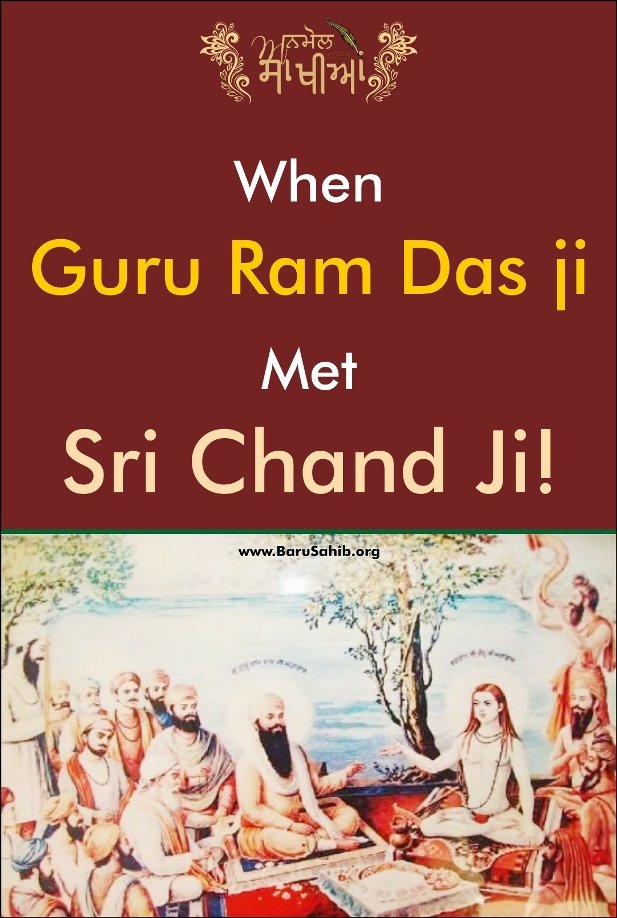
When Guru Ram Das ji Met Sri Chand Ji!

Meeting between Guru Ramdas Ji and Sri Chand (Son of Guru Nanak Dev Ji) After Guru Ramdas Ji had taken the gurgaddi he still continued doing lot of physical sewa. Once Baba Sri chand, son of Guru Nanak ji decided to meet Guru Ramdas ji. As soon as the word traveled to Guru Ramdas Ji, […]

Meeting between Guru Ramdas Ji and Sri Chand (Son of Guru Nanak Dev Ji)

After Guru Ramdas Ji had taken the gurgaddi he still continued doing lot of physical sewa. Once Baba Sri chand, son of Guru Nanak ji decided to meet Guru Ramdas ji. As soon as the word traveled to Guru Ramdas Ji, He sent his followers to meet Sri Chand at the edge of the city and himself left his sewa to meet him. When Baba Sri Chand saw Guru Ramdas Ji he was shocked because with his yogic eyes he saw his father Guru Nanak in Guru Ramdas ji. He proclaimed you are the image of my father .. you have the light of my father, but your beard is much longer than my father! why is your beard so long ?? Guru Ramdas ji answered – my beard is so long so that I can wipe the feet of the saints like u and he actually bent over to rub over Sri Chand’s feet. This surprised Sri Chand ji who jumped back and said even after so many years of ‘tap’ I haven’t been able to achieve this grace and humility. I have never seen such humility before. you are the king. you sit on the throne. you are the king of the yoga. They both
enjoyed the meeting after that.

“With the rising of the sun, the Gurmukh speaks of the Lord. All through the night, he dwells upon the Sermon of the Lord. My God has infused this longing within me; I seek my Lord God. ||1||

My mind is the dust of the feet of the Holy. The Guru has implanted the Sweet Name of the Lord, Har, Har,
within me. I dust the Guru’s Feet with my hair. ||1||Pause|| – GGS ji Ang:1355

Soon the word spread that Sri Chand ji declared Guru Ramdas ji as the yoga king.. the yogi’s stated to question what yoga does he knows and what is the throne he sits on ???.. so when they came to Guru Ramdas ji, ramdas ji told them to chant gods name instead of austerities and stop violence against their body, and instead of going to caves and leaving everything, live in your “grisht ashram” (homes) and bring moderation to your eating, sleeping and to your sensuality ..don’t deny yourself as a human but bring moderation to it and infuse yourself with moral courage (sahaj yoga) and by these things they will gain union with god.. the way of yoga the celebs have adopted had actually separated them from god for when they came close in presence of a woman their equilibrium was disturbed bcos they were still humans.. Guru Ramdas told them to keep their equilibrium day and night by meditation and chanting gods name. and focusing on god’s feet.

You may pluck the strings with your hand, O Yogi, but your playing of the harp is in vain.

Under Guru’s Instruction, chant the Glorious Praises of the Lord, O Yogi, and this mind of yours shall be imbued with the Lord’s Love. ||1||

O Yogi, give your intellect the Teachings of the Lord.
The Lord, the One Lord, is pervading throughout all the ages; I humbly bow down to Him. ||1||Pause||

You sing in so many Ragas and harmonies, and you talk so much, but this mind of yours is only playing a
game You work the well and irrigate the fields, but the oxen have already left to graze in the jungle. ||2||

In the field of the body, plant the Lord’s Name, and the Lord will sprout there, like a lush green field.
O mortal, hook up your unstable mind like an ox, and irrigate your fields with the Lord’s Name, through
the Guru’s Teachings. ||3||

The Yogis, the wandering Jangams, and all the world is Yours, O Lord. According to the wisdom which
You give them, so do they follow their ways.

O Lord God of servant Nanak, O Inner-knower, Searcher of hearts, please link my mind to You. ||4||9||61||
– GGS ji Ang:368

He further explained.. yoga is acceptance of both polarities ..good and bad .. when there is no good no bad .. (kaun bhale ko mande) ?? when u accept all of it as god then you merge with god in ecstasy. and this is true yog.

~ Source : DailySikhUpdates

41 Films, 101 Awards, this Filmmaker has no TAKER yet he impacts Lives with his self funded Film

The first time you speak to Anshul Sinha, you feel like he’s just an average boy-next-door. He loves to play cricket, has had a middle-class upbringing and likes to live within his means. His father works in a bank, mother is a Hindi professor and elder brother runs a fast-food joint. What’s unusual about this […]

The first time you speak to Anshul Sinha, you feel like he’s just an average boy-next-door. He loves to play cricket, has had a middle-class upbringing and likes to live within his means. His father works in a bank, mother is a Hindi professor and elder brother runs a fast-food joint.

What’s unusual about this boy-next-door, however, is that he cares a tad too much about the issues we care less about, things we read in the newspapers, television channels — every day.

Farmer suicides, organ donation, biomedical waste — name it and Anshul’s made a film on it. That’s his attempt at trying to make us aware and shake us from our comfort zones.

Did it make any difference? You and I may ask.The answer is a yes and a no. Well, to shoot some of these films, Anshul put his life at risk — he even received threat calls…

Then of course, there were films that were not well-received in India, but went on to bag critical acclaim at international film festivals. In fact, one of his films Gateway to Heaven will be opening the International Festival of Local Television to be held in Slovakia commencing June 15, 2016.

When no one was willing to produce his films, he put in all his hard earned money to finance and release his work in the public domain.

Anshul’s story is spun by desperation, anger and criticism, dotted by brief moments of success and heartfelt appreciation.

Here, he takes us on a journey through those fascinating moments… read on.

Cricket: Love and heartbreak

“I had always wanted to do something for my country. I loved cricket so I thought I’ll get trained and play for my country. I played cricket at the state level for the Under 16 team and received training under Ajit Tendulkar.”

After class 10, Anshul’s family moved to Hyderabad from Mumbai where he played in the Under 19 team at the district level.

“Unfortunately, due to politics (certain bias), I wasn’t selected in the national team and my family advised me to get serious about my life and career,” he says.

Heartbroken, Sinha enrolled for MBA in Bharti Vidyabhavan in Hyderabad. There too, the idea of serving the country was so strong that in the year 2010, he came up with a plan.

“I realised that there are so many underprivileged people in my city. I wanted to do something for them. So I initiated this campaign where I would ask people in my college to donate Rs 1 per person. At the end of the month, the money collected would be donated for some social cause.”

During his first trip to a blind school in Malarpet, he spoke to the principal of the school and shot his interview on his mobile camera (a Nokia 1100 touch screen model).

“Since we had collected the money from so many people, I felt it was important for everyone to see how their money is being spent and changing lives.”

In his interview, the principal of the blind school mentioned that the school did not have computers.

“The computers for the blind were costlier than the normal ones as they had special keyboards. I realised that it wouldn’t be easy if I stuck to collecting Rs 1.”

Anshul showcased the film at In Focus, an intercollegiate film festival held at Loyola Academy.

After watching the seven-minute video, an NGO came forward and donated 12 computers to the school.

Next, he visited an old age home in Secunderabad and interviewed an old man who was abandoned by his son. “The eight minute documentary was so powerful that a few weeks later, the son took his father home.”

One of his films featured an orphanage where he profiled a girl who was kidnapped and rescued. “The man who had rescued her wanted to put her in a good school, but did not have the money for it. After watching the film, a local newspaper published the story and a local businessman who read the story came forward and donated Rs 26,000 for her education.”

His desire to help took him to a deaf and dumb school that had no access to electricity. He ran an eight-minute documentary film featuring their problems. A month later, the State Bank of India got them access to electricity and installed fans and computers.

Halfway through the conversation, I interrupted Anshul and asked him, ‘Why do you keep referring yourself as ‘we’. Did you shoot these films with a crew?’

He said, “No, I shot them on my own. But I like to use ‘we’ because I feel it’s a collective effort — in thoughts, prayers and actions — and I don’t want to take the entire credit. Each month, I remember asking my classmates to vote for the cause they wanted to support. I never wanted it to be about me. Whenever I use the word ‘we’ I feel inner strength; that I am not alone (in this).”

In 2011, Anshul made a comprehensive documentary chronicling the lives of the poor in Hyderabad. The documentary — Remove Poverty from India — suggested the idea that if each one of us decided to (in our own little way) uplift the people in our towns and cities, we could collectively remove poverty from the country.

But it wasn’t as easy as some of you might think.

“I visited at least 10 well-known colleges in Hyderabad and requested the principal if I could showcase my documentary to the students. Most of them misunderstood that maybe I was asking for donation through the film. Without even watching the film, some of them wrote me off saying ‘chanda maangne aaya hai.’ It was disappointing because it wasn’t about the money. I wanted to reach out to the young crowd and get the message across and I wasn’t being able to.”

“Meanwhile, I continued making short films. After 14 films, I grew confident. My parents had always supported me. I started looking for film festivals and registered for them. My 11 minute film Remove Poverty won 12 awards at different college festivals.”

His film Lapet — featuring the story of four kids from different religions running after a kite — won him 25 awards and got screened in Los Angeles, USA in December 2012.

Getting threat calls

During this time, he also took up the job of a programme co-ordinator with Hyderabad Media Pvt where he was required to make documentaries that would be telecast on television.

“I made quite a few documentaries with them; the most important being the one on biomedical waste. I researched for two months and shot videos of people dumping hospital waste and dead bodies in the drain.

“I did six to seven sting operations to expose the people behind it. The movie Unseen Disaster was uploaded to the video library but I wasn’t able to find a producer to sponsor it.

“For me, it was more important that the video be telecast so that people are aware of the crime, I even approached the health minister of Andhra Pradesh at that time (T Rajaiah) but nothing came of it initially. I started getting threat calls from the local goons asking me to stop shooting such films and to destroy what I had gathered, but I was adamant.”

“I sent it to film festivals in Mumbai, Vijayawada…it was the official selection at Flexiff International held in Sydney, Australia. Back home, an enquiry commission was set up and some of the local ministers and doctors involved in the crime were asked to resign.”

Anshul now no longer wanted to make films that will become ‘library content’ (stored unused as research data). That, he says, would have “killed the filmmaker inside (me)” who “wanted to make films that will change and benefit society.”

So, in January 2013, he put in his papers and started research on his next topic.

He shot The Road of Spero — the story of Vijay Reddy, an MNC employee who had quit his job and was teaching rural kids.

“I went around the village and spoke to several families where young boys had committed suicide because they could not speak English and could not find a job. I could not believe it at first, but that was the hard truth.”

“When I could not find a producer for The Road of Spero, I self financed it and took the film to Darbhanga International film festival in Bihar.”

Now Vijay Reddy is an ambassador of education and works under the Telangana government where he counsels rural kids.

So passionate was his love for socially driven films, he did not realise that his next film Gateway to Heaven would put him and his family in the centre of turmoil.

For the film, he profiled Rajeshwar Rao, a man who had performed the last rites of at least 12,000 orphaned dead bodies across 20 years of his career.

“During my research, I realised that Rao was also the only man in Hyderabad who was single-handedly fighting the organ donor mafia. It was a story waiting to be heard and one that affects the nation.”

To fund his filming and research expenses, Anshul took up a night job at HSBC.

“I would shoot during the day and at night, I’d go to work. I did 17 sting operations almost often putting my life at risk trying to film the people behind the organ donation scam.”

It took him a year and half to finish the film that was 1 hour 10 minutes long. It had cost him Rs 3 lakh. But Anshul could not find a single producer who would finance the film and release it in a theatre.

“They told me no one will pay money to watch dead bodies on the screen.”

Add to this the random threat calls he received from people. “They’d even call up my parents and threaten them. My mother once replied, ‘Jo karna hai kar lo, maar bhi doge to uske maa hone ka garv hoga.’ (Do what you can. Even if he were to be killed, I’ll be proud to be his mother.) Rajeshwar Rao, Anshul says, was offered Rs 2 crore for keeping his mouth shut, which, he obviously refused.

Meanwhile Anshul’s performance at HSBC dropped because he wasn’t able to cope up with the pressure of work alongside his struggle to release the film. He quit the job so he could focus on the film.

“I remember calling up Just Dial and asking them to share numbers of the top studios in India. I even travelled to Mumbai and approached Red Chillies, Yash Raj….some of them did not even let me enter the office, forget meet the concerned people or have a discussion.

“Even leading news channels like CNN-IBN weren’t willing to consider the film. They told me ministers and big names were involved and they could not telecast it.

“I wrote letters to the Prime Minister’s Office but nothing had come off it yet. It was disappointing, I almost went into depression; but I wasn’t ready to give up yet. I took it as a challenge.”

In December 2015, Anshul booked a theatre in Hyderabad, self-marketed and released the film.

“There were five shows in a day, but I did not make any profit,” he says. And it did not matter as long as he had the audience. I told the youngsters that if they wanted me to show the film to their friends, they could call me anytime. If they could gather a crowd of 20, I said I will come with my projector and do it.”

In Feb 2016, he received a letter from the Ministry of Home Affairs, Govt of India stating his “RTI application is being forwarded to the division for taking necessary action.” (Click here to see the letter)

Anshul did 45 road shows across India and raised Rs 1 lakh for the Satya Harishchandra Foundation (an NGO that cares for unidentified, unclaimed bodies). On his return, he joined an ad film company in Hyderabad, where he is currently employed.

“I took up the job because I was in need of money. Unlike making independent films, there is no creative freedom here. We are merely following the clients’ briefs.”

The cause of farmer suicides

His latest film — a 60 minute video on farmer suicides — has given him a newfound purpose in life.

“During my research, we came to know that in India, every few minutes, a farmer commits suicide in India. In my interactions with families of farmers, we realised that some of them killed themselves because they could not repay a loan of a few thousand rupees.

“In the village we visited in Hyderabad, the maximum loan this farmer owed was Rs 25,000 and he took his life because he could not find a way to repay it. I did not want to be among the ones who could feel bad about it at one minute and go back to sleep the next. We felt responsible and wanted to do more than just donate money.”

In his research, he’s also found that majority of farmers committed suicides in the months of May and September.

Anshul is in talks with agriculture scientists and local government officials to find permanent solutions.

“I have shown the film to several officials. I want to organise a QnA session where agriculture scientists and local officials will listen to the problems of farmers and come up with a positive solution, rather than donating money or simply waiving off their debts.”

Responsibility as a filmmaker

“India makes 1000 films every year. We have one of the largest film industries in the world, some of the best talents and brains too. While it is okay to make films on superheroes, romance and action, if each filmmaker decided to highlight a social issue through their films, it will go a long way in changing mindsets and make each one of us more responsible,” he says.

What inspires him to keep going?

“If we had not shot the first film, those blind kids wouldn’t have got computers… the old man wouldn’t have reunited with his son… someone had to do it. If your intent is good, you will find a way out. You have to keep going, keep trying,” he sums up.

Source : Rediff.com

When Bhai Lalo Ji and Malik Bhago offered food to Guru Nanak Dev Ji!

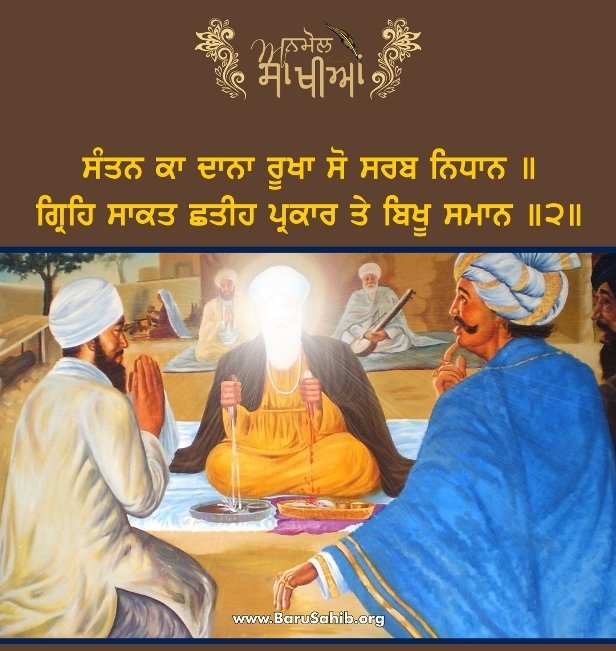
ਸੰਤਨ ਕਾ ਦਾਨਾ ਰੂਖਾ ਸੋ ਸਰਬ ਨਿਧਾਨ || ਗ੍ਰਿਹਿ ਸਾਕਤ ਛਤੀਹ ਪ੍ਰਕਾਰ ਤੇ ਬਿਖੂ ਸਮਾਨ ||੨|| During Guru Nanak Dev Ji’s time, there was someone named Bhai Lalo Ji who earned his living by honest work. Bhai Lalo Ji once got lunch for Guru Nanak Dev Ji and his companion, Bhai Mardana Ji to have. […]

ਸੰਤਨ ਕਾ ਦਾਨਾ ਰੂਖਾ ਸੋ ਸਰਬ ਨਿਧਾਨ ||
ਗ੍ਰਿਹਿ ਸਾਕਤ ਛਤੀਹ ਪ੍ਰਕਾਰ ਤੇ ਬਿਖੂ ਸਮਾਨ ||੨||

During Guru Nanak Dev Ji’s time, there was someone named Bhai Lalo Ji who earned his living by honest work. Bhai Lalo Ji once got lunch for Guru Nanak Dev Ji and his companion, Bhai Mardana Ji to have. Bhai Mardana Ji asked, “This meal tastes like nectar. What has been put in it?” Guru Nanak Dev Ji replied, “That was the taste of truthfulness and honesty that you tasted. This taste is above the taste of worldly delicacies.”

There was a high government official of the city called Malik Bhago who gave a general feast and also welcomed Guru Nanak Dev Ji. However, Guru Ji refused the invitation and said, “We are fakirs, what have we to do with your feast?” He was then asked again; therefore, Guru Nanak Dev Ji took Bhai Lalo Ji with him and went to Malik Bhago. Malik Bhago said furiously to Guru Ji, “You are dishonouring Kshatriyas by eating dry chapaties in the house of a low caste carpenter. My feast will offer you delicious food. Why do you refuse to eat it?”

Guru Nanak Dev Ji then took Bhai Lalo’s chapati and Malik Bhago’s fried sweet pancake. When he squeezed Bhai Lalo’s chapati milk dripped out from it but when he squeezed Malik Bhago’s fried pancake, blood dripped out from it.

Guru then said, “Look Malik Bhago, wealth gathered by cruelty and corruption towards the poor is like sucking their blood which you have done. You had invited me to partake of blood, leaving food pure as milk. How could I accept it?” This showed that Bhai Lalo was the symbol of honesty and hard work.

Therefore, the story shows how food from the faithless cynic is nothing but poison, just how Gurbani mentions that Maya is just like sugarcane which is sweet from the outside but inside Maya is just poison which only leaves pain in the end.

~ Source: SikhAnswers

A TRUE SIKH is one who does not get his Intelligence in the Way of Guru’s Words

Bhai Bela Ji was a Gursikh during the times of Guru Gobind Singh Ji. He came to Guru Ji and asked if he could stay at Anandpur Sahib. Guru Ji consented so long as Bhai Bela agreed to partake in Seva. He was asked what form of Seva he wished to partake in, such as, […]

Bhai Bela Ji was a Gursikh during the times of Guru Gobind Singh Ji. He came to Guru Ji and asked if he could stay at Anandpur Sahib. Guru Ji consented so long as Bhai Bela agreed to partake in Seva. He was asked what form of Seva he wished to partake in, such as, langar seva, recite Bani or join the Guru’s army and fight in the battlefield. Bhai Bela replied that he could not cook, read Gurbani or knew how to use shashtars. Thus Guru Ji assigned Bhai Bela Ji the duty of looking after the horses and their stables. At the same time Bhai Bela Ji would be taught Gurbani by Guru Ji.

Guru Ji started by teaching Bhai Bela Ji one line of the JapJi Sahib per day. Bhai Bela Ji would spend his whole day, whilst fulfilling his daily chores, repeating that same line. The following morning he would recite it back to Guru Ji to make sure that he had memorised it correctly, and thus he could progress and go on to learn the next line.

One day, Bhai Bela Ji came to Guru Ji ready for his next lesson. However Guru Ji was busy and was preparing to go out. Just as Guru Ji was about to leave, Bhai Bela Ji got in the way saying, “Guru Ji, I am ready for my next lesson. I want to learn the next line of JapJi Sahib.” Guru Gobind Singh Ji replied, “Bhai Bela, na vakhat veecharai naa veyla” meaning, “Bhai Bela, you are not considering the circumstances I am in; I am busy and must go out.”

Yet Bhai Bela Ji was so innocent and obedient, that he understood Guru Ji’s comment to be the next line of the JapJi Sahib and spent his whole day practising the phrase. When the other Sevadaars heard Bhai Bela Ji, they started laughing and began mocking him. But Bhai Bela Ji ignored them and continued reciting the phrase, eager to learn it well so that he could please Guru Ji the next morning by reciting it correctly.

The following morning when Bhai Bela Ji went to meet Guru Ji, the rest of the Sevadaars had gathered there as well. They wanted to see Guru Ji get angry with Bhai Bela Ji for incorrectly reciting the JapJi Sahib. However, when Bhai Bela Ji recited the line “Bhai Bela, na vakhat veecharai naa veyla,” Guru Ji instead got up and embraced Bhai Bela Ji.

Guru Ji said, “this is what a true Sikh is. He does not allow his own intelligence to get in the way of his Guru’s words. He believes his Guru’s Bachan to be 100% true and does not consider his own intellect to be above that of his Guru’s.”

Too often we judge ourselves to be cleverer and more knowledgeable than our Guru. Bhai Bela Ji sacrificed himself entirely to the Guru’s words. He was so innocent, subservient and obedient that he placed his faith entirely in the Guru’s Bachan, forsaking his own mind and intellect.

May Guru Ji bless us with such pyaar, sharda and faith to forever live according to His Hukam, which is conveyed to us through His Shabad.

~ Source : tuhitu.blogspot

When the doctors gave up, They turned up to Guru Sahib to heal their Daughter!

ਜੀਅ ਕੀ ਬਿਰਥਾ ਹੋਇ ਸੁ ਗੁਰ ਪਹਿ ਅਰਦਾਸਿ ਕਰਿ || ਛੋਡਿ ਸਿਆਣਪ ਸਗਲ ਮਨੁ ਤਨੁ ਅਰਪਿ ਧਰਿ || At the end of the Sunday divaan, Bhai Gursewak Singh came to me and said that someone would like to talk to me. I thought it must be someone who is upset with the lecture I had […]

ਜੀਅ ਕੀ ਬਿਰਥਾ ਹੋਇ ਸੁ ਗੁਰ ਪਹਿ ਅਰਦਾਸਿ ਕਰਿ ||
ਛੋਡਿ ਸਿਆਣਪ ਸਗਲ ਮਨੁ ਤਨੁ ਅਰਪਿ ਧਰਿ ||

At the end of the Sunday divaan, Bhai Gursewak Singh came to me and said that someone would like to talk to me. I thought it must be someone who is upset with the lecture I had given about Gurmat and felt offended that I spoke about alcohol or Amrit etc. Bhai Gursewak Singh brought to me a Veer jee with cut hair, wearing an orange rumaal and an ‘Om’ Hindu symbol around his neck. The Veer jee said to me, “Sat Siree Akaal jee.” He spoke Hindi. He asked, “Can I take a few of your moments, I wished to talk to you.”

We took a seat at the back of the Darbar Sahib and began talking. The Veer jee introduced himself and said, “My name is Rakesh. I am a Hindu. I am originally from Gujarat. I come here, to the Gurdwara regularly. The one thing I love about Sikhs and the Sikh religion is – simplicity. Everything is so simple and everyone is so welcoming. Although I am a Hindu, I don’t get the same inner-peace and joy that I get from the Hindu temple as I get from the Gurdwara Sahib…”

He continued, “I wish to share with you a story about this Gurdwara and how this is a special place for me.” He explained that he was married to a Danish lady, who had a daughter from a previous marriage but was accepted by Rakesh as his own. When he arrived in the country he used to go school to learn how to speak Danish. Whilst learning Danish he met a Punjabi aunty who was also learning Danish. One day the Punjabi aunty invited Rakesh to the Gurdwara Sahib because they had an Akhand Paatth Sahib.

Rakesh explained, “From when my daughter was born, her feet were not flat. They were curved upwards. Because she could not place her foot flat, she could not walk. The doctors said that there was no cure and wrote that she would never ever be able to walk.” He explained that on the Saturday of the Akhand Paatth Sahib, they visited the Gurdwara Sahib in Copenhagen for the first time. He didn’t know much about Sikhs and it was the first time he was visiting a Gurdwara in his life. Rakesh, his Danish wife and daughter which they carried to the Darbaar Sahib, stood before Sri Guru Granth Sahib Ji.

Rakesh said, “Sardar Ji! My wife and I decided we would pray to Sri Guru Granth Sahib Ji to make our daughter better so that she can walk. My wife and I stood before Sri Guru Granth Sahib Ji with our hands together and prayed. My wife said to Sri Guru Granth Sahib Ji that if he makes our daughter better, she would raise her as a Sikh. We later had langar and went home.” He explained, that evening they arrived home, they noticed their daughter’s curled feet had gone one inch down. The following morning they woke up, they noticed their daughter’s feet had gone down by another inch. By seven days, both feet of their daughter were straight and touching the ground. Rakesh smiled and said, “The doctors said she could not walk. Within a week Sri Guru Granth Sahib Ji blessed our daughter and she is able to walk now. Sri Guru Granth Sahib Ji is not just wisdom – Sri Guru Granth Sahib Ji is a Power. I know – I have experienced this. Sri Guru Granth Sahib Ji is a real, a Living Power. Since then, I come all the time to the Gurdwara, listen to Gurbani and Keertan, and do Seva. I love coming here. It gives me so much peace, joy and satisfaction.”

~ Source : SikhNet